Firefighters have long accepted the visible risks of our profession, such as heat, smoke, and collapse. Yet a quieter, insidious danger still lurks in the shadows: cancer, caused by occupational exposure to the toxic byproducts of combustion. What was once dismissed as an inevitable occupational hazard is now understood as a preventable risk, provided firefighters adopt safer post-incident practices.
The Firefighter Cancer Support Network (FCSN), in collaboration with National Firefighter Registry for Cancer (NFR), has released a fact sheet with actionable steps to minimize exposures from contaminated personal protective equipment (PPE). The flyer “Contaminated Gear: At a Fire Incident – Procedures to lessen firefighters’ exposures from contaminated personal protective equipment PPE” distills these measures into practical on-scene guidance behind each recommendation.
Why Clean Gear Matters
When firefighters enter a structure fire, they encounter a complex soup of toxic chemicals. Benzene, formaldehyde, polycyclic aromatic hydrocarbons (PAHs), dioxins, and heavy metals are some of thetoxicants that make up this toxic soup that firefighters face. Modern building materials and furnishings, often petroleum-based, release these toxic byproducts when burned.
PPE does its job by protecting from the harsh environment, but it is also absorbing and trapping many of these toxic particles. Once the flames are out, that same gear becomes a mobile contamination source. Residual toxins cling to fabrics, lodge in seams, and off gas as we move from the fire to rehab, or longer. This increases the risk of secondary exposure through skin contact, inhalation, or ingestion, sometimes even while driving back to the station.
Studies confirm that firefighters have significantly elevated risks of developing and dying from cancers compared to the general population. Each step a firefighter takes to reduce exposure contributes not only to personal safety but also to the future health of the entire fire service.
Preliminary Exposure Reduction (PER)
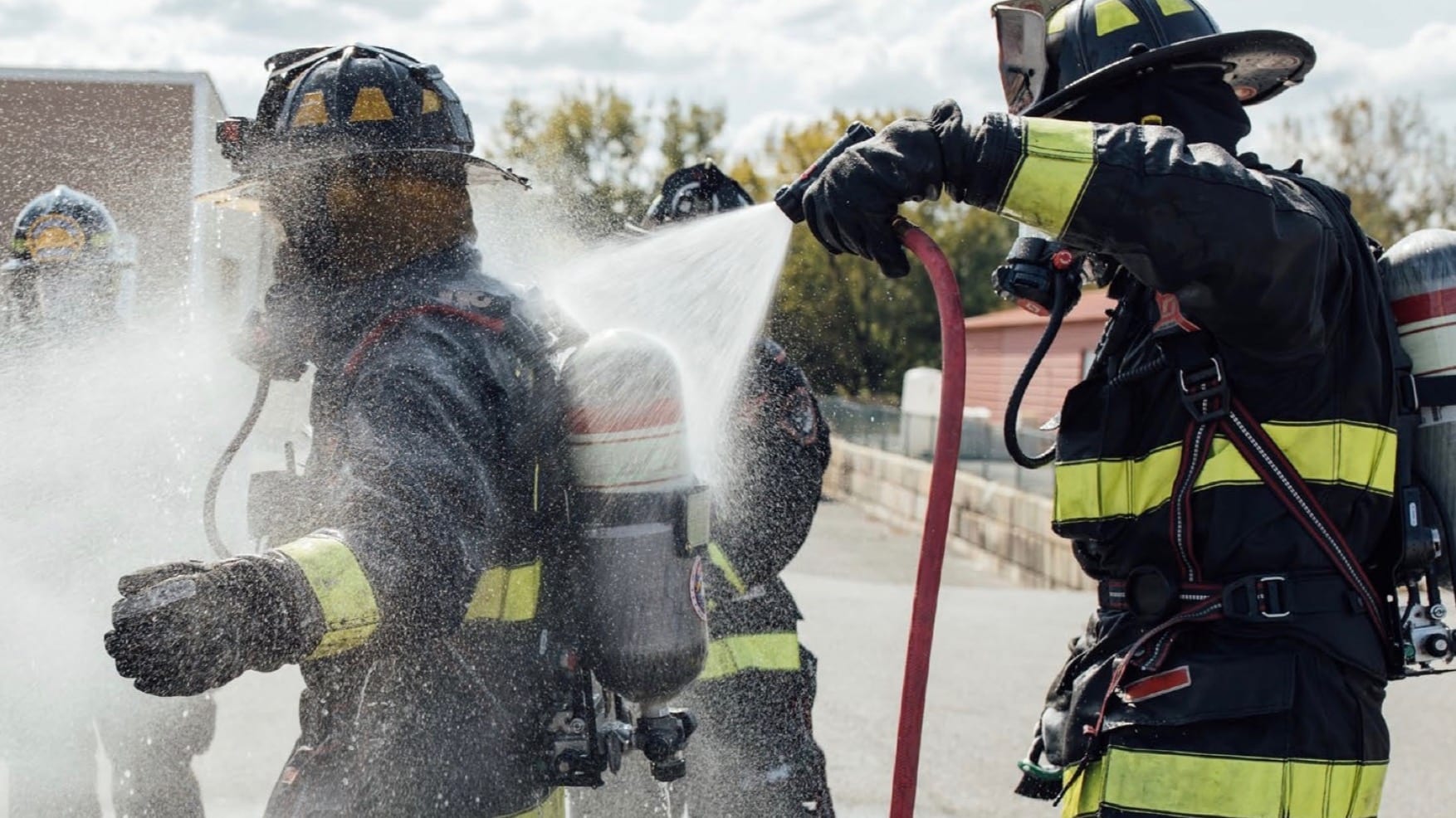
One of the simplest, most effective interventions is gross decontamination, often called preliminary exposure reduction (PER). After suppression operations end and before leaving the fireground, firefighters should rinse contaminants from their gear.
- Best practice: Use a low-pressure hose stream with detergent or specialized decon soap and scrub brushes. Water alone removes only surface debris; detergents help break down oily carcinogenic residues. This method is known to reduce up to 85% of the surface contaminants.
- Timing matters: PER should happen as soon as the firefighter is safely out of IDLH conditions. The longer contaminants remain on gear, the greater the opportunity for skin absorption and off gassing.
Proper Doffing of PPE
How gear is removed directly affects how much contamination transfers to the skin. Research shows that gloves and hoods harbor some of the highest concentrations of carcinogens.
- Hood removal: Avoid pulling a contaminated hood down over the face and neck. Instead, roll it forward so that the outside surface does not contact skin. The neck is highly absorptive and a common site for chemical exposure.
- Glove removal: Use a HAZMAT-style doffing method by peeling gloves off without touching the contaminated exterior. Immediately don a clean pair of medical gloves before handling other gear.
- Bagging gear: Place doffed gear in a sealed bag, ideally while still wearing nitrile gloves. This prevents contaminants from off gassing in rehab areas or passenger compartments. If possible, transport bagged gear in a separate compartment of the apparatus.
Cleaning the Skin
Even with careful doffing, skin will likely be contaminated. Quick cleaning reduces absorption and protects against incidental ingestion.
- On scene: Use skin-cleansing wipes designed to remove hydrocarbons and heavy metals. Studies have shown these wipes are effective at reducing contamination.
- At the station: Take a full shower as soon as possible. The “shower within the hour” guideline remains a cornerstone of cancer-reduction programs.
- Critical detail: Always wash hands thoroughly before eating, or drinking. Hand contamination is one of the fastest ways toxins enter the body.
Cleaning and Maintaining Gear
Once back at the station, contaminated gear should never be tossed in a corner or laundered with everyday clothing.
- Launder separately: Follow manufacturer specifications for washing turnout gear, using extractors designed for PPE. Avoid overloading machines and rinse thoroughly.
- Don’t forget accessories: Helmets, boots, radios, and SCBA harnesses all collect toxins. Wipe or wash these components with approved cleaners.
- Multiple sets: Departments should work toward providing two sets of structural PPE per firefighter, allowing one set to be cleaned and dried while the other remains in service.
Training and Practice: Making Decon Routine
Training and practice are essential. Just like stretching hose or throwing ladders, decontamination and doffing must be ingrained through repetition. Departments can integrate PER drills into regular training evolutions, reinforcing muscle memory and making the process second nature.
Supervisors should ensure that decon is not treated as optional or situational. Every fire, regardless of size, produces toxic byproducts. Even car fires, dumpster fires, and room-and-contents jobs generate contaminants dangerous enough to warrant full decon and PPE handling protocols.
Overcoming Barriers and Excuses
Despite growing awareness, some firefighters still resist these practices.
Common barriers include:
- Time pressure: Crews want to pack up quickly and return to service.
- Resource constraints: Smaller departments may lack spare gear, extractors, or dedicated decon equipment.
- Cultural resistance: Veterans may dismiss new practices as unnecessary.
Overcoming these barriers requires leadership commitment, peer accountability, and education. Chiefs and company officers must model the behavior they expect. Firefighters must be empowered to remind each other of the importance of safety protocols, just as they would for SCBA use or seatbelts.
By following decon and doffing protocols consistently, firefighters are not only protecting themselves but also contributing valuable information to help future generations of firefighters face lower cancer risks.
Cancer is one of the leading causes of firefighter line-of-duty deaths. While the fire service can’t eliminate exposure entirely, it can dramatically reduce risk by following the simple, evidence-based steps outlined in the NIOSH / FCSN flyer, that can be downloaded online.
These measures, combined with training and cultural change, transform the way firefighters think about contaminated PPE. Clean gear should be seen as the new badge of honor, a visible commitment to professionalism, health, and longevity in the fire service. By protecting ourselves from the hidden hazards of contaminated gear, we safeguard not just today’s crews but the next generation of firefighters who will answer the call.