

The view from the summit of Joseph Dunnigan’s hike.
The app lied.
That was all I could think about as I stumbled forward. Each step I took on the icy path felt like I was sinking into wet concrete.
My shirt and pants were heavy with sweat. My throat burned from my breathing in the cold winter air. The water I carried was broken ice that stung my teeth with every sip. And yet, I kept on.
My reason for being in nature on that February day was simply to get away. I needed a break from the firehouse and the city. So, I went to the Catskills. I went on a hike.
A 2016 analytic review defined hiking as “the act of walking for a substantive distance in the outdoors, often over natural terrain.”
As I started my hike, I wasn’t concerned with its definition. Other things were on my mind. I began to think about and work through family issues, work-life balance, even the mistakes I made on calls from long ago. And while those were just a few of the problems I was facing, I began to realize something as the thoughts rolled in: I was stressed.
I wasn’t alone in that. A 2024 review concerning health issues in the fire service found firefighters face compounding stressors that affect them physically and mentally. Some of these health issues include cardiovascular disease, sudden cardiac events, post-traumatic stress disorder (PTSD), maladaptive behavior, such as substance abuse and dependence, and even suicidal ideation.
Physical Health
Regarding the physical issues related to being in the fire service, that 2024 review, by Gonzalez et al., discussed how habitual exercise is a means for addressing cardiovascular and pulmonary risk factors.
According to Gonzalez et al. and other researchers, it is recommended adults complete about “150 minutes per week of moderate-to-vigorous physical activity.” Another review from 2016 discussed how not achieving this number equates to having a sedentary lifestyle, which contributes to many of the health issues discussed above.
As a remedy, the 2016 review stated that hiking can help with weight loss. For my hike that I described earlier, it took me about two and a half hours to complete, or about 150 minutes. Equivalent to about a week’s worth of cardio.
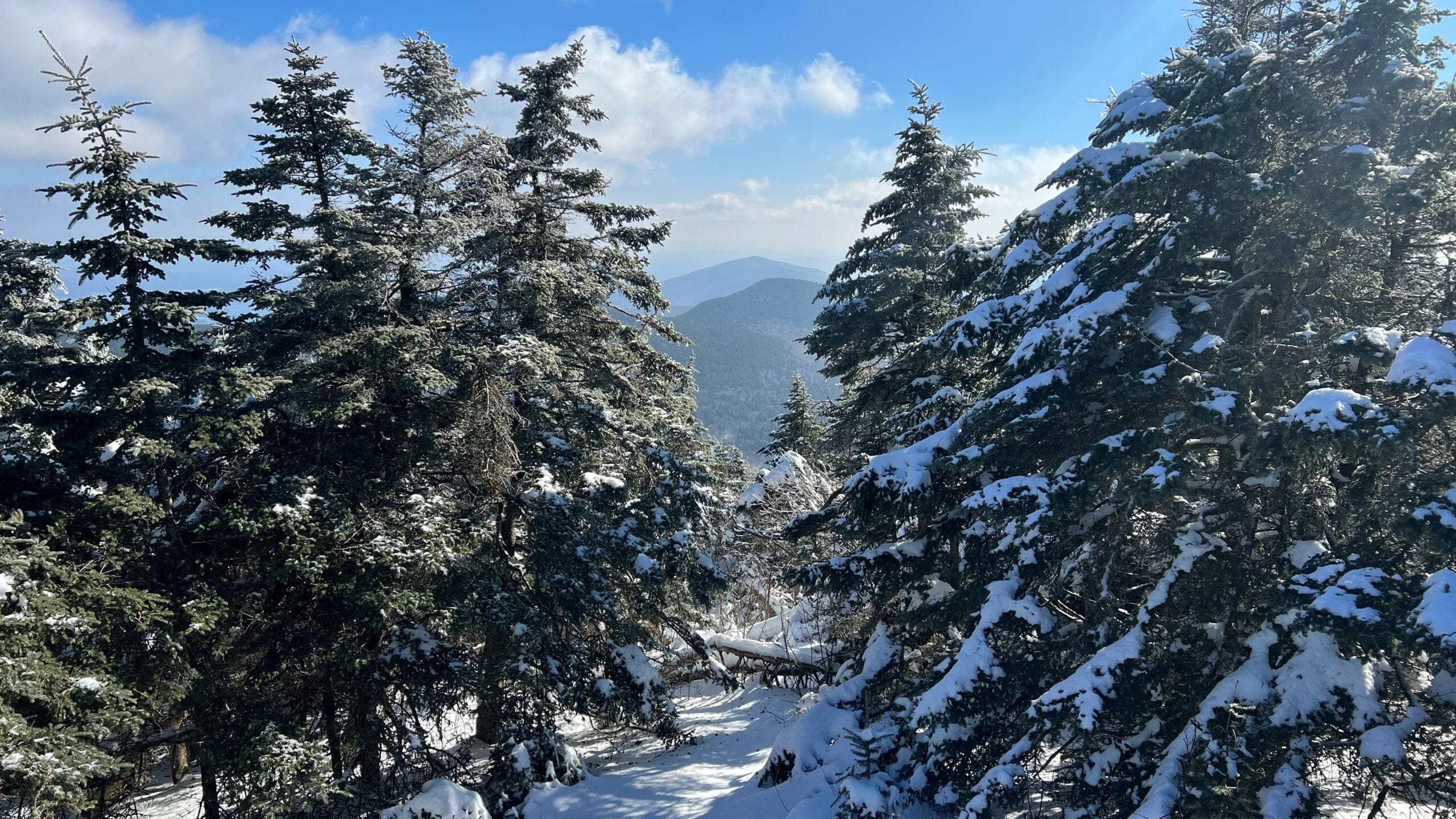
The evergreen forest on Joseph’s hiking route.
Mental Health
With respect to mental health issues faced by those in the fire service, Gonzalez et al. added that mindfulness activities have been recommended as a means of addressing the compounding stress factors.
Research has shown that long-distance walking, like hiking, can reduce mental stress as the time away helps the hiker sort out life’s problems by reducing common distractions experienced in more populated areas. For my hike, I unintentionally slipped into this phase of sorting out “life’s problems,” showing that sometimes it’s actually a positive thing to “go take a hike.”
Additionally, a review of exercise and its role for addressing PTSD in veterans stated that exercise can reduce negative emotions, substance abuse, and social withdrawal. The reviewers of that subject added that exercise can improve perceptions of well-being. To exemplify this, the researchers discussed how a study of veterans who summitted Mount Kilimanjaro found the challenge to have positively impacted the veterans’ lives by reducing their PTSD by giving them a sense of accomplishment and inner strength.
Furthermore, the reviewers stated that exercise can combat the physical effects of PTSD, for example, by reversing abnormalities the disorder causes in brain structure, and by boosting the immune system.
Substance Abuse
In the fire service, certain substances, like tobacco and alcohol, are sometimes used to create a bond between us during social outings, such as cigar nights or after a round of golf.
Still, substances can also become harmful when they are used to relieve stress. A study of substance use by firefighters found many of them reported a higher rate of alcohol use and some chose not to report their smoking habits.
Another review concerning the prevention and treatment of substance use and being in nature stated the overall use of drugs, alcohol, and tobacco has increased.
The reviewers added that these substances are also linked to mental health issues, and claimed that being in nature can help prevent and treat addiction, and promote recovery. They state that some nature-based addiction and substance abuse therapies have utilized hiking as a treatment.
The elevation sign.
On Top
While I remained in my head, a sign told me I had passed the 3,500-foot elevation mark. Finally, the terrain turned into an evergreen winter forest. Trees swayed in the light breeze. The blue sky seemed to be closer. And in that environment, I began to drop those things I had been thinking about. I began to feel lighter.
Suddenly, I saw the clearing. A rock formation stuck out, covered in white powder. I climbed to the top and looked around. I could see the surrounding valley. Snow covered millions of trees in a thick blanket. I could hear the sound of nothing.
I made it.
Joseph Dunnigan is an FDNY firefighter and an environmental science graduate student studying post-fire ecology. His writing has appeared in FDNY’s WNYF Magazine*,* Hudson Valley One*,* The Rockland County Times and other regional publications.