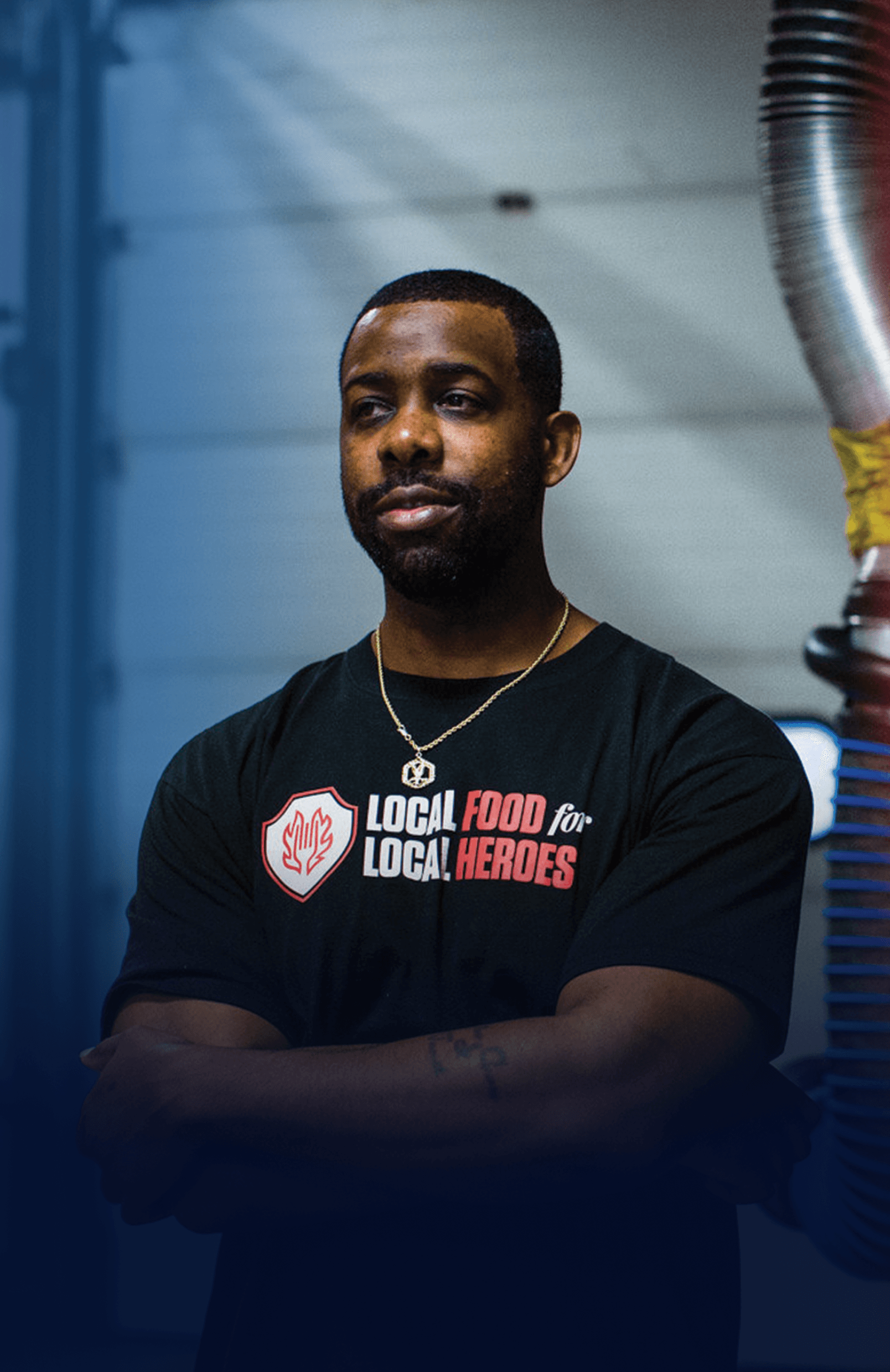
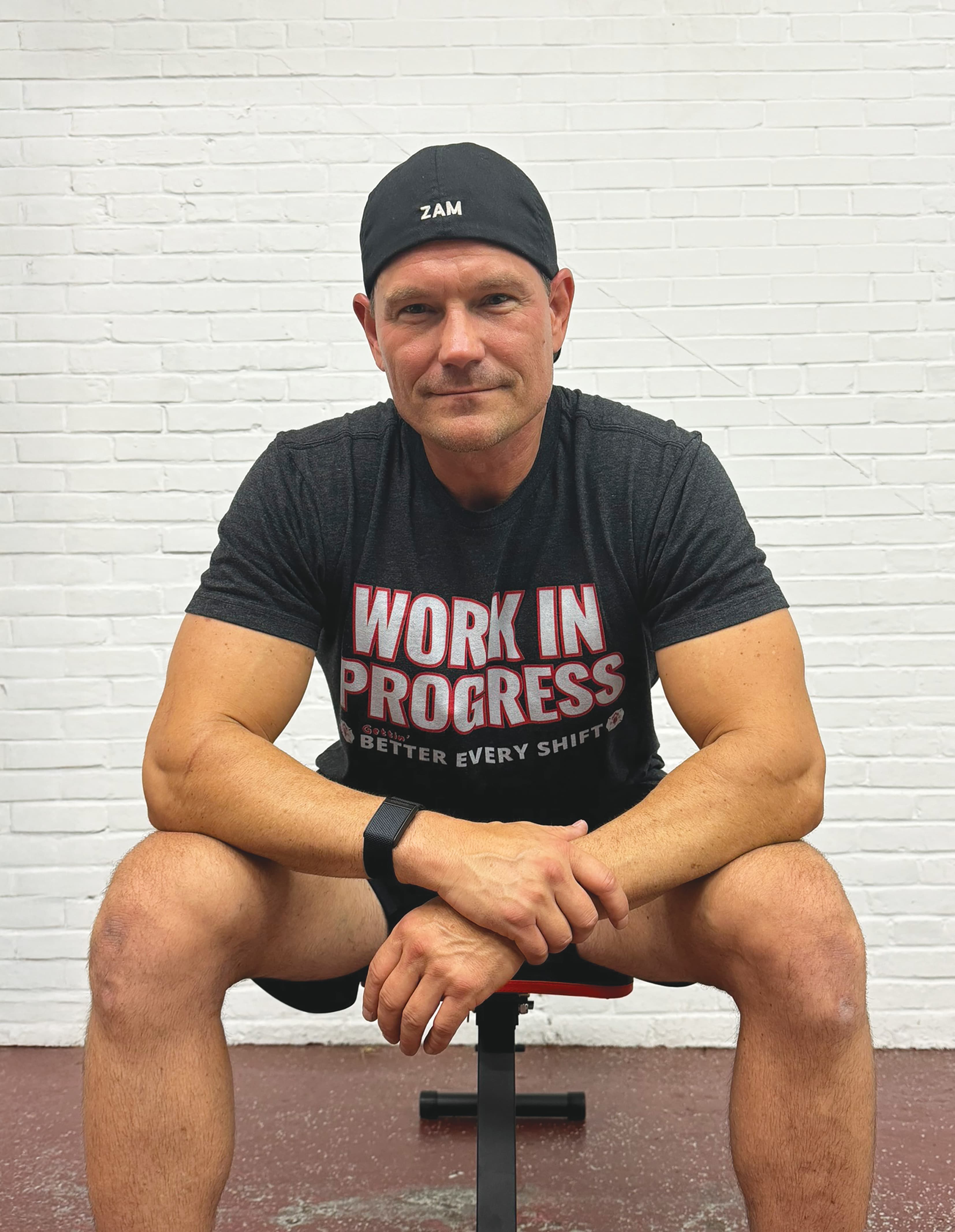
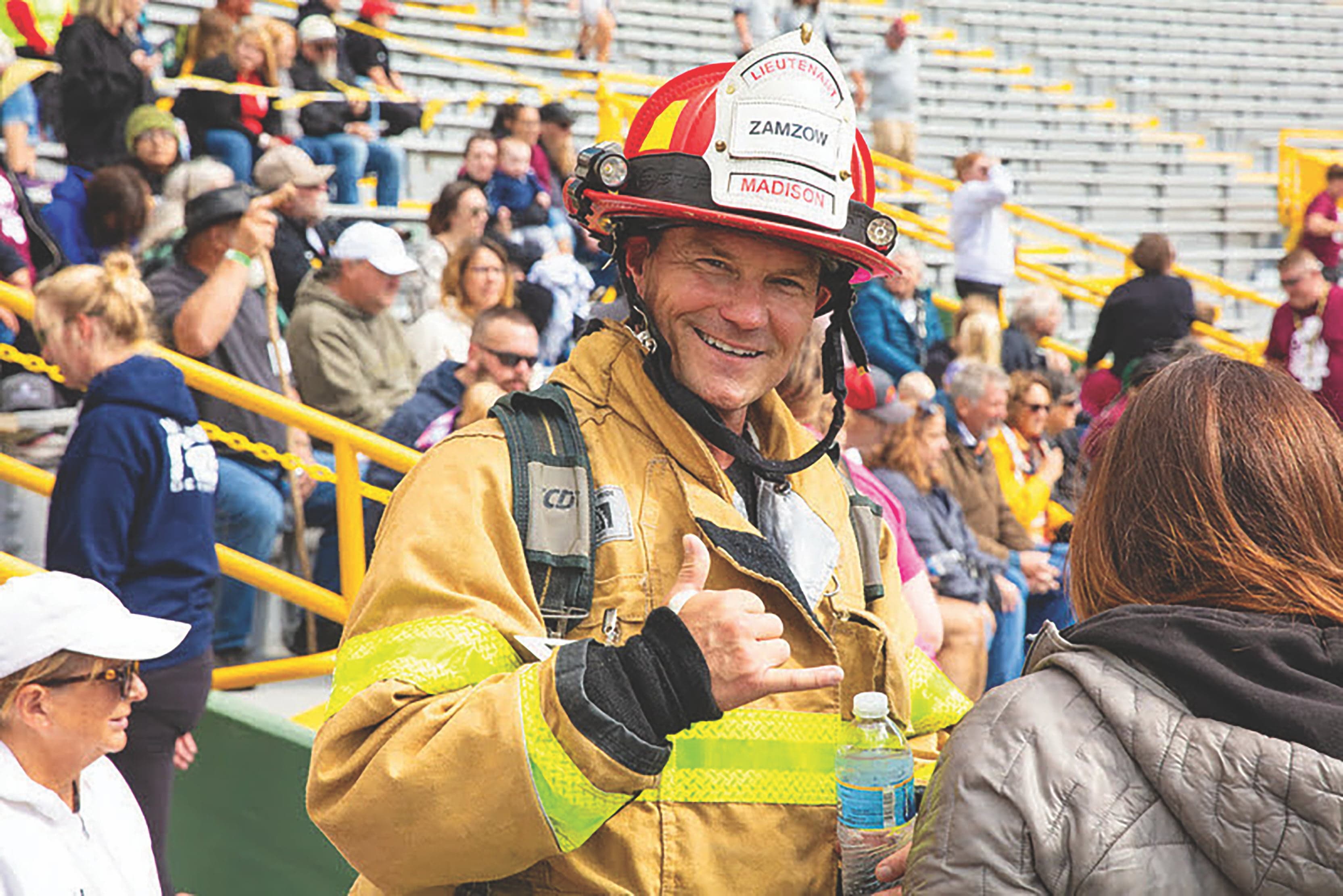
If Aaron Zamzow, owner of Fire Rescue Fitness and a career firefighter for 15 years isn’t the first person who comes to mind when you think about firefighter fitness – we’d be surprised. With his hand in a vast number of fitness-focused pots, Zamzow (or Zam as he prefers to be called, and yes, we almost referred to him as Zamzow in this story just to mess with him) has really done it all.
Zam will say that he is a firefighter/EMT first and foremost, and then a personal trainer. Even so, he is probably the most entertaining and relatable fitness expert in the market (though we give a nod to the professionals who previously and successfully laid the groundwork and foundation for firefighters).
His sense of humor is self-deprecating. His energy is borderless and his banter is rapid fire. He's been known to bound onto a stage in a superhero costume and confess his love of ice cream and tequila (he got us wondering how we’ve missed this dynamic combo).
Zam has always been the “give me the mic and point the camera here" guy.
Fitness has been talked to death in the fire service. And for a good reason, because if we don’t focus on it, death or disability could become our reality. So, how does Zam make his contributions and fitness advice so powerful?
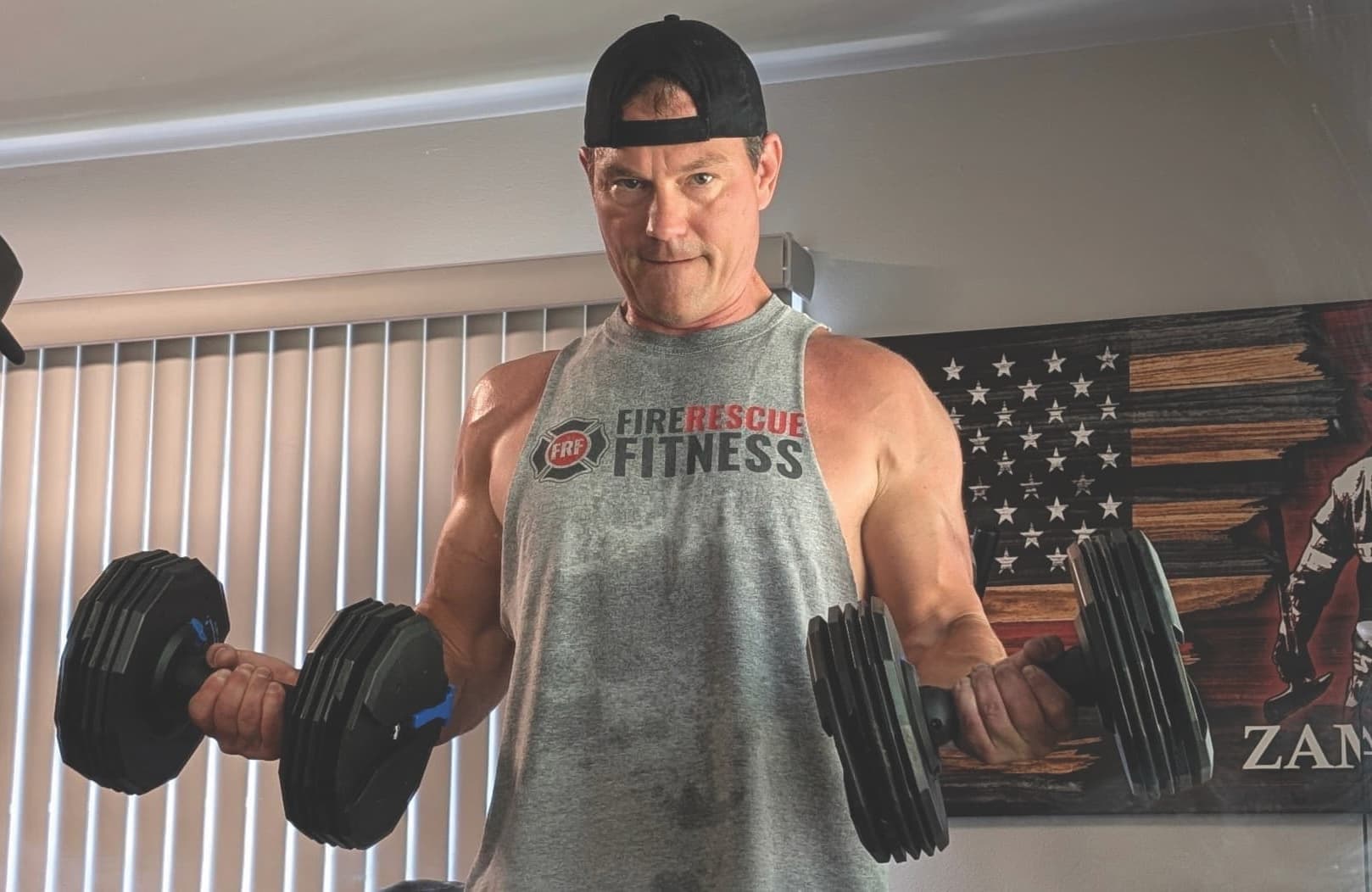
One way is through FRF, which offers various online programs and packages that help firefighters attain their fitness goals in combination with professional coaching and support. After all, he used to work with pro athletes.
But the cherry on the top is Zam’s personality – it is, to say the least, colorful. Couple that with his genuine and compassionate nature and you have a recipe for a passionate and contagious love of promoting health and wellness to firefighters.
If you’ve made it to one of his presentations, you’ll have heard a story Zam likes to tell of his dad’s less-than-flattering advice. When he was growing up, Zam’s dad (with whom he remains close) let him down gently by telling just how hard he might need to work in life to be successful.
“Son, you don't have a lot of athletic talent, and with a room-temperature IQ, you’ll need to figure out life through hard work and great self-talk to evaluate what’s going on and what you’ll need.” Sage advice, Zam says.
While we certainly can’t evaluate the temperature of Zam’s IQ, we do agree that getting gritty in life can often have favorable outcomes – especially in an emergency services career.
But self-talk and constant re-evaluation? That’s the foundation of almost everything Zam does for the fire service.
With an array of health and wellness programs and challenges, Zam illustrates just how important it is to re-evaluate where you are in your health and wellness journey, keeping a sharp eye on whether or not your expectations match your reality.
“Over the years, the old man has come out in me and said, ‘Hey dude, you can’t just go do pushups and think that everything in your life is fine because you're working out.’ I work out and feel great, but after some time, there is so much that comes out against us.”
As he puts it, “When you're young, you don’t think you need sleep and can eat that Whopper, but the older you get, the more you realize, man, I didn’t have it right at all.
When I present, I used to say (hey, I apologize) all you need to do is start moving. But there is so much more to it than that.”
“Just get up and move works for only a percentage of the population. When it comes to firefighting, movement encompasses so much more. As first responders, we say we are super self-aware, but that statement is multifaceted. We have oversimplified what awareness means, such as why we overeat or exercise. Why we make the decisions we make. Alongside that thinking, we have become expert procrastinators with an answer and a reason (excuse) for everything we do.
When I started to make good progress in my health and wellness journey, I lost my ego and started paying attention to what I was doing and where I was.
— Aaron Zamzow
“First responder procrastination: it's part of our denial process. When I started to make good progress in my health and wellness journey, I lost my ego and started paying attention to what I was doing and where I was. We use our jobs as an excuse. We work overtime or help someone else. We constantly go into our giving mindset and think it gives us a free pass that isn’t really free.
"I don't want to look in the mirror because I know what I'll see. Yet I’m still willing to help everyone else out before myself. It’s broken thinking,” Zam says.
What is a surefire way to reset your mindset and ground yourself to your potential?
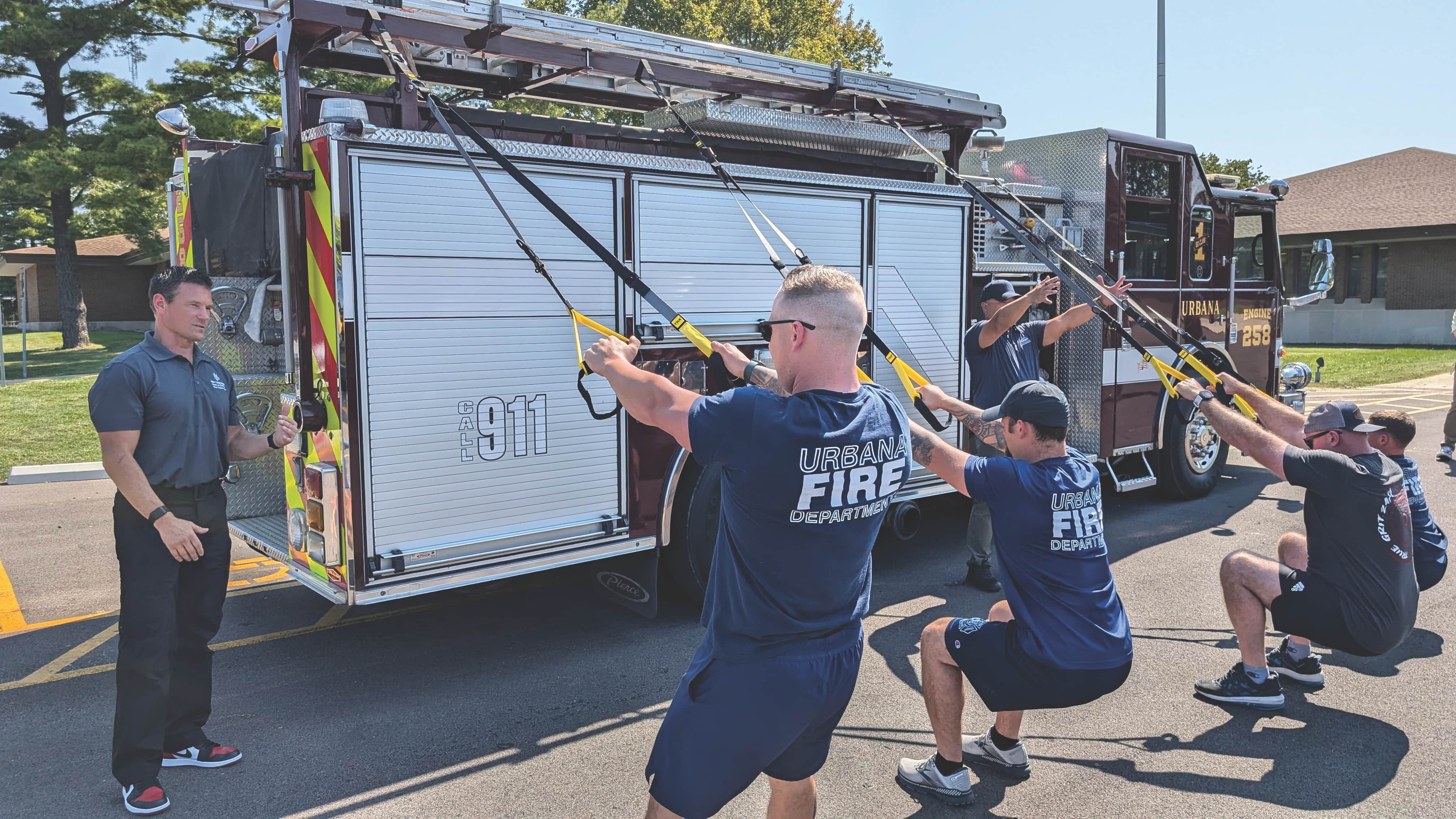
“If you were once an athlete, you return to what you knew as an athlete,” Zam explains. “But that might not work for you anymore. That doesn’t mean you’re no longer an athlete. It means you’re probably not the same and what worked for you then might not work for you now.”
As a professional trainer with over 30 years with experience training pro athletes, Zam has heard all the excuses. Money is a great motivator, but it wasn’t always enough. Athletes still lacked motivation at times, even in the presence of big money.
So if pro athletes can’t always stay motivated, how can first responders when they’re also parents, caretakers, providers and multi-professionals? How can we keep our focus on what’s important?
Zam swears by the practice of creating attainable goals and habits. How does that work? Well, lose the thinking that you need to do one thing over and over for at least 21 days and instead open yourself to the idea that habit forming is a long-term commitment that requires self-evaluation at every turn. There are no quick fixes when it comes to your health and wellness. This is why Zam created “Resilient 50 - Five for Fifty” - a free resource for those who want to steer their boat in an attainable direction.
“It's not about losing weight, getting a better bench press, or deciding which protein drink you should be buying. Resilient 50 is simple.
'Instead of looking at your end goal, you break it down into its simplest form.
"What must I do today to help me achieve my goal 50 days from now? Take five attainable habits and implement them every day.
“They don’t need to be lofty or extreme. But by practicing these goals each day, you’ll eventually be led towards your bigger goal. Not every goal is fitness-driven. Some folks wish to be better partners and listeners; some want to drink more water or get better sleep. Others might have bigger goals with their health, which means this process will help.
"Small goals lead to bigger goals.
"We attend conferences all the time where speakers hand out fantastic advice for first responders, but if you don't implement it, it falls flat. So choose five things you need to do, join the challenge and start the journey.”
We asked Zam what he believed the biggest challenges were when it came to the beginning, middle and end of the firefighting career, and to no one's surprise, he came up with some great words of wisdom.
“When we start our careers, we don’t emphasize the value of a healthy lifestyle and how to attain it as a new firefighter. It's a macro answer but firefighters need to build a support system from day one, including family and friends. And they should save time for themselves and their families. Time to build relationships. It’s called ‘ten percenting’ – we have a lot of relationships, but if you have a core group (representing 10%) who tell you what you don't want to hear or be called out for because they know what you stand for, then you have to invest in that 10%. They’re your significant others, family, and really good friends and they’ll keep you true to yourself.”
Midway career problems?
“We let egos get in the way. That's the time when you start to feel the job a little bit more in your mind and your body. But you say you feel the same way and believe you can do the same things. You lose track of who you truly are.
“When you're at the five to 10 year mark, you might be 20 or 30 pounds heavier than when you started. But that’s not muscle. Someone once said, ‘You know what, Zam, you’re right, but in my mind, I still think I'm that athlete that I was when I came into the fire service.’ Everyone can relate to that. Drop the ego, look in the mirror, and evaluate your habits and where they're getting you.
“If you are in a position where you’re struggling, look at the things that you didn't do. Did you establish a lifestyle? Did you drop your ego and look at your life with an honest lens? If your fitness is ok, what do you need to do to stay there to be your best?”
And the end?
“They need to realize it's not the end. A lot of first responders will say that they have six months left and they're trying to make it. That is a terrible answer,” Zam says. “You want to feel good when you retire, and watching firefighters retire and deteriorate kills me. They sacrificed so much for this job and want to reap the benefits of that blood, sweat, and tears. The biggest thing to understand is that there isn’t an end. You’re leaving a legacy and setting yourself up for a bigger end. You must continually take care of yourself – and if you haven’t so far, start now. It can have a lasting impact on yourself and those around you watching. That’s the essence of leaving something better than when you came in.”
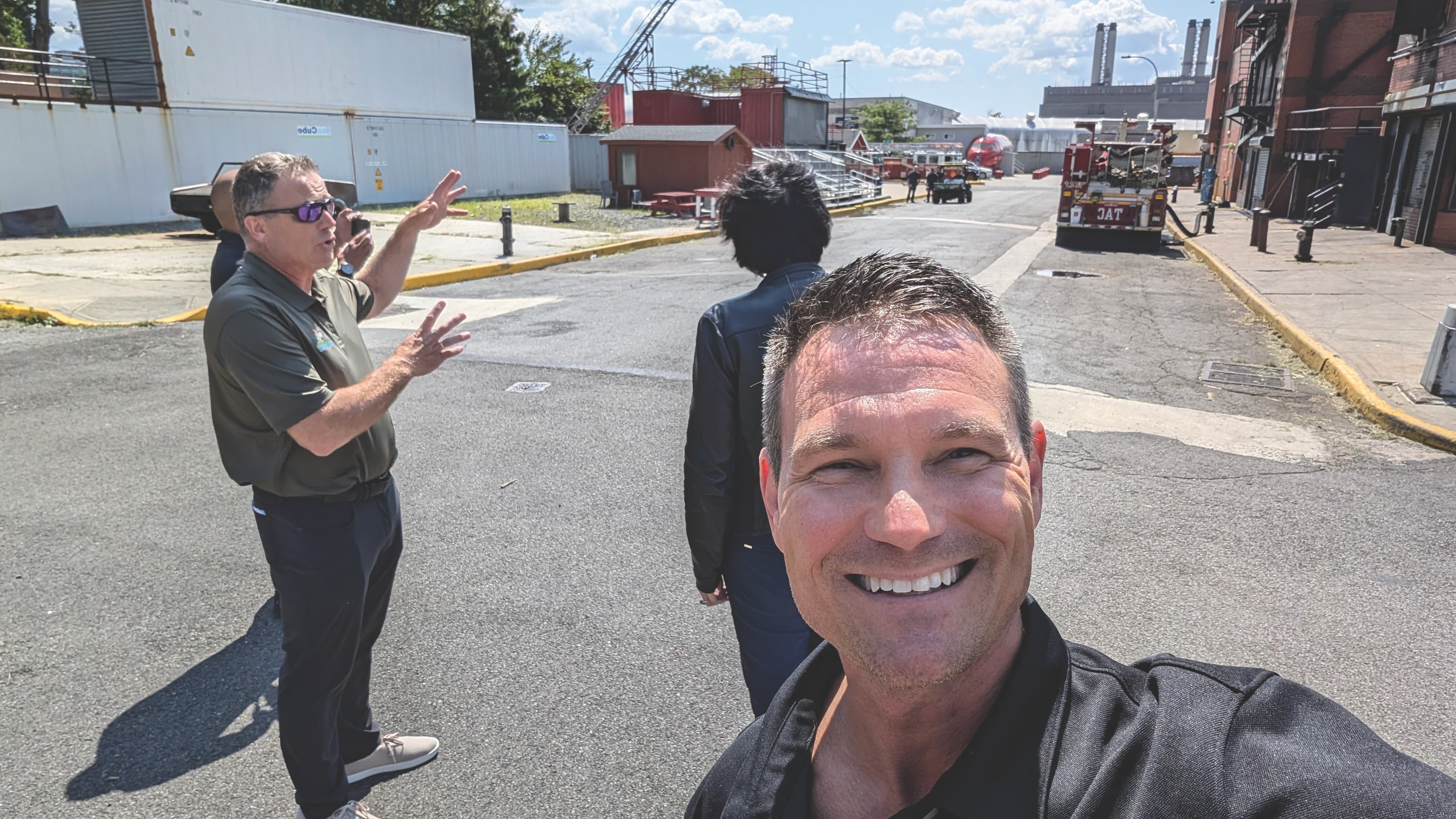
So how does one reconnect and restart a journey to health, wellness, and ultimately fulfillment and happiness? Zam would say it begins and ends with gratitude, something he practices daily and firmly believes in.
“By practicing gratitude, working out, or checking a box, you can get a dopamine rush that is in contrast to the dopamine rushes that we get from sugar, seeing likes on a social post or even energy drinks. Gratitude doesn’t need likes, caffeine or sugar to fuel its purpose.
"We need to stay focused on EMS – which is what I call Exercise, Minding your nutrition, and Sleep and recovery.”
The acronym may be a stretch, but you get it.
“Once you couple EMS with gratitude practice, you start to feel the changes,” he says. “If you break it down into simpler terms, you get a dopamine rush from taking care of yourself. You’ll begin to ask yourself questions like: Why am I eating this? Why do I need this? And you’ll have more motivation because you will have more energy. Food is fuel, but we’ve lost track of its purpose.”
Zam’s advice: “It’s very easy to get negative in our profession because there are opportunities everywhere. Whether we point to leadership, co-workers, or patients, once you start to assess and lose the ego and practice one gratitude a day, it can put you into a different mindset.”
Motivation can be tough. Zam can relate to that wholeheartedly as an exhausted and overworked first responder, podcast host and public speaker. But you won’t hear him complaining.
“The best day to start is today. If you’re waiting for a better time, it will never happen. If you just wait until Billy finishes his hockey season, or for when you get through this work set, or maybe after the holidays, it simply won’t happen. Don't wait. Because when we are really truly stressed and life gets demanding, we need to be our best.
“I often see people put off things that will make them their best. We want first responders to thrive in the eye of stress.
"So, instead of thinking about surviving and just getting through, think about thriving instead.
"If you took the Resilient 50 challenge and didn't make all five for 50, are you still better off than before? Of course you are.”
Zam jokingly refers to his people and fellow first responders as misfits and encourages everyone to be proud of that status. He pictures the fire service and its band of misfits as a group of amazing individuals capable of improving their lives daily – something we can’t disagree with. Imagine an entire profession that – despite the trials and tribulations of life and the job – comes together for better health, wellness and happiness.
Now, that’s something anyone can get behind.
“When things are shitty, and you're tired, just measure your perspective and practice gratitude, and your outlook will change,” says Zam. “Seek counseling, whether it's preventative or in response to trauma. Do your annual medical. Work out daily (notice how I didn’t say ‘just move’). Aim for better sleep – one of my goals in the Resilient 50.
“And lastly, focus on all aspects of recovery – no matter the journey.”