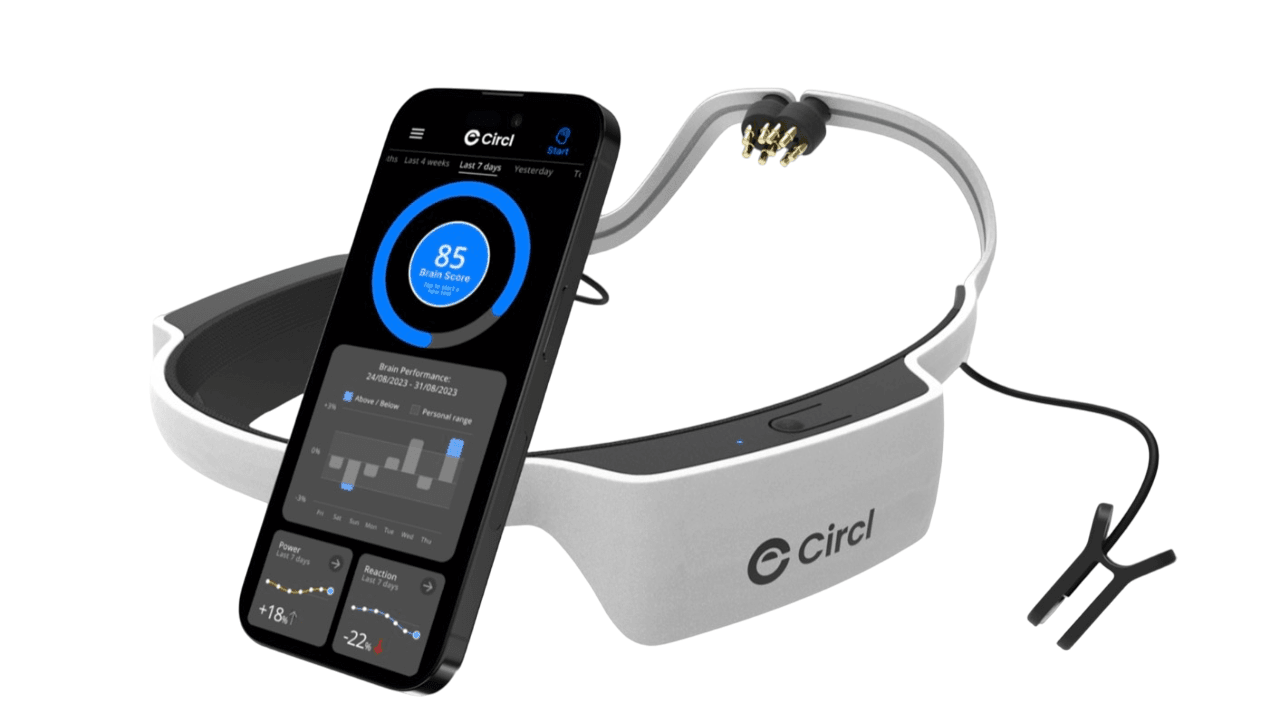
First responders endure relentless stress — high-stakes calls, long shifts, repeated trauma — and mental wellness traditionally isn’t measured until after a crisis. Circl Brain changes that by delivering objective, real-time brain health insights. A simple weekly EEG-based test reveals your current state, clarifies what healing strategies are working, and tracks cognitive trends so you can build resilience and prevent future mental health deficits.
A Four-Minute Weekly Check-In
Once a week, you don a lightweight headband and complete a four-minute visual challenge on a smartphone or tablet. The test presents circles at varying frequencies to probe your brain’s response to:
- Distractors — inactive objects (like desks, walls and tables) that measure your brain’s baseline perception of the environment
- Targets — active or changing objects that assess your brain’s ability to process new information swiftly
In less than 10 minutes (including setup and review), Circl computes five core metrics and displays them as a clear “brain report” in the app:
- Brain Power – how vigorously you recruit neurons to process stimuli
- Brain Speed – your brain’s reaction time to new inputs
- Alertness – your level of vigilance, avoiding both sluggishness and overdrive
- Focus – your capacity to concentrate and filter distractions
- Memory – your ability to encode and recall visual details
By translating complex EEG data into simple scores and plain-language guidance, Circl makes brain health visible and manageable — no specialist training required.
Tracking Trends: 30 Days, 6 Months, 3 Years
While one test shows today’s performance, patterns over time drive meaningful insight:
- 30-Day View: Flags short-term dips in Brain Speed or Alertness — often caused by poor sleep, shift overload, or acute stress — so adjustments can be made before fatigue deepens
- 6-Month View: Reveals sustained stress, recovery trajectories after head injuries, or creeping burnout. This view supports timely interventions like counseling, schedule modifications, or peer support
- 3-Year View: Detects long-term trends — early cognitive decline or strengthened resilience — guiding career-long wellness strategies years before clinical symptoms would appear
Side-by-side comparisons give first responders a “check-engine light” for the mind — supporting early action, targeted healing, and long-term cognitive resilience.
Real-World Deployment
Leading police agencies in British Columbia and Alberta have embedded Circl into their wellness programs. Each week, officers complete a quick brain scan to understand their current state, monitor progress, and receive tailored guidance on how to improve.
To encourage engagement, many departments run monthly challenges:
- Lifestyle Focus: Each month centers on a wellness habit — sleep consistency, hydration, mindfulness, etc
- Impact Measurement: Officers track the effect of these changes on their brain scores and share what helped most
This data-driven, gamified approach makes mental wellness a regular topic of conversation, reduces stigma, and fosters peer-to-peer learning. One wellness co-ordinator called Circl a “game-changer” — not to replace counseling, but to add objective data that enables early, personalized support.
Team Cognition in Healthcare
Circl is also being piloted with surgical teams to explore how team brain function correlates with patient outcomes. Key questions include:
- Do teams with higher Alertness and Focus scores achieve smoother procedures and fewer complications?
- How do long shifts or back-to-back surgeries affect team cognition and patient-reported recovery?
These insights provide healthcare leaders with anonymous, actionable data to optimize staff well-being and improve patient safety.
Healthy Aging in Senior Living
Independent living facilities use Circl to help residents maintain cognitive health as they age. Weekly scans provide:
- Early Detection: Spotting declines that go beyond normal aging and allowing for timely care or intervention
- Program Optimization: Identifying which activities — social interaction, brain games, exercise — best support resilience for each resident
This evidence-based approach supports healthy aging and helps seniors remain mentally sharp and engaged. Moreover, Circl’s work with first responders contributes to long-term cognitive protection by addressing poor mental resilience early in life — when interventions yield the greatest benefit.
Informing Policy with Objective Data
Aggregated, anonymized Circl data empowers agencies to evaluate and improve wellness policy through measurable outcomes:
- Shift Models: Compare cognitive performance under different scheduling patterns to find those that preserve brain function
- Wellness Initiatives: Assess the true impact of mindfulness programs, “brain recovery days,” and fitness efforts on mental wellness scores over time
This operational science approach helps turn anecdotal observations into evidence-backed decisions that enhance organizational well-being and readiness.
A Complement, Not a Replacement
Circl Brain is not a diagnostic tool or substitute for therapy, counseling, or peer support. It adds a critical, objective layer to traditional care:
- Validates Experience: Concrete metrics confirm feelings of fatigue, fog, or stress
- Personalizes Care: Recommendations are based on your own brain’s responses
- Reduces Stigma: Normalizes brain check-ins — like tracking workouts or heart rate
All data is private and secure, with user-controlled access. Integrated into a broader wellness strategy, Circl helps keep first responders and caregivers mentally sharp, resilient, and safe.
Data-Driven Care
As Dr. Nolan Beise will explore in his forthcoming CRACKYL feature, “The Future of Mental Wellness,” brainwave analytics like Circl are ushering in a new era of proactive, data-driven care. For first responders, healthcare teams, and senior-care providers alike, these tools offer a clear, objective path to stronger minds and safer communities — today and for years to come.