

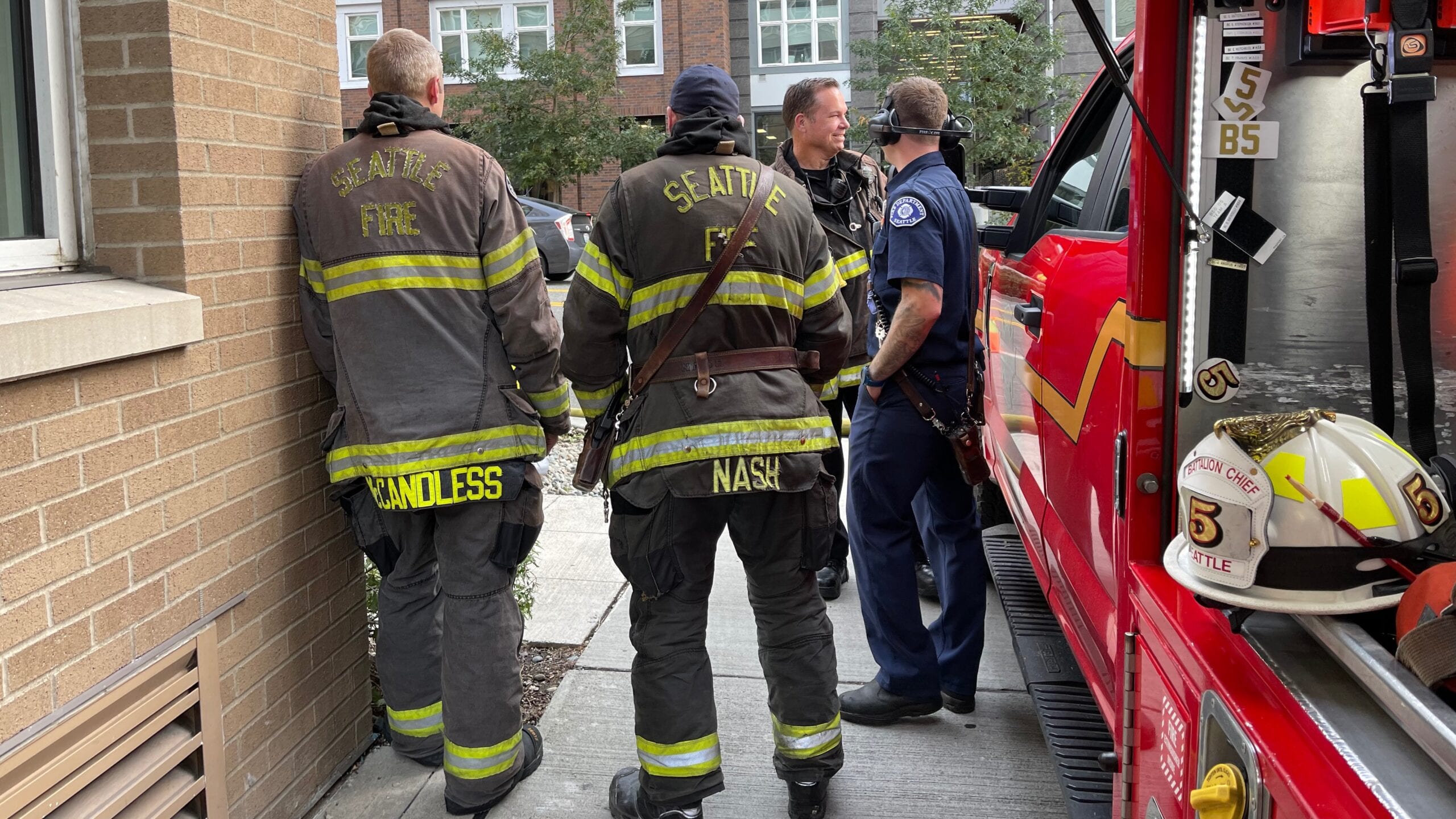
Photo by Steve Baer | FireDog Photos
Have you ever met someone, and five minutes in, you’re already deep into something real?
Not just the usual talk. Not the “how long were you on?” or “What did you drive?” stuff. I’m talking about the kind of conversation that makes you sit up straighter. That hits a little deeper. Something human.
That’s been happening more lately – not because I’m trying to force it, but because I’ve stopped waiting around for the perfect moment to ask something meaningful. I’ve started saying what’s actually on my mind.
We were on a family trip not long ago, and I ended up talking to a retired Buffalo cop. Thirty-five years on the job. Once we got past the basics, I asked what I really wanted to know: Are you making enough to live on? Do you miss the work? Is retirement what you thought it’d be?
Asking in Order to Understand
Some people might hear those questions and think I was prying. But I think it would’ve been a bigger miss not to ask. Because I wasn’t trying to be clever. I wasn’t trying to bond. I was trying to understand something about what’s coming. About where this all leads. About what I might not see yet.
And maybe, in some subconscious way, I was searching for a little assurance, too. Because let’s be honest – assurance and stability sit high on the human needs list. Even for those of us who like to think we’ve got it figured out. So when someone’s already lived through the system, outlasted the pace, and come out the other side, I want to know how they’re doing. I want to know what surprised them. What held up. What didn’t.
Because even if our jobs are different, our service is the same.
The older I get, the more I realize I’m not looking for more conversations, I’m looking for better ones. Especially around the firehouse table. We’ve mastered the art of talking in circles. Of venting without solving. Of creating new problems just to avoid dealing with the ones we’ve been dragging around for years.
It’s not that we’re not talking, it’s that we’re not aiming those conversations in the right direction.
But what if we flipped that? If we started asking questions that actually made us pause – made us reflect, or share, or learn something – maybe we’d stop feeling so stuck. Maybe we’d stop spinning.
And here’s the thing: it’s not just a feeling. There’s science to back it up.
Your Brain Likes Meaningful Conversations
When we have deeper, more meaningful conversations – especially the kind that feel honest and safe – the brain responds. Dopamine increases. Cortisol levels drop. You get a rush of oxytocin, the chemical tied to trust and connection. Your brain literally starts to shift out of threat mode and into clarity. Conversations like that don’t leave you heavier. They leave you clearer.
Meanwhile, the wrong conversations – the ones we have out of habit, the ones that stir up frustration without any direction – they don’t just waste time. They cloud judgment. They fill your head with noise and leave you more distracted than before. I’ve walked away from plenty of those feeling worse, not better.
So no, I don’t think asking someone if they’re OK with how their life turned out is too much. I think it’s overdue. And if we started asking better questions – on shifts, on sidewalks, around the kitchen table – maybe we’d stop circling the same old noise. Maybe we’d finally get to some better answers, too.
Kory Pearn is a career firefighter and captain; and the founder, publisher, and editor-in-chief of CRACKYL Magazine.