
In 2014, I shared a post with The Secret List – Firefighter Calls, run by Billy Goldfeder, marking the 30th anniversary of the first documented lightweight wood truss line-of-duty death (LODD). This week, Feb. 27 marks 42 years since that tragedy, an anniversary that underscores how long we have known the risks, and how critical it remains that we never forget them.
According to Vincent Dunn in Collapse of Burning Buildings, the first known firefighter killed in a lightweight wood truss collapse was James Pressnall of the Irving (Texas) Fire Department. On Feb. 27, 1984, Pressnall, 31, was working at a two-story apartment house fire when a lightweight wooden truss roof collapsed. He suffered second and third-degree burns over more than 70 percent of his body and died from those burns and smoke inhalation.
Tragically, his death was not an isolated event.
A Pattern of Preventable Tragedies
On Dec. 26, 1992, two firefighters were killed while operating at an arson fire in Pilgrim’s Hope Baptist Church in Memphis, Tenn. The lightweight wood truss roof collapsed only seven minutes after arrival, trapping the firefighters inside. That short operational window, a short time between arrival and catastrophic failure, has become a recurring theme in truss-related LODDs.
Over the years, too many names have been added to this list of fallen firefighters: Todd Aldridge and Mark Benge in Florida; John “Strawn” Nutter in Louisville, Ky.; John Hudgins and Frank Young in Chesapeake; Edward Ramos in Connecticut; Lewis Mayo and Kimberly Smith in Houston; and many more across the United States and Canada.
Today, the risk is arguably even greater (training and awareness have managed this risk). Lightweight truss construction is far more prevalent than it was decades ago. According to industry data from Alpine and GBC Truss, hundreds of millions of wood trusses have been installed across North America. More than 75 percent of all homes built in the United States and Canada now utilize wood truss construction, up from approximately 60 percent just a decade ago.
The Growing Presence of Lightweight Construction
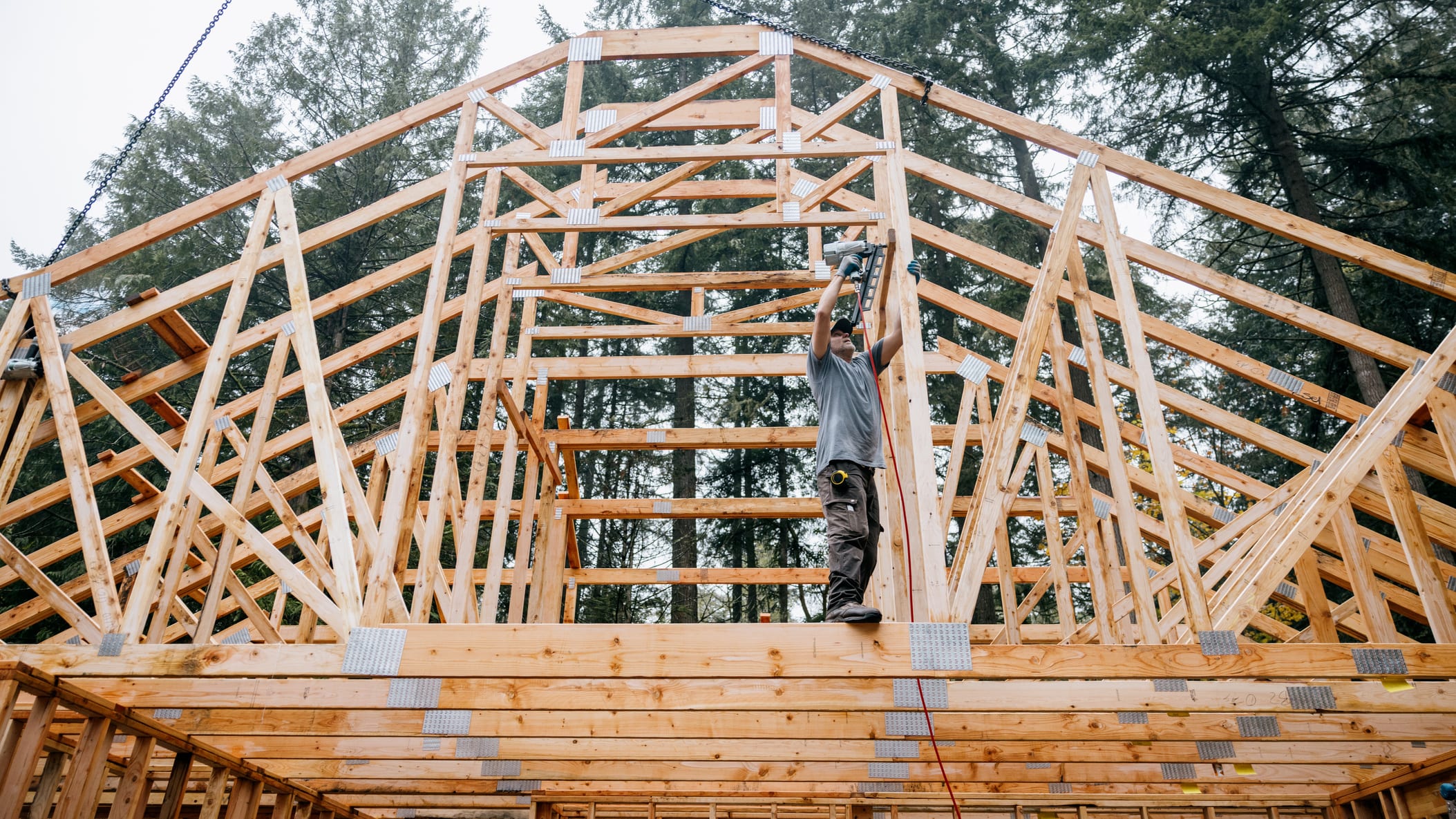
NIOSH defines lightweight construction as structural members joined in a rigid framework, most often triangular in shape. Trusses are designed to efficiently separate compressive and tensile forces, allowing builders to use minimal material while achieving the required strength. This efficiency makes them economical, but under fire conditions, it can be deadly.
Firefighters are taught that lightweight wood trusses can fail in as little as five to 10 minutes when exposed to fire. That timeframe often overlaps exactly with initial arrival, size-up, and early interior operations. Compounding the danger, these systems frequently fail without obvious warning signs.
Modern engineering allows designers to calculate precise failure points under normal conditions, eliminating “overbuilding.” What is often not adequately accounted for is the effect of fire. As one investigation report noted, significant factors in truss collapses include the extremely short duration of structural integrity and the lack of warning indicators prior to failure.
Recognition, Respect, and Responsibility
Trusses vary in size, shape, material, and design — wood, steel, and hybrid systems — and all behave differently under fire, but all are subject to failure. It is our responsibility to recognize them, respect them, and act accordingly.
Fortunately, training on truss systems is now commonplace, and most firefighters understand the risks they present. What continues to make the difference, however, is ongoing education and constant reinforcement, reminders that help firefighters manage risk and make sound decisions on the fireground.