A firefighter reclaims her health, purpose, and identity after facing the impact of trauma and alcohol
There was a version of me that sat alone on the porch every night, a Twisted Tea in hand, convinced I had everything under control. I didn’t. At my heaviest, I weighed 344 pounds. I smoked a pack of cigarettes a day. And I had stopped wanting to come home at night.
My name is Shannon Landon. I am 38 years old, and I have been a first responder for most of my life. At just 16 years old, I joined the Granville Rescue Squad, and by the time I was 18, I had completed and passed my EMT course. Shortly after, I began working as a paid EMT for Regional Ambulance in Rutland, Vermont. Helping others became my purpose. I came from a family of first responders, and serving my community was something I was proud to do.
Being a first responder comes with experiences that stay with you forever. We see things most people never have to see. We walk into situations that are traumatic, heartbreaking, and sometimes impossible to forget. While on duty one day, I responded to a call that deeply affected me. It changed something inside me, and I didn’t know how to process what I had seen, or how to cope with the emotions that followed.
Inside the Struggle
At first, alcohol seemed like an easy answer. After difficult shifts or painful memories, having a drink helped numb the feelings and silence my thoughts for a while. I convinced myself I had it under control. I thought I was stronger than addiction. I told myself it was simply a way to relieve stress and that I deserved it after everything I dealt with.
I became very good at hiding it because I didn’t want people to know I was struggling. I thought admitting I had a problem would make me look weak. In my mind, first responders were supposed to be strong. We were the people others called when they were at their worst, and I believed I had to keep everything together no matter what. Addiction, however, doesn’t care how strong you are or what title you hold.
What started as an occasional drink slowly turned into something much bigger. Before I knew it, alcohol had become a regular part of my life. My drinking continued to worsen until my husband gave me an ultimatum: I had to choose between drinking and my family. Even then, I struggled.
In Hindsight
Instead of coming home, I would sit on my porch or go partying, drinking my life away. I stopped caring about myself. My health suffered, my relationships suffered, and I slowly lost sight of the person I used to be.
Looking back now, I can see how far I had fallen. I had lost friendships, my marriage was hanging by a thread, and I could feel my family slipping away. I felt trapped in my own life, exhausted and ashamed, but unsure how to climb out of the hole I had dug for myself.
As a firefighter, and especially as a woman in the fire service, I always felt like I had something to prove. I didn’t want to fail, and I didn’t want people to think I couldn’t handle life or the job. Eventually, I realized that pretending I was OK was hurting me more than admitting I wasn’t.
Making Changes
In April 2024, I made a decision that changed my life. I gave up alcohol because I had finally reached the point where I knew something had to change. I couldn’t keep living the way I was. I was tired of hurting myself and the people I loved, and I wanted my life back.
Instead of turning to alcohol, I focused on my health and wellness. I started making changes little by little. I changed my lifestyle, the places I spent my time, and even some of the people I surrounded myself with. Recovery meant rebuilding my life from the ground up, and one of the hardest but most important things I did was ask for help.
I reached out to my firehouse family. In the fire service, we often say we’re family, but I truly learned what that meant during one of the hardest seasons of my life. They knew what I was going through, and not one person walked away from me. They stood beside me, encouraged me, and reminded me I wasn’t fighting alone. Their support changed everything.
Choosing Recovery
Through recovery, I learned it’s OK to not be OK. Asking for help doesn’t make you weak. It takes more strength to admit that you’re struggling than it does to pretend everything is fine.
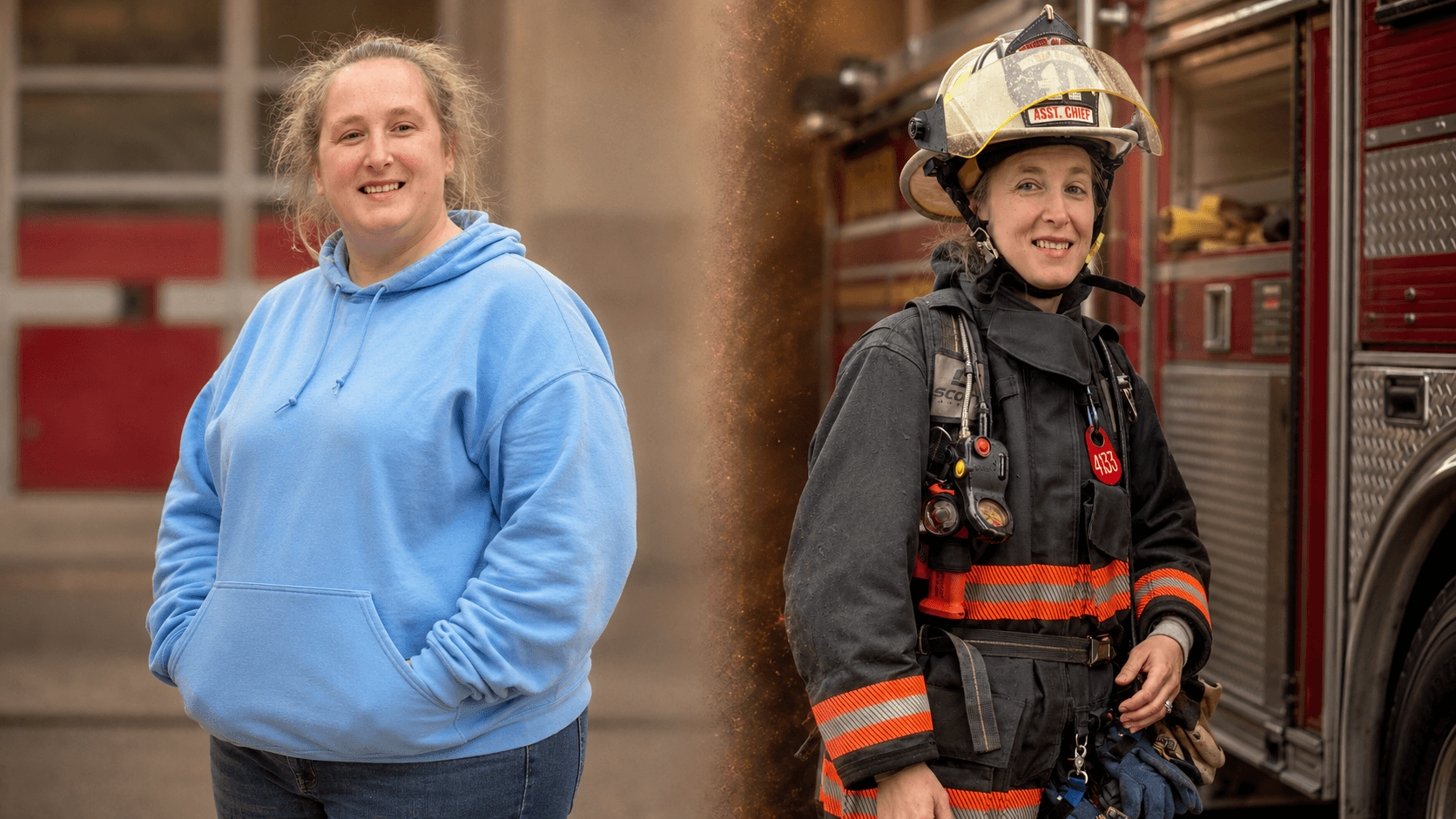
Today, my life looks completely different. I’ve now been sober for more than two years. I’m 185 pounds lighter, healthier, and stronger than I’ve ever been. More importantly, I learned to put myself first in a healthy way. I rebuilt my confidence, repaired relationships, and rediscovered the person I had lost along the way.
This year, I was promoted to Second Assistant Chief in my fire department. That moment meant more to me than anyone could imagine because it represented how far I had come. I had gone from someone who felt completely broken to someone trusted to lead others.
The most important thing I’ve learned through this experience is that no one has to fight their battles alone.
Community Support
Sometimes life knocks us down harder than we ever imagined possible, and sometimes we end up in places we never thought we would be. The lowest point of my life didn’t have to be the end of my story. For me, it marked the beginning of a new one.
If you’re struggling, ask for help. Speak up and lean on the people who care about you. Healing is possible, even when it feels impossible. The answer isn’t at the bottom of a bottle. It can begin with admitting that you need help and taking that first step forward.
If you’re struggling with alcoholism and need someone who understands, I am here. You don’t have to reach out to a stranger or a hotline first — you can reach out to me, and we can go from there together.