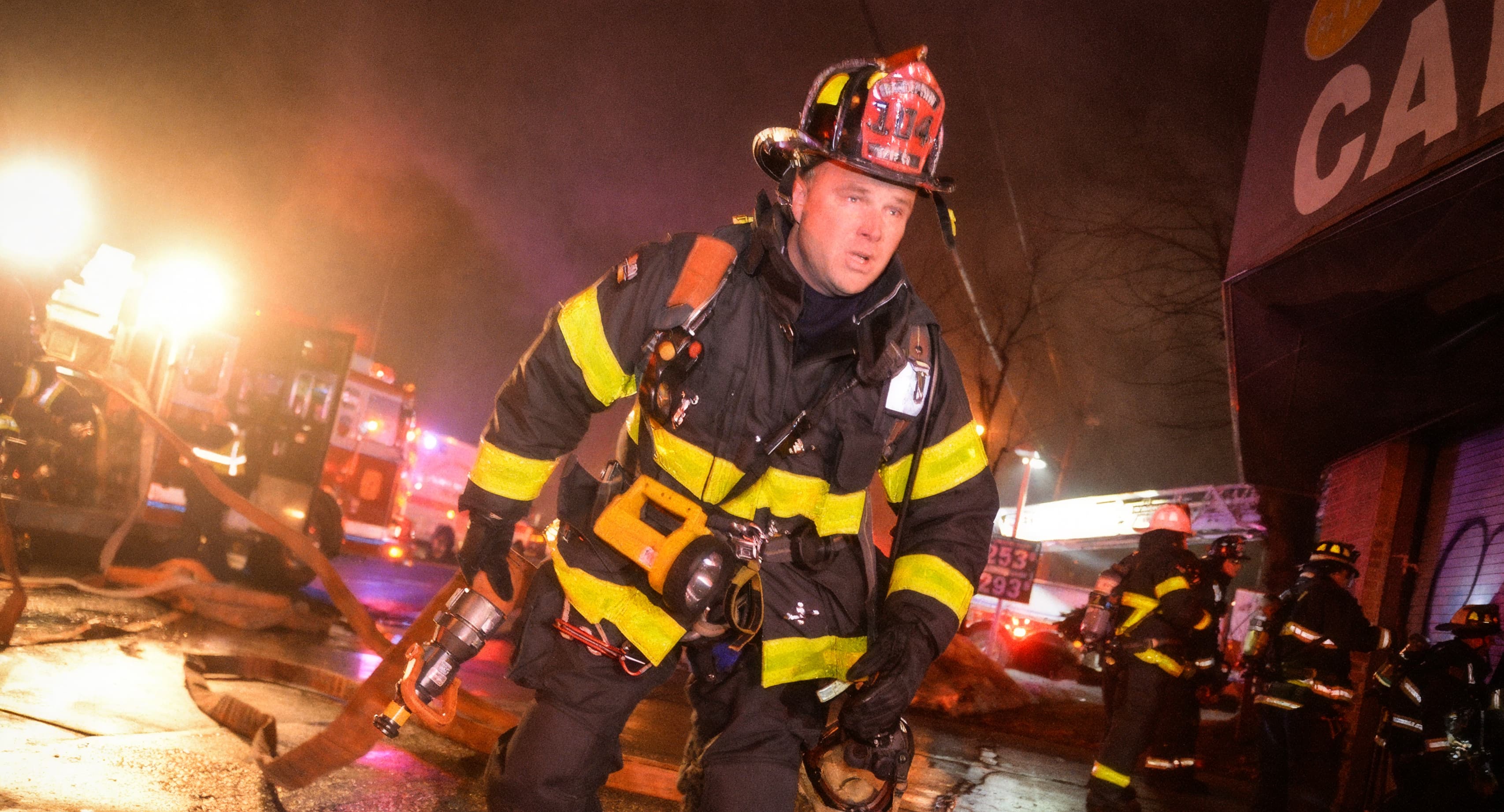
If the fire service were a dark, cloudless night sky, it would be full of stars. Some would be so faint you could barely make them out with the naked eye. Some would have shined bright a long time ago and are now faded. Some would have flashed and exploded suddenly. Others still would be slowly growing in intensity. And some would simply outshine the rest.
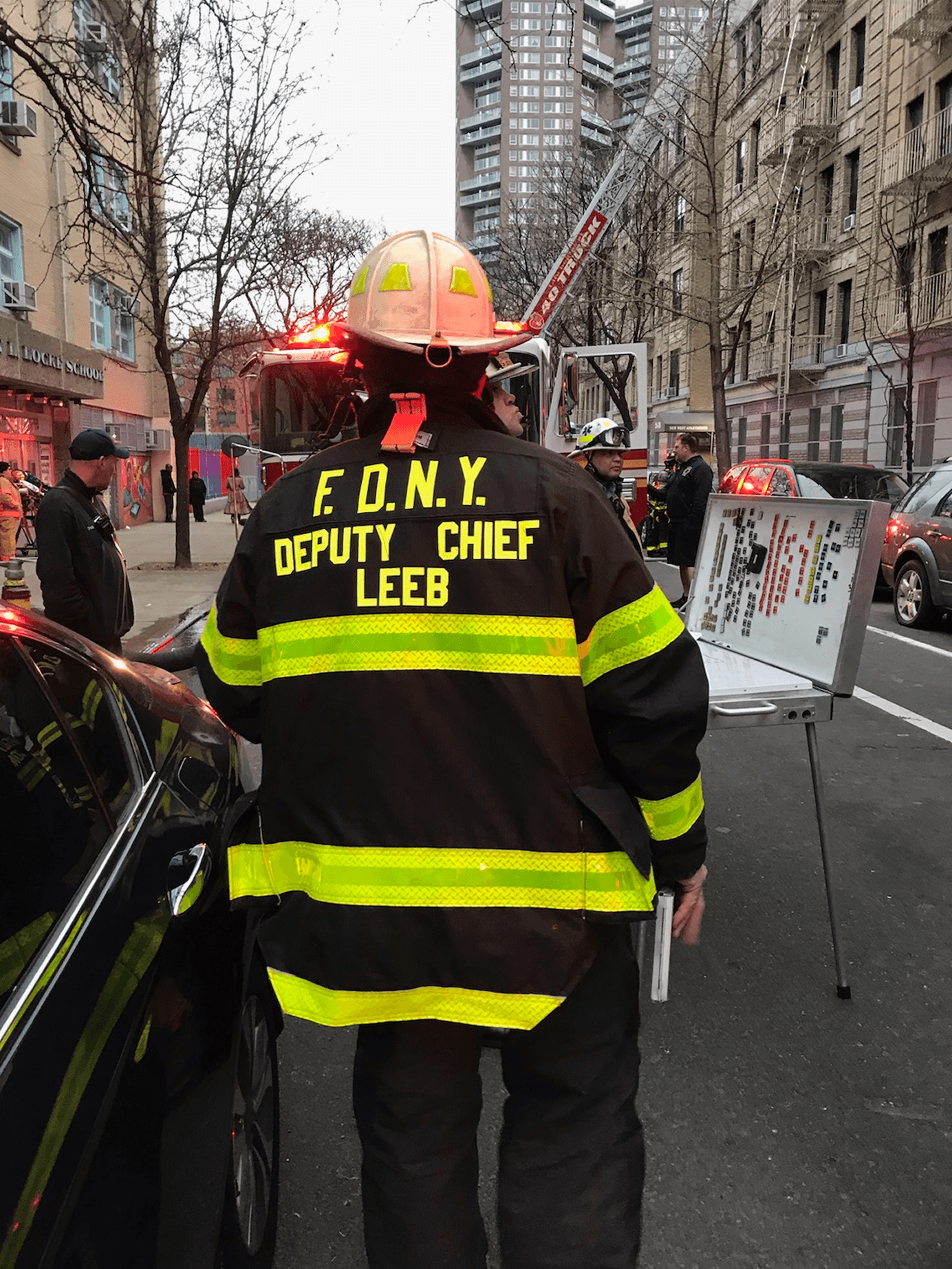
The ones you just couldn’t take your eyes off. Frank Leeb is one of those stars.
Scientists in the U.S are building a special-purpose observatory to calibrate about 10 of the brightest stars. From that they can measure any star’s brightness. Astronomers use the term “standard candles” for fixed points against which star brightness is measured.
In the fire service, our measurements aren’t so precise, yet we can still discern between the genuinely bright stars, the dim ones, and the shooting comets. For us, the standard candles could be built around something like this: purposeful, driven, intellectually curious, passionate, grateful, compassionate, and committed. And here’s how Leeb lines up with those measuring points.
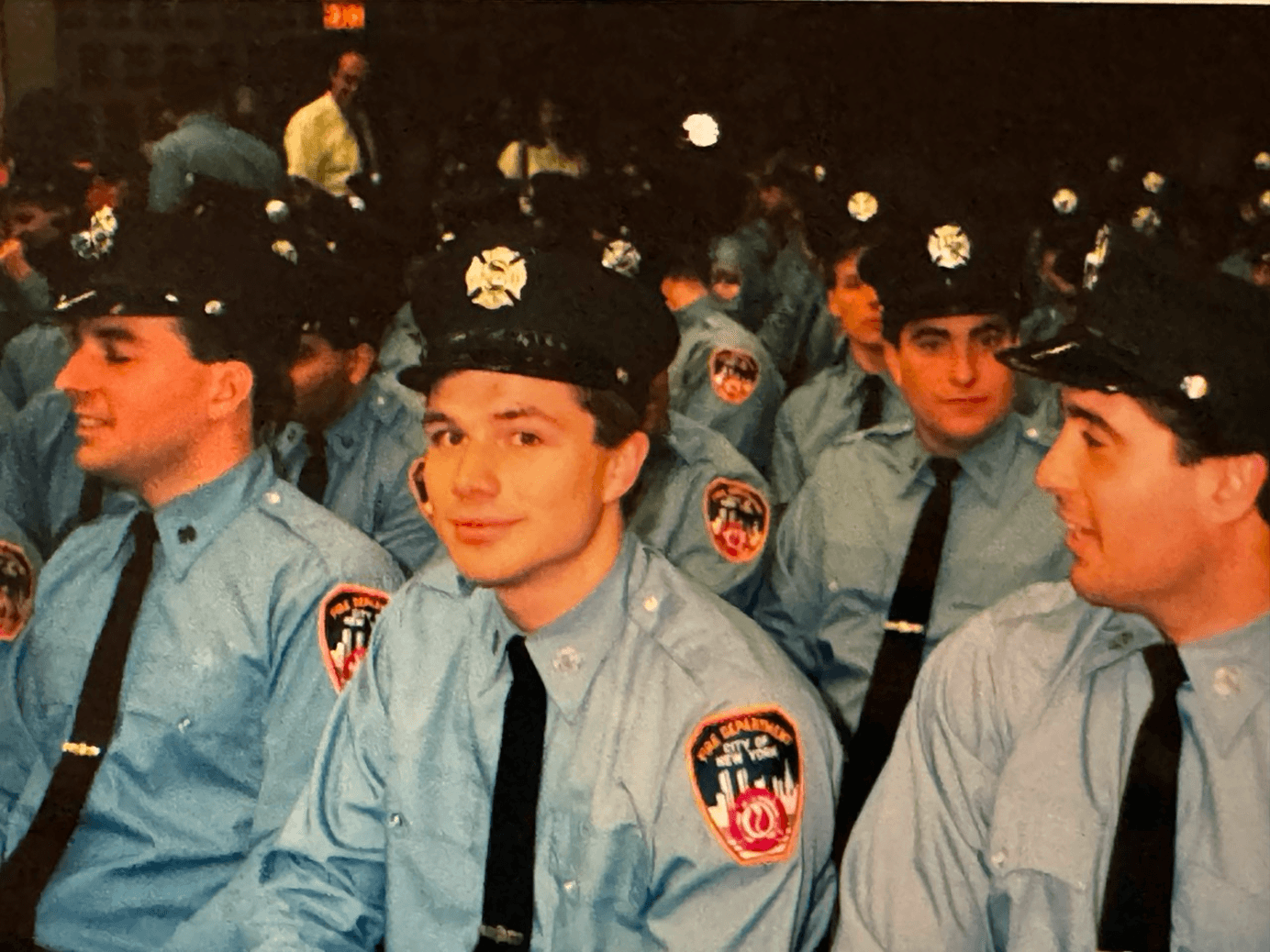
In 1983, Leeb joined the East Farmingdale Fire Department as a cadet on Long Island, N.Y. When he was old enough to become a full-fledged volunteer firefighter for the department, he did just that. He remains an active volunteer today; although, he admits to being less active than he once was.
He started two-hatting in 1992 when he joined FDNY.
There, he shot through the ranks in North America’s largest fire department (second-largest in the world just behind Tokyo). He tested for and passed every promotional exam that came his way. He went back to school for a bachelor’s degree, and later a master’s degree. He was there for 9/11 and the aftermath. He deployed to New Orleans after Hurricane Katrina.
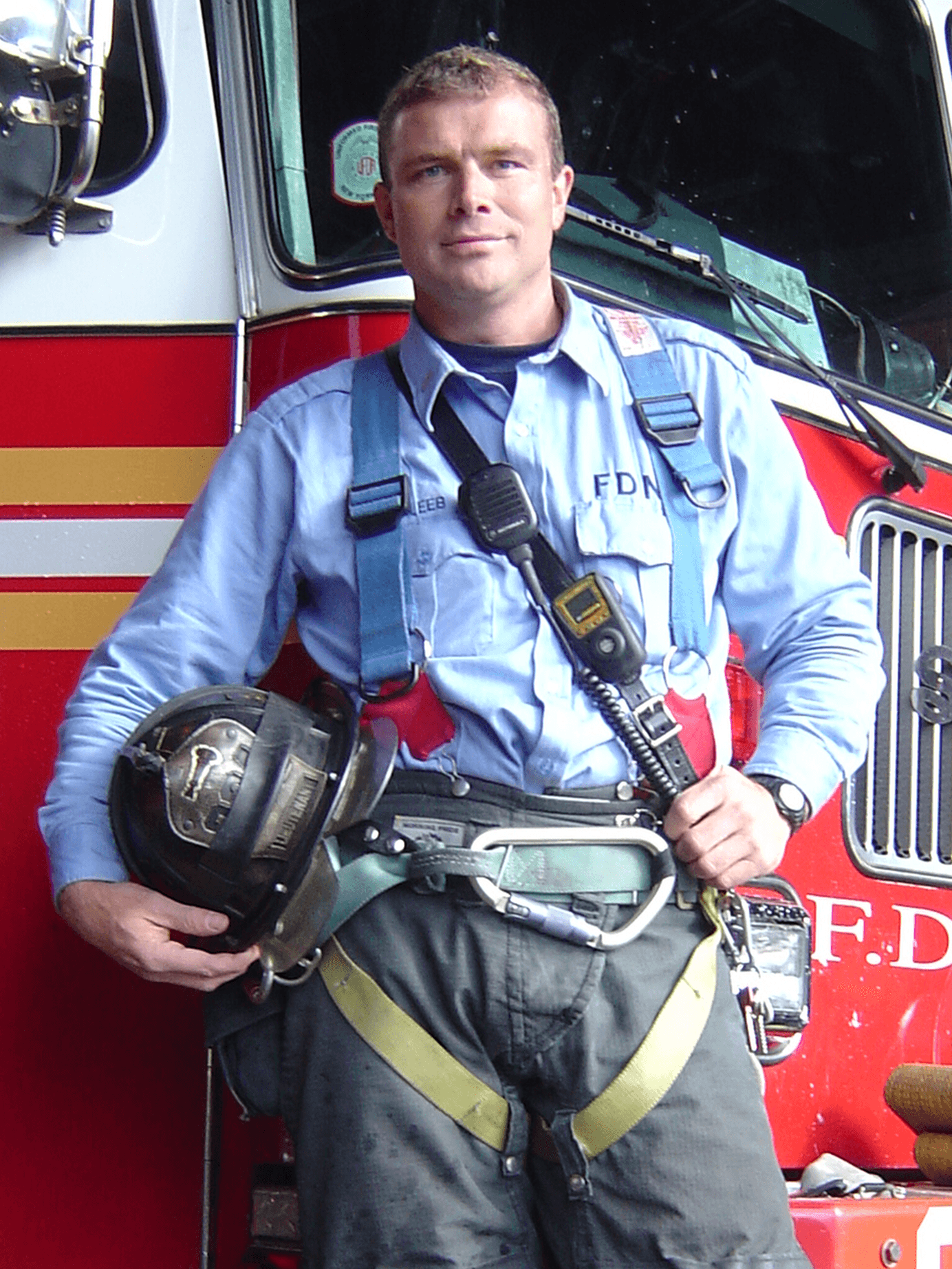
By the time he retired from FDNY in 2024, he had risen to assistant deputy chief and had overseen the department’s fire academy, training, and safety.
Shortly after Leeb retired from FDNY, the Gettin’ Salty podcast did something interesting.
They did a This is Your Life-type episode, where a long list of guests came on partly to bust Leeb’s chops and partly to recall the most profound things about him as a person and a firefighter. Several had been in promotional exam study groups with Leeb and talked about how driven he was in the group, and how as soon as one exam was cleared, he pushed to get ready for the next.
When you strive for things — be it getting through fire academy, a promotion exam, a graduate degree or a book launch — failure lurks around every corner.
Experts will tell you it is not if you fail, but how you fail.
“The way I process failure has evolved over time. To be clear, I don’t like to fail, and that has always shaped how seriously I take it,” Leeb says.
“The biggest shift came when I learned to turn failure into action, using it as motivation for improvement.”
That change happened organically in the fire service, driven by a constant desire to be better.
“In training, I view failure as an opportunity to improve, to identify gaps and prepare. On the fireground, however, my mindset is different. I do everything possible to prevent failure. The approach there is to play to win; failure is not an option. Lives, including our own, depend on our ability to perform.”
Of course our standard-candles yardstick doesn’t start and stop at the firehouse door. Leeb has become a force in the fire service health and wellness arenas. Seriously, try going to any health and wellness conference without bumping into Leeb — you can’t do it, not happening; he’s pretty much everywhere.
Shortly before retiring, he took the helm of the First Responder Center for Excellence, an affiliate of the National Fallen Firefighters Foundation that focuses on education, and death and injury prevention. He’s authored two books, serves on countless boards and committees (UL Fire Safety Research Institute, NFPA, and Science to the Station, to name just three). He’s a vendor, teacher, speaker — often the keynote — at, again, nearly every industry health and wellness event.
Oh, and we need to add one more to our measurement: humility. We’ve all run across the FIG JAMer (F*ck, I’m Great, Just Ask Me) in our lives. They instantly lose brightness points on our standard candle scale.
To say Leeb was hesitant to do this interview is … well … an understatement. He’ll talk to anyone and everyone for hours about the fire service, how to make it better, and the amazing job others are doing to get us there. Talk about himself? That took a bit of convincing.
So just what the hell is burning inside this star that makes it shine so bright, that makes him achieve so much? The short, simple answer is purpose.
“I love the fire service,” he says. “I have given so much to the fire service, but I tell you what, I have gotten way more back.
“If you love the fire service and the people, the fire service and the people will love you back. Not every day, but they will love you back. I can’t even really put into words what I’ve gotten from the fire service.”
He credits amazing role models both inside and outside FDNY for the successes he’s had along the way. He then quickly shifts back to what powers his pink-toy-bunny-with-a-drum drive.
“I don’t recall struggling with imposter syndrome or anything like that,” Leeb says. “I always put in the sets and reps to prepare for the rank I was moving into, and I was motivated at every rank to get better. I was really a learning sponge.”
Because?
“What I did feel was the weight of responsibility to take care of my firefighters,” he says.
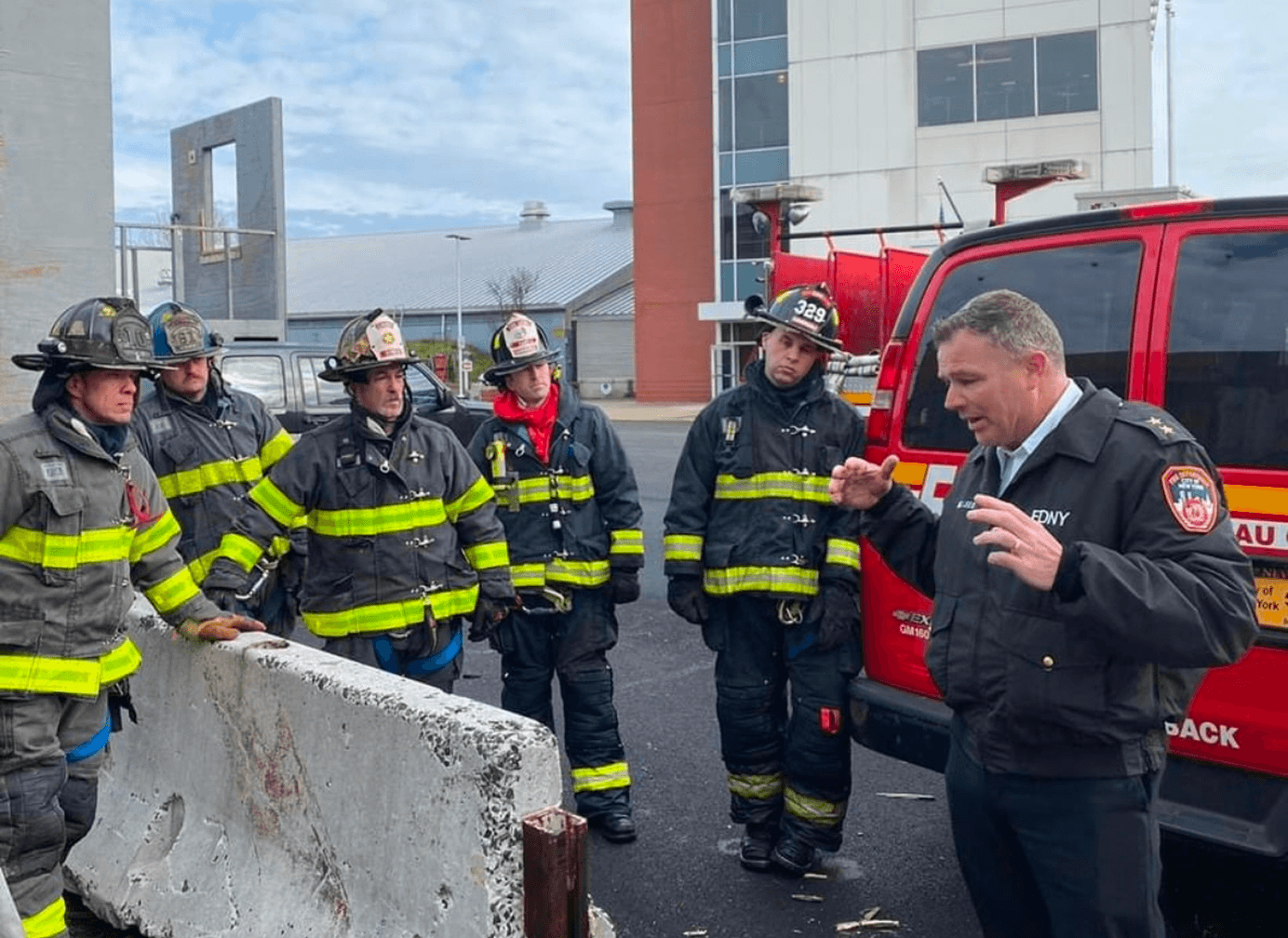
“They know I cared for them and that I put in the work to be the best I could be. At the highest ranks of the FDNY, the staff chief rank, which is a top-20 position within the organization, requires a lot of time. You are rarely off duty.
“However, these positions come with the power to change the organization, which was a motivating factor for me.
“It is an opportunity to give back to the organization that has been so good to me. The opportunity to work in training and move the needle on initiatives that impact the health, wellness, and safety of firefighters was extremely important to me.”
He’s said more than once that if he lives to be 150, he still wouldn’t be able to go to enough fires to satisfy his love for the job.
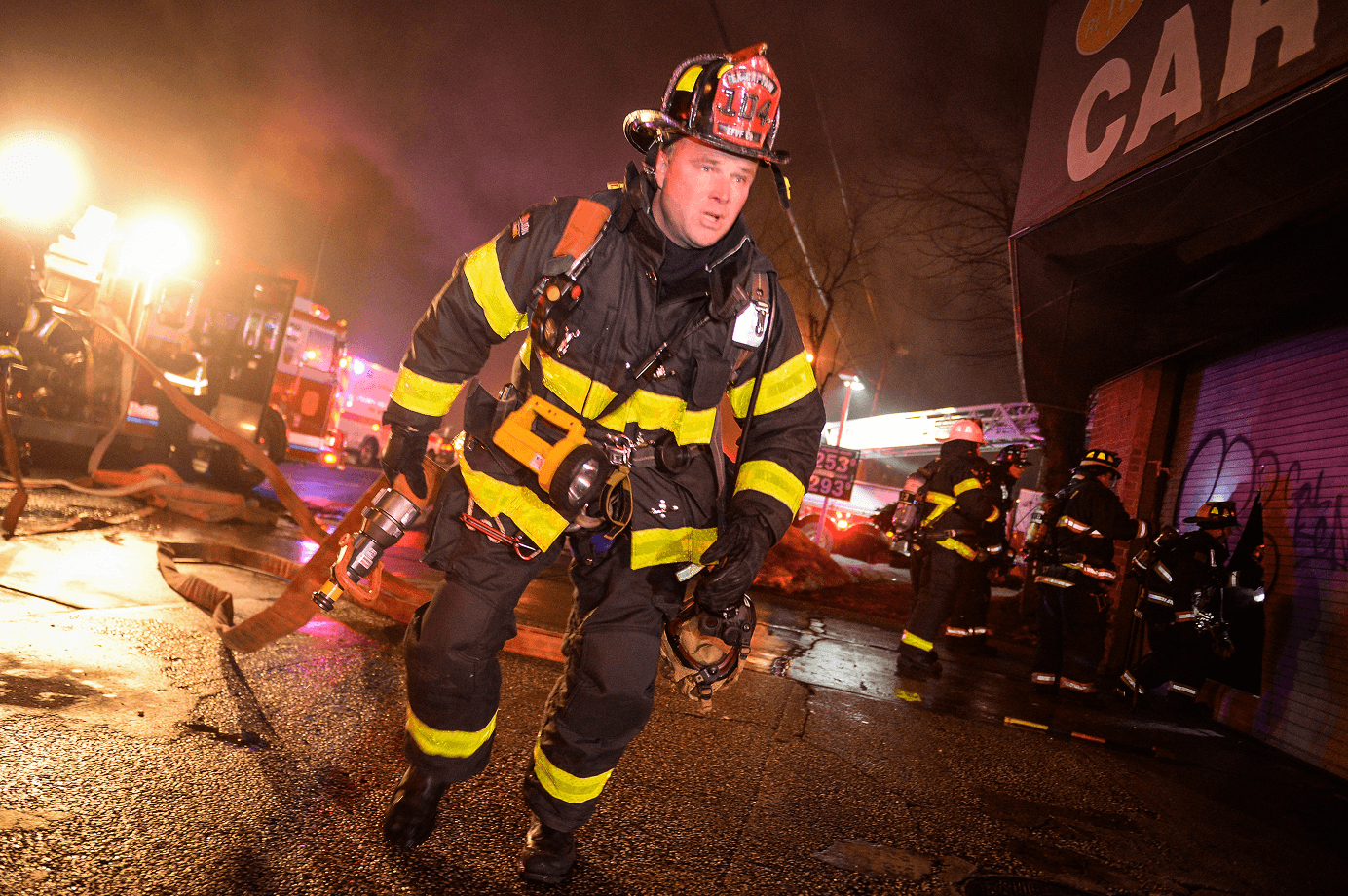
Yet for someone who loves the job as much as he does, Leeb gets that there is more to it than just the job. There’s quality of life and longevity. And so part of his drive is the urgency to leave the fire service better than he found it.
“Our generation of firefighters, we will be judged,” he says.
“We will be judged on how well we did in mitigating the cancer risk to our firefighters and how well we handled the mental health crisis. Again, we’re a microcosm of society, but how are we handling it differently?”
That level of hard-charging — year after year, decade after decade — is of course, more than sheer willpower. It is deliberation, planning, choices and sacrifices. Leeb says he’s made sleep and diet top priorities. He’s deliberate in how and when he drinks alcohol — none on the eve he's about to present (he owes it to event attendees to bring his A-game), and not enough to jack up his sleep on days he’s not presenting. He exercises every day, whether at home or on the road. He’s learned to maximize his time by getting tasks done while traveling. And he’s learned to say no to things that don’t align with his purpose.
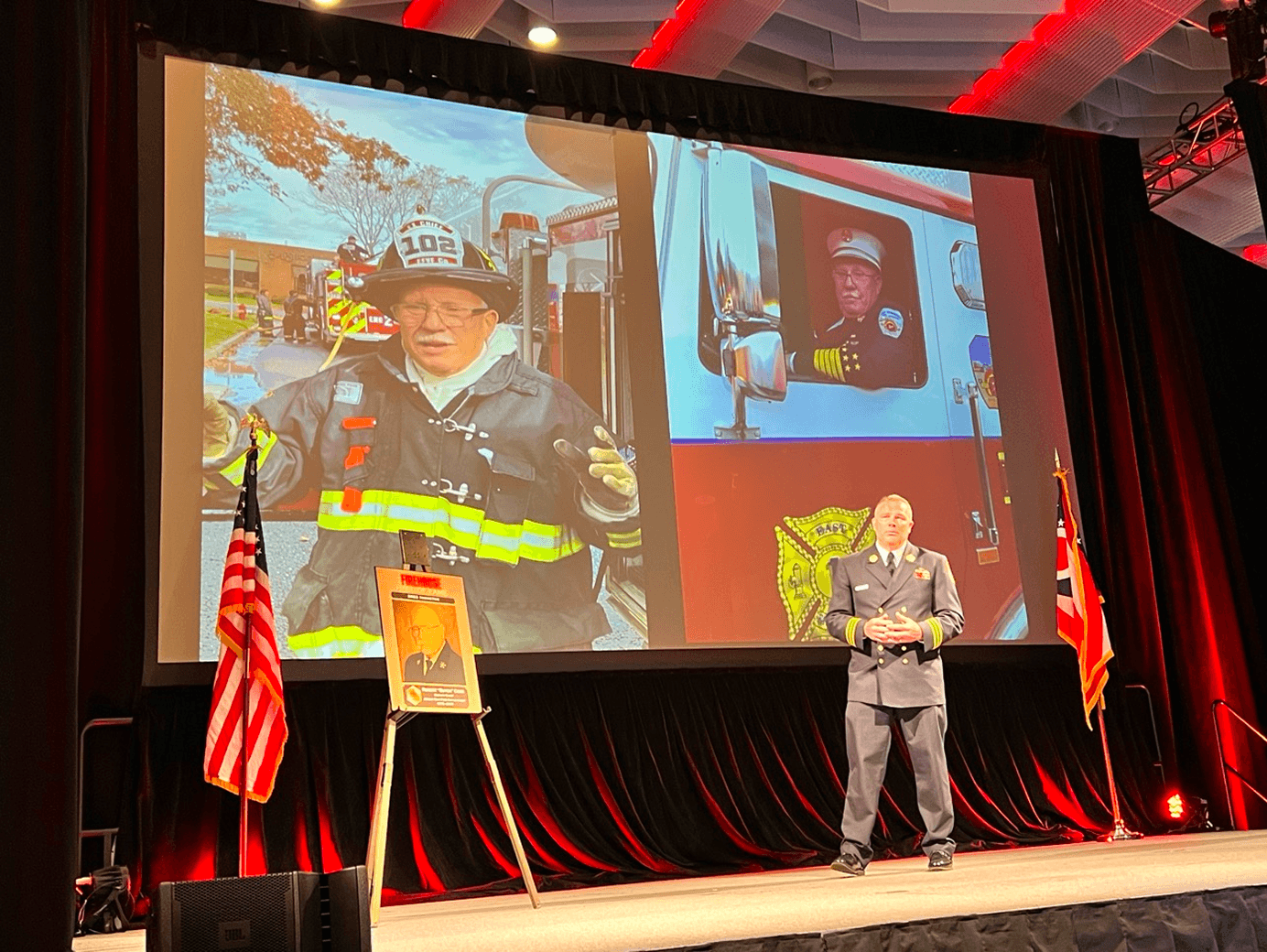
“At this stage in my career, at this stage in my life, I don’t do anything that I don’t think is worth it, that is off-brand,” he says. “I’m not looking to waste my time.”
In short, he says, it is about knowing what matters and focusing on that. There simply isn’t enough time and energy in life to fritter it away on pointless things.
And we’ve left off one more important standard candles measure: resiliency. Yeah, yeah, yeah, we all need it to keep us out of survive mode and in thrive mode. But consider all the tragedy and trauma you would encounter running with and leading the country’s biggest fire department. Add into that history book events like 9/11 and Hurricane Katrina. Then pile on the stress of hard charging through your career. You better have a plan for how to bounce back.
“In the fire service, you see so much heartbreak, both in those we are sworn to protect and inside the job, as well,” Leeb says. “It is the team you work with that helps you get through it all. The kitchen table is a magical place.
“We also know that sometimes, despite our best efforts, we do not always get the outcome we desire. But that must never be due to a lack of preparation. It is my preparation and that of my teams that has made me better able to cope with the outcomes from a mental standpoint.
“Another thing that worked for me after a particularly disturbing incident, perhaps where a child or family died in a fire, is that I typically did not read about the incident or watch it on the news. Reading or watching the news made it personal, and when that happened, it bothered me more.
“There have been many incidents and experiences where I know I left a piece of me at the scene or hospital.
“Exercise and being around people who you care for and WHO care for you do wonders to help when stress or emotions are high.
“And of course, your family, you need support outside the job, and nobody is better than family.”
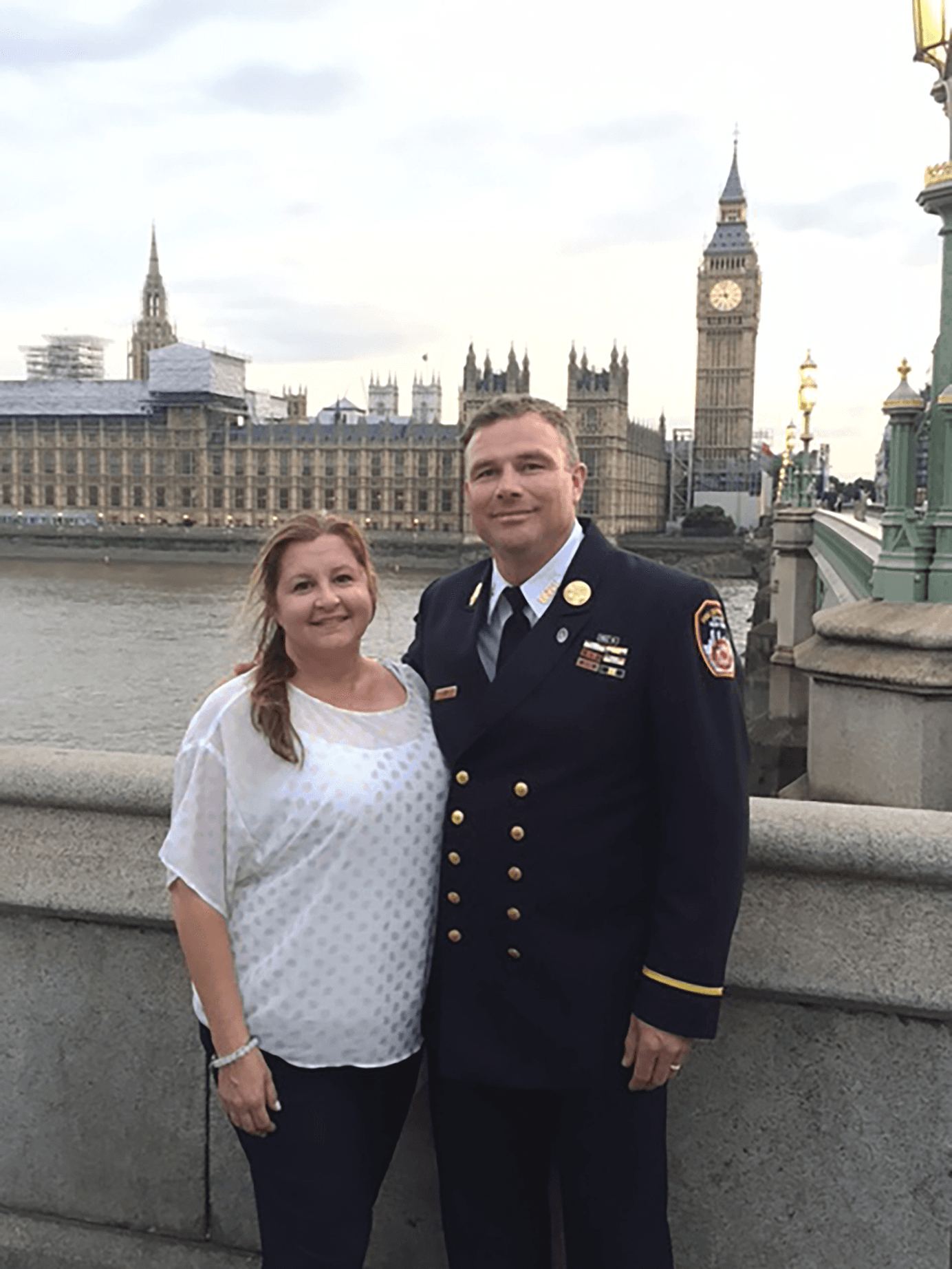
Like many high achievers, family is one of Leeb’s load-bearing walls. He says he focuses on being as present as he can when home and looks for ways to include them in work projects, such as his first book. And yet for someone who says he has very few regrets in life, he knows he’s sacrificed important family time for his career. And he knows family life can be fragile.
Bobby Leeb was Frank’s brother, older by 10 years. He led Frank into the fire service, mentored him, and fought fire next to him. Then he died, suddenly, at the too-young age of 36.
“He was 10 years older, so he was the guy, right? He would take me after school to go hit a baseball at the field or just do anything. He would go to different events and would always have me tag along.
“That I’m a New York City firefighter is because of my brother, because he introduced me to the fire service at such a young age.”
Bobby Leeb had a heart problem he was unaware of. He was out one morning, it was a Thursday, when he went into cardiac arrest. No one performed CPR.
“When I went to the Naval Postgraduate School for my master’s, I wound up writing about out-of-hospital cardiac arrest and the survival rates — something that was so off topic for me,” Leeb says. “I initially wanted to write about the FDNY fire and EMS merger. I was really glad I did the topic that I did. I dedicated my thesis to my brother.
“Early quality CPR makes a difference. There’s a huge variation in different parts of the country on if you go into cardiac arrest out of a hospital, whether you’re going to live or die.
“I miss him every day … to have one more conversation on the back step of the apparatus with him and to discuss a fire. I was fortunate to learn a lot from him, to have many different fires with him. I’m grateful for that, but I’m also sad that I don’t have more of those opportunities with him.”
Unlike astronomers gazing up, we don’t improve our understanding of what it means to be a firefighter by comparing ourselves to the brightest or dimmest stars.
We gaze upon the bright stars to motivate us to live and work better, and to provide guidance on how to get there. And it is the really bright stars who set aside their humility to help others navigate their journey across life’s sky.