Picture this: our oldest child, on the brink of adulthood, is about to embark on the grand adventure of college life as we move her into her freshman dorm in Boston. Instinctively, I shift into full fire marshal mode, installing a dry-chem extinguisher, a carbon monoxide and smoke detector – the works.
I meticulously inspect for fire hazards, scrutinize the room's means of egress and, like a detective solving a high-stakes mystery, even check the window locks. After all that, I brief her on fire department operations, commercial alarm systems, how to read smoke, and the importance of staying low in case of a fire.
A safety-minded parent or an overzealous control freak?
You be the judge.
It’s the paradox of control in chaos at work. Public safety personnel are like a walking encyclopedias of disaster prevention – we simply know too much. Our jobs rely on strict procedures and protocols. Whether at the firehouse or on a chaotic scene, meticulous attention to detail and safety is in our DNA. Every shift, we thoroughly check the rigs, ensure all tools are functioning correctly, and are constantly looking for potential hazards and dangers.
Situational awareness and adherence to procedures provide us with a semblance of order amid the chaos and unpredictability of emergencies.
The question is, should we allow this need for control to extend into our personal lives – like when we’re moving a kid into a college dorm? Probably not.
But can we stop ourselves?
How do we set boundaries that allow us to leave the control freak at work? Imagine a firefighter on vacation, counting the number of left and right doors to the stairs from the hotel room and jotting that pre-plan on the back of the room key with a Sharpie.
Sensible off-duty behavior or over-the-top preparedness?
In the movie American Sniper, there's a moment at a child's birthday party where Chris Kyle's friend's dog begins to roughhouse playfully with his son.
Suddenly, Chris panics, lunges at the dog, causes all heads to turn in confusion and leaves everyone wondering why he overreacted so intensely. Have you ever defaulted to overly protective mode in seemingly harmless situations? Welcome to the club.
Dr. Stacy Raymond, a first responder psychologist, offers this advice:
“I’m concerned that firefighters have a problem-seeking mindset, always searching for safety issues in their surroundings because they are public safety workers,” she says. “That perspective is crucial on the job, but try to be careful when you go home to your family or attend a neighbor's cookout that you don’t focus on what could go wrong.”
The truth is many of us have developed a need for control in both our professional and personal lives.
This need for control often stems from adverse childhood experiences, during which some of us faced trauma and dysfunction. As kids, many of us had no choice but to problem-solve independently. For those first responders, adversity led to a profession where chaos is their comfort zone, and they need to bring order to critical situations.
Raymond states, "Due to the consistent release of the stress hormone cortisol, chronic hypervigilance is not good for the body or the mind. Your family wants to have fun and relax, and they want you in on that. Yes, the kids should wear bike helmets and look both ways while crossing the street – and yes, the grill should not be too close to the house. But make your safety checks around family and friends, and then get on with life. There is not an emergency lurking around every corner.”
“Maybe,” she adds, “that's how it is at work when the tones drop, but at home, they want you in civilian mode as best you can achieve that.”
Reeeelaaaaxxxxx!
“First, remember to stop and smell the roses,” says Raymond. “Even though you’re in the 'bad news business' with more elderly, mental health, and drug overdose calls than actual fires, you must, for the sake of your sanity, realize that good things are also happening in the world. Take a deep breath and try to attain a balanced view of the situation in front of you. What's the 'reasonable' risk in this scenario? OK, I see the negatives/dangers, but what possible good can come from this situation?”
When you’re with your family, pause and take a breath. Switch gears and drop the Safety Supervisor act at the front door. Acknowledge your advanced skills regarding safety – they’re something to be proud of – then identify whether or not you’re using your more primitive “survival” brain or your “rational/thinking” brain. Once you flip that switch, ask yourself, “What do my kids or spouse need from me right now?”
There’s value in flexibility.
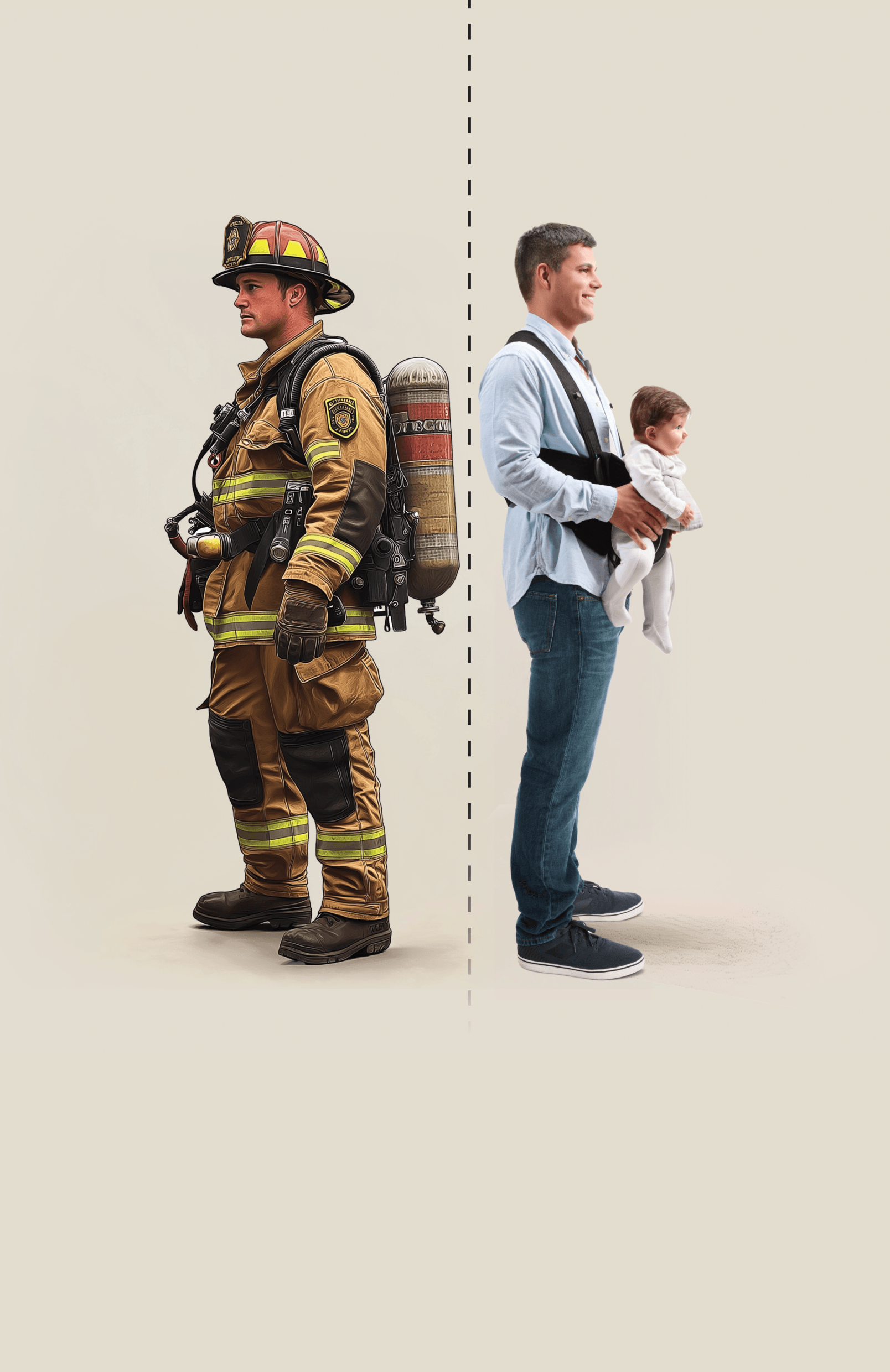
Showing up like a fire marshal at home can make you seem like a killjoy, and who wants that? Instead of trying to control every variable, consider the value of resilience and adaptability.
Acknowledge how these qualities can help your loved ones navigate life's uncertainties confidently and gracefully.
Amid the cacophony of alarms and the constant threat of the unknown, somewhere out there, kittens are being adopted, ice cream is being enjoyed, and someone just nailed a perfect parallel park on the first try.
Because while we can’t be a dragon slayer in every situation, we can certainly take off the turnout gear, kick back, and let life’s little fires smolder just a bit.
Who knows? They might fizzle out on their own.