Responding to emergencies day after day and year after year takes a noticeable toll on even the most resilient among us. Over time, the accumulation of stress responses really adds up. For some, it feels like a sense of chronic overwhelm, but for others, it feels like nothing at all.
The absence of feeling doesn’t feel good, it doesn’t feel bad, it just... doesn’t feel.
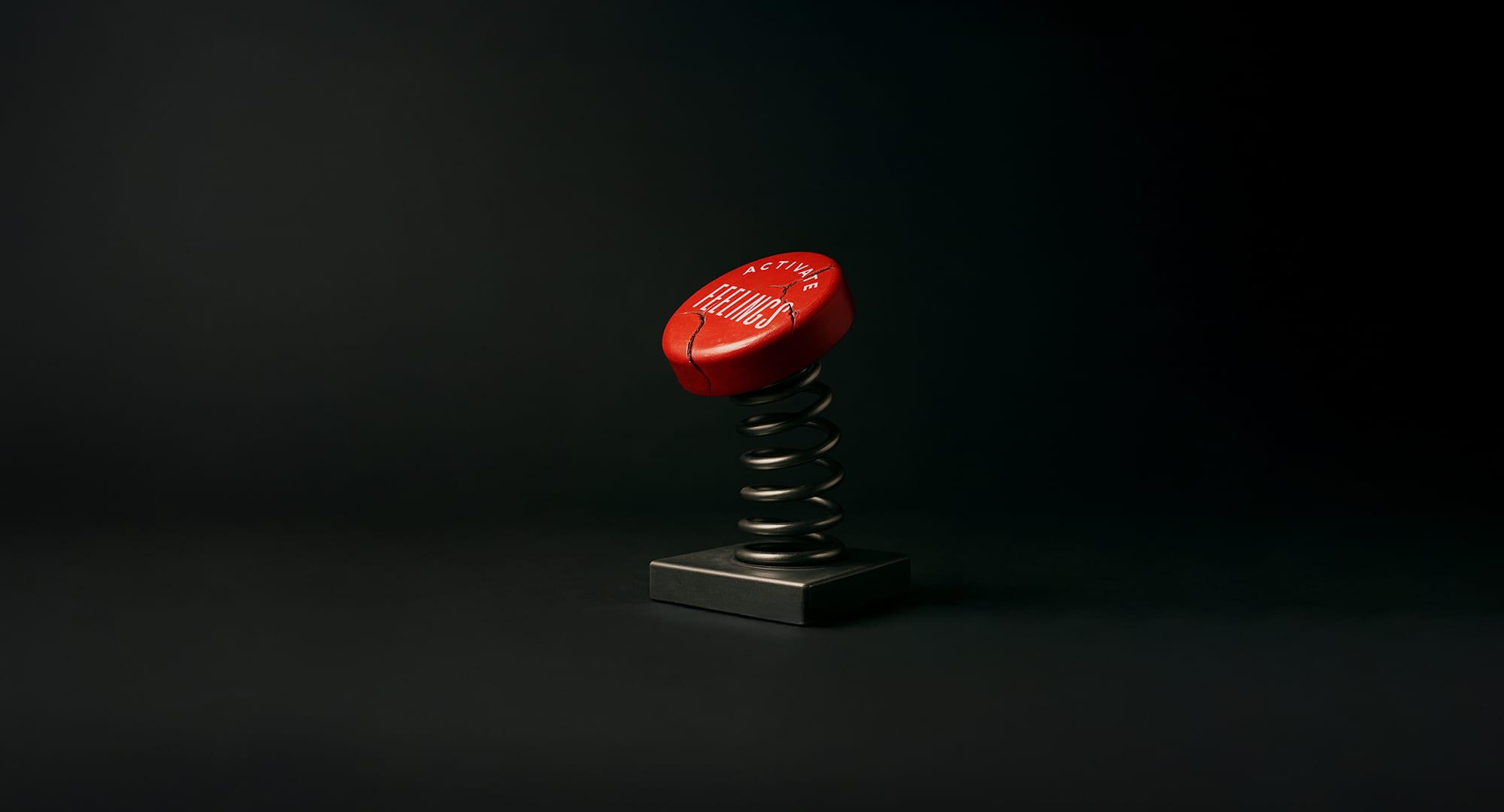
I’ve grown to lovingly refer to this emotional absence as a broken “give-a-damn button.” It’s a type of numbness that is ever-expanding and all-consuming. It starts while running calls, then slowly occurs while on shift, and if left unchecked, it will dominate most aspects of life.
But what is this give-a-damn button in the first place?
Broadly, this button represents our emotional experience in the world. From some of the most profoundly pleasurable times in our lives to the darkest valleys of hell that we’ve walked through, our give-a-damn button tells us what matters. It flavors our experiences, reminding us what is real and who we are.
As humans, we were not meant to be numb. But many of our lives resemble that of a lobotomized patient from the 1950s.
Understanding this essential button starts with the psychologist Dr. Christina Maslach, who in the 1970s, began to describe a common theme within stressful occupations. Maslach, among others, noticed that professions seemed to fundamentally change those working in them. Notably, workers who consistently engage in human-centered, high-stress environments were among the most vulnerable to this budding phenomenon known as burnout.
At the most basic level, burnout begins with stress, and unless you’ve been living under a rock (or in complete denial), responders certainly deal with a fair amount of stress. Let’s take the number of calls for service per year as an example. Your department likely ran more calls last year than the year prior. Equally as likely, your department is on track to run more calls this year than last.
This cycle of ever-increasing calls shows no sign of slowing, but it’s not the only problem we’re facing.
The breadth of the calls we run is also evolving. It’s true, we are receiving more non-emergent calls for service than we ever could have imagined. However, there is a dark side to our increased call volume.
Our current cadre of emergency responders will run more traumatic calls than previous generations.
Most alarming of these includes what seems to be a never-ending growth of child and adolescent suicide. Compound these mentally taxing events with an ever-increasing stream of calls for service, and we can no longer avoid the need for all of us to take care of ourselves.
You might be thinking, “Is stress the enemy?” And should the goal of a mental-wellness program be to “destress, your life?” And while you’re not completely wrong, I don’t see a way we could feasibly remove stress from emergency response.
Fortunately, responders historically do a good job of coping with stress. They tend to have a strong internal sense of personal accomplishment, and historically see themselves as embedded within a community of other responders, both of which help to belay the effects of prolonged stress.
But by far the most commonly used coping skill known to responders from north to south and east to west is the use of humor (always clean and appropriate humor – yeah, right).
Humor as a coping mechanism
allows a psychological distance from the realities of the job. Psychologically speaking, this is called objectification. Firefighterly speaking, things are much easier to deal with than people. And herein lies the problem. If left unchecked, we forget to rehumanize the ones we care about.
Maslach laid out a clear path towards the progression of burnout. Stress that remains after attempts to cope results in strain, and over time the chronic experience of strain results in burnout.
So, while stress is a major contributor to a broken give-a-damn button, the real enemy is burnout.
The three components of burnout are:
- emotional exhaustion
- cynicism
- a diminished sense of personal accomplishment
Emotional exhaustion leaves you feeling just like it sounds … exhausted. It can be challenging to function throughout the day without the desire to consume copious amounts of caffeine or other stimulants.
Cynicism prompts you to begin questioning the presence of goodness in the world. Witnessing human tragedy can start to create a pessimistic outlook. Cynicism pairs well with a cutting level of sarcasm and can shut down anything or anyone who gets in the way.
A diminished sense of personal accomplishment causes one to question the basic validity of life or the job. Simply stated: What’s the point?
This three-pronged attack of burnout is more dangerous than any flaming dragon you may have battled at the end of a hoseline.
Burnout, if left unchecked, will leave a tornado-like path of destruction in every domain of your life, including your work, personal wellness, social connections, and family.
So, how do we fight this enemy and fix our give-a-damn button? It starts with recognizing where you are in the cycle.
In my clinical practice, I frequently discuss the burnout-o-meter. Think of this like a fuel gauge on the apparatus. All of us are somewhere between completely burned out and completely full.
Knowing where you are on the burnout-o-meter can enable you to make a meaningful difference in your own life and the lives of your family.
However, it does not mean you have to hang up your gear. When the fuel gauge of your apparatus begins to dip, your department doesn’t run it until it’s empty, and buy a new one. Simply go to the pumps.
When the burnout-o-meter starts to rise, it’s time to intervene. Talk with someone you trust about any changes they’ve seen in you since becoming an emergency responder. Identify some key areas in your life that remind you of the goodness that is present in the world. If needed, seek professional help from a clinician who understands the world of emergency responders.
The most important message about burnout is to remember you are not broken.
The World Health Organization lists burnout as an occupational phenomenon, not a psychological disorder. Don’t let burnout take away your give a damn.