
What the Fire Remembers
Kevin Kubler’s The War Years and Back turns decades of FDNY testimony into a story about fire, corruption, brotherhood and the danger of forgetting what came before
Kevin Kubler has long been drawn to New York City in the 1970s, an era remembered through contradictions. The music was alive, the culture was expressive, and the city held a sense of freedom that still occupies a place in the American imagination. But beneath that energy was another New York — one strained by crime, financial collapse, social unrest, and entire neighborhoods consumed by fire.
Kubler grew up during the latter part of the decade and remembers the events that shaped it: the blackout, the Son of Sam murders, the gasoline crisis, and the lingering sense that the city was both thrilling and dangerous.
For firefighters working during that period, danger wasn’t an occasional disruption. It was the rhythm of the job. On some nights, a company could respond to as many as 10 working fires. Firefighters entered burning buildings without modern bunker gear and often without the respiratory protection now considered fundamental. At the same time, New York City was nearing fiscal collapse. Firehouses were closing. Firefighters were being laid off. Civil unrest made responding to emergencies even more hazardous.
The city was burning faster than its firefighters could keep up.
Those conditions became known within the FDNY as the War Years, and in Kubler’s view, they will never happen again in quite the same combination. “There never has been nor will there ever be a time where all of these things collide,” he said. That belief — that this specific convergence of circumstances was a one-time event — is part of what pushed him to write it down before it disappeared with the men who lived it.
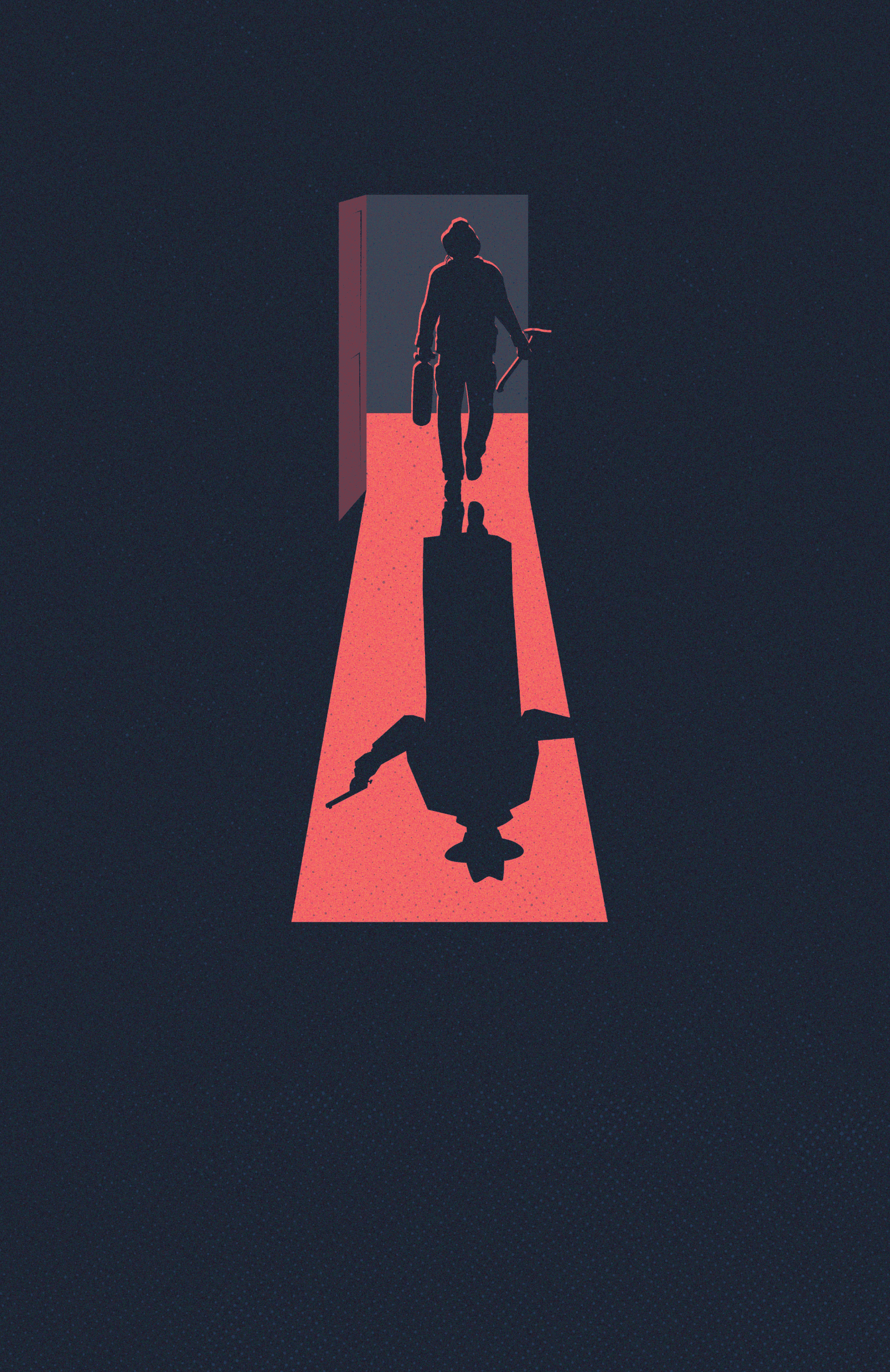
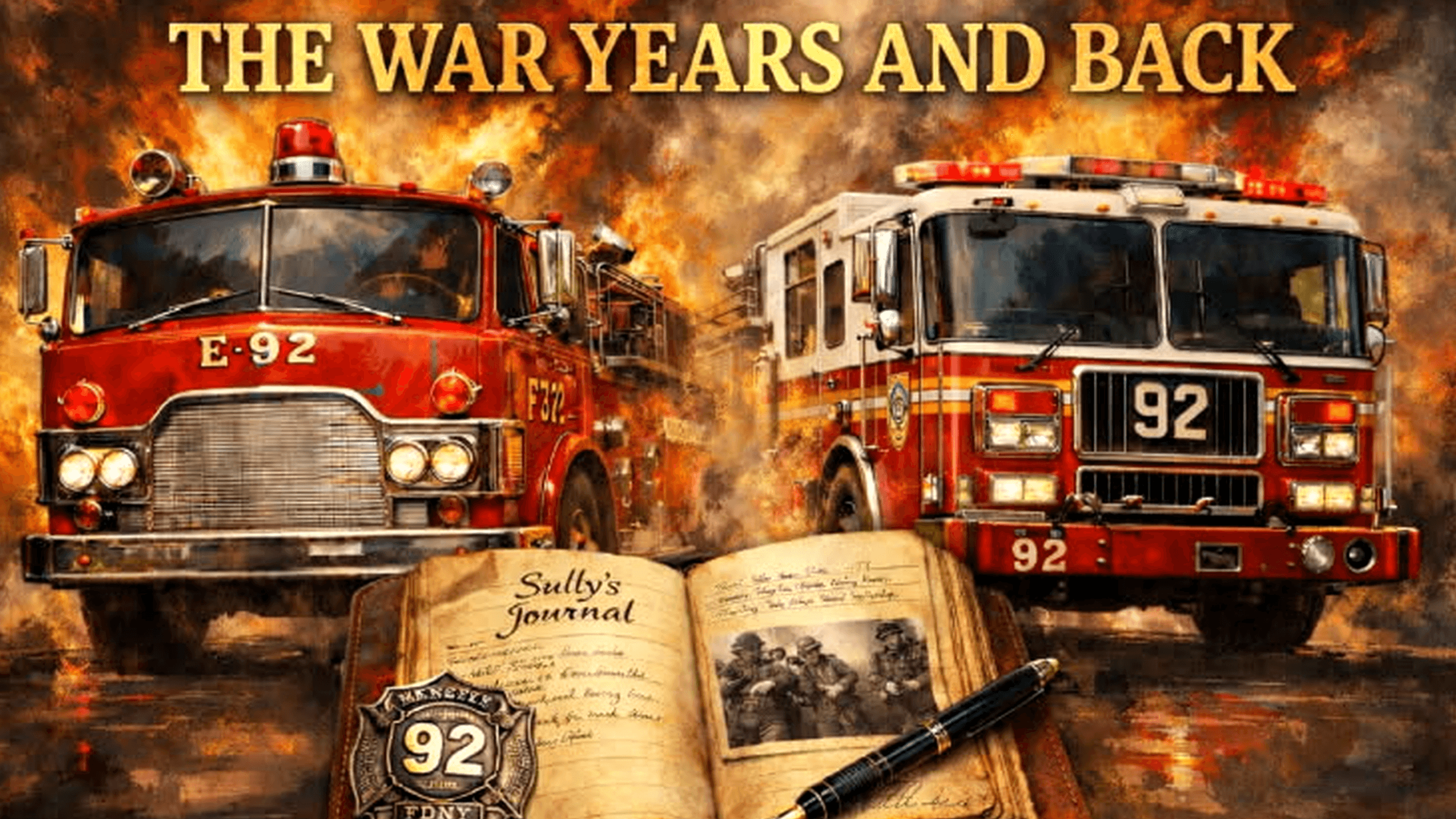
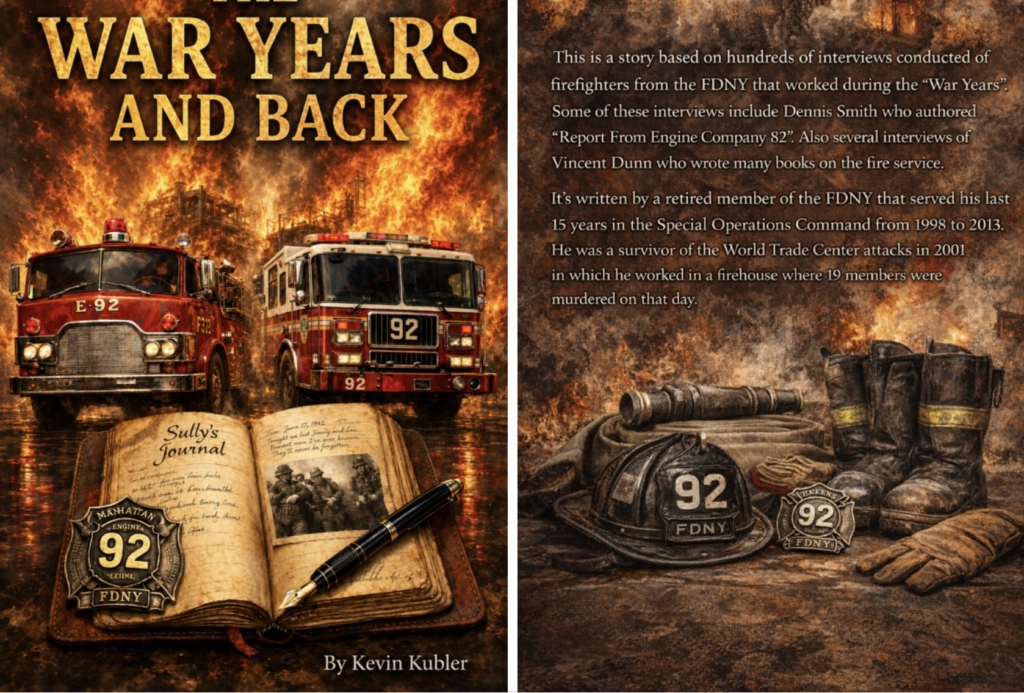
The result is his novel, The War Years and Back, which follows Richie “Little Sully” Sullivan, a present-day FDNY firefighter who receives his grandfather’s private journal after graduating from the academy and reporting for his first tour. The journal starts out as guidance on firehouse life, but its entries soon point toward a larger mystery: suspicious fires, institutional corruption, and the line-of-duty death of Little Sully’s grandfather.
 Screenshot
As the grandson reads further, family history becomes an investigation. Fires once dismissed as accidents begin to form a pattern. Powerful people appear to have benefited from the destruction. Questions surface about whether landlords and tenants were being encouraged, intentionally or otherwise, to burn buildings for financial gain — a dynamic Kubler said the city fed, whether it meant to or not.
The novel moves between generations, connecting the fires of the 1960s and ’70s with a modern city facing familiar pressures. Through its dual timeline, Kubler wanted to show that although much has changed in the fire service, much has also stayed the same.
The fictional story rests on an extensive historical foundation, and preserving that history was the point. “I was hoping to record and preserve all of the firsthand accounts of the incredible firefighters who worked during the War Years,” Kubler said. He built the book from hundreds of conversations with FDNY firefighters who lived through that period, many conducted through The Gettin’ Salty Experience Podcast, which he co-hosts.
The project wasn’t initially planned as a formal archive. The stories accumulated as older firefighters appeared on the show. One interview led to another. Details overlapped. Separate memories began forming a shared account of the same era. “The picture painted itself,” Kubler said. More than once, an idea sparked by that night’s episode pulled him out of bed; he’d write it down before it slipped away, and it would find its way into the manuscript.
Seeking Understanding
As the interviews grew, so did his desire to understand the conditions behind them. Retired FDNY firefighter and historian Paul Hashagen became his research and writing mentor, teaching him how to search newspaper archives, online records, and the FDNY library at the department’s training academy.
Kubler took notes whenever a guest mentioned a particular fire, firefighter, tool, or tactic. Small details mattered. If a piece of equipment hadn’t yet entered service during a scene’s setting, it couldn’t appear in the book. If a person or fire was mentioned, the timing had to align with the historical record.
“Everything in this book is 100% historically accurate,” Kubler said of the events and conditions surrounding the fictional narrative. That commitment came with a sense of responsibility — not just to the record, but to the men who trusted him with it. He wanted to portray the era correctly, he said, and to tell his guests’ stories both historically and as something readers would actually want to read, which is why the fictional layer exists at all.
Across the interviews, several themes appeared repeatedly: the volume of fire, the danger of the buildings, the lack of resources. But the strongest theme wasn’t exhaustion or fear. It was love — for the job, and for one another. The firefighters remembered camaraderie, trust, and mutual respect as the forces that got them through. The conditions could be punishing, but the bonds inside the firehouse gave those years meaning.
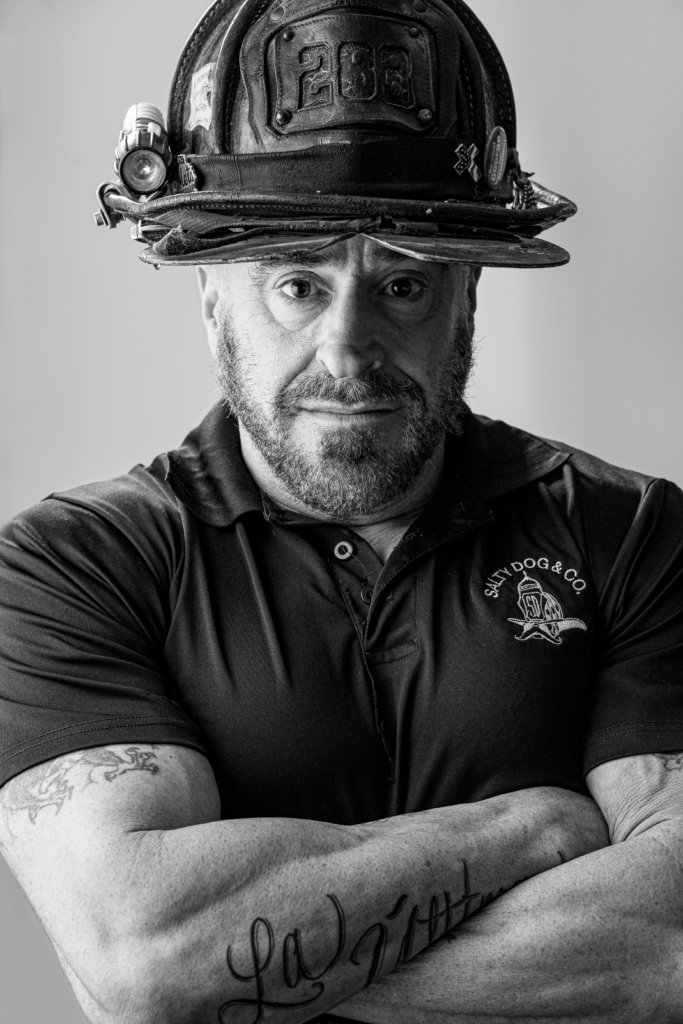
Kevin Kubler is a retired FDNY firefighter and current podcaster based out of Long Island, N.Y. The podcast, titled the*Gettin Salty Experience,*is now listed on Google as the most popular firefighter podcast in the world.
Kevin spent his last 15 years as a member of the FDNY’s Squad 288 in The Special Operations Command. He retired as the senior man and the Captains chauffeur.
Kevin worked at, and was a survivor, to the Father’s Day Fire and the attacks on the World Trade Center.
In addition to hosting the Gettin’ Salty Experience, podcast with his best friend Louis Rufrano, Kevin is a proud father of four and husband to Ana.
As this book goes to print, he is currently working on his second book, How to Build a Squad Company: From the Commissioner, The Officers, and The Men in the FDNY that Built Them.
Among Kubler’s interview subjects were two of the most influential figures in modern fire-service literature: Dennis Smith, author of Report from Engine Co. 82, and retired FDNY Deputy Chief Vincent Dunn. Kubler had read Smith’s book roughly 20 times before interviewing him. Kubler and his podcast partner conducted what would become Smith’s final interview before his death. “That will always be a special moment in my life,” he said.
Dunn brought another kind of authority. Even in his 90s, Kubler said, the retired chief could recall fires, buildings, and operations with extraordinary command, while staying engaged with new firefighting technology and current practice — a bridge between the War Years and the fire service of today. What stayed with Kubler most, though, was the atmosphere both men could summon. “The mood, the sounds, the smells,” he said. “You felt like you were in the kitchen of 82 Engine in 1969.”
The characters come from Kubler’s own life. Every one is based on someone he worked with or knew personally, though some names have been altered. The Sullivan family was inspired by Kubler’s own — his father Richie, his mother Ellie, and their seven children growing up in a middle-class Queens home.
What Kubler hopes readers take from the book is less about plot than about presence — a sense of having been there. “I hope I am able through my writing to bring the reader back to that time,” he said, “to feel what it was like to be a firefighter from that period. The sights, the sounds and the smells of the War Years.” He wants it to be an easy read, he added, one built on real fire stories, since firefighters tend to love a good one.
The War Years may never return in precisely the same form. But Kubler’s novel suggests that history doesn’t need to repeat itself exactly to become dangerous again. Sometimes it only needs people to stop remembering.