
Last month, I had the opportunity to observe volunteer firefighters in a rural area of Maryland battle a fully involved house fire. (As luck would have it, I was staying in a hotel across the street from the firehouse and while there, they responded to a working house fire). The scene was a powerful reminder of both the capability and the limitations that define rural firefighting, particularly in communities without fire hydrants. Firefighters from several surrounding jurisdictions arrived quickly and in strong numbers. Their commitment, effort, and teamwork were unmistakable. The problem wasn’t staffing; it was water. There simply wasn’t enough of it, fast enough, to make an offensive attack possible.
From the moment I arrived, it was clear the fire had a significant head start. The structure was already well involved, and the first-due engine’s onboard tank water was exhausted quickly. Without a hydrant system to support a sustained attack, crews were quickly forced into defensive operations. I watched the frustration on their faces as the fire continued to advance. Despite their skill and determination, they were essentially helpless to extinguish the main body of fire. Instead, they shifted their focus to what they could save, the nearby exposures threatened by radiant heat and flying embers.
These firefighters were not short on heart, talent, or numbers. They were short on water. This is the unavoidable reality of rural firefighting, and it is something every rural fire department, and every department that may respond to assist them, must constantly prepare for. But what I witnessed next was just as important as the fire attack itself.
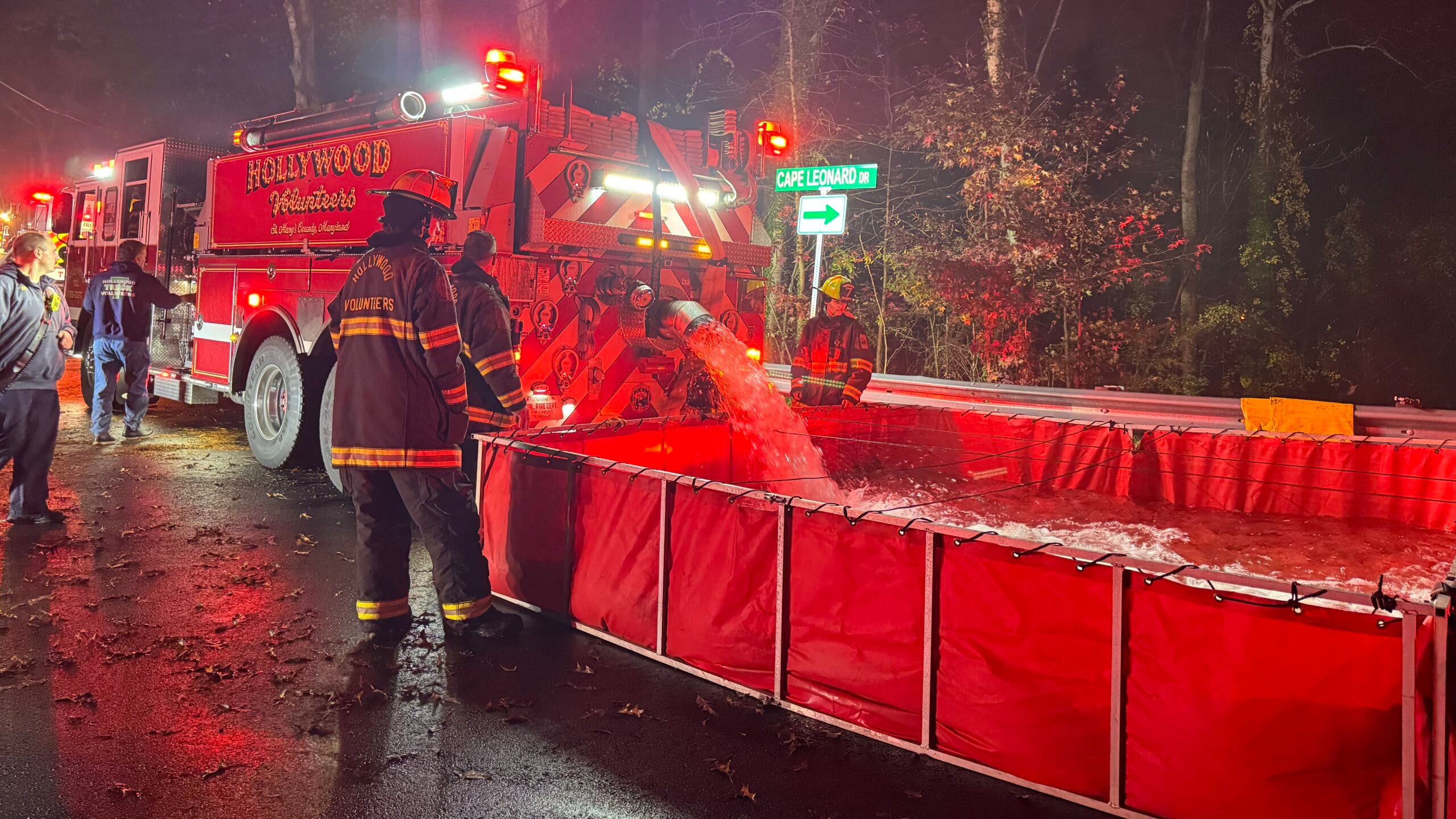
When I stepped back from the immediate action and observed the operation from the street, I saw a water relay being set up and placed into service. Tankers established a shuttle and began filling the large yellow portable dump tanks positioned in the roadway. Within a short time, the system began working efficiently. Though these efforts weren’t enough to save the main structure, given the fire’s advanced state long before crews arrived — they represented the process that may be critical during the next fire, or the one after that.
Watching the setup of the rural water supply operation brought me back to my time working with firefighters in New Orleans after Hurricane Katrina. In those conditions, drafting from static sources and establishing long-distance relays were essential skills. Water supply was the key link of the entire operation. Success depended on training, preparation, and the ability of firefighters from different departments, each with their own procedures, apparatus, and experience, to operate as a unified system.
The same was true last month in Maryland. It was obvious these firefighters had trained together before. Their coordination — between departments, operators, and command, did not happen by accident. It was earned through repetition, planning, and a commitment to preparing for the very challenges they now faced.
Still, even well-executed operations contain opportunities for improvement. And that is the larger lesson. Even when a building is beyond saving, the incident itself still has immense training value. We owe it to ourselves — and to the communities we serve — to analyze these calls with honesty and rigor. That means tracking small failures, identifying friction points, and ensuring our systems and procedures are not only documented but tested and refined under real conditions.
Rural firefighting is, by nature, a process-driven operation. Water supply, apparatus placement, tanker shuttle timing, drafting capability, and command coordination all must function as one. When one piece falters, the entire operation feels the effect. But when each component performs reliably, firefighters have a fighting chance — even when operating miles away from the nearest hydrant.
This fire reinforced a critical truth: it is the process that drives outcomes, and the outcomes that must continually refine the process. Departments must constantly evaluate whether their existing procedures are effective, standardized, and understood by members across all responding agencies. Mutual-aid partners must train together, operate together, and communicate using common terminology and shared expectations. And every fire, even the ones where the structure is already lost, provides a valuable opportunity to test systems under pressure.
Rural communities rely on their fire departments for fire suppression, and that means they rely on them for leadership, planning, and preparedness. Hydrant gaps, long response distances, and limited resources are challenges that cannot be wished away. But they can be mitigated through disciplined water supply operations, thoughtful pre-planning, and strong interdepartmental cooperation.
What I witnessed in Maryland was a demonstration of professionalism in the face of an impossible task. The structure was lost before firefighters ever arrived, but exposures were saved, the water relay was executed, and firefighters showed the coordination and capability that will make all the difference at the next fire.
In the fire service, we improve through reflection, honest evaluation, and a commitment to process. The lessons learned on rural roads and farm driveways are no less important than those learned in dense urban environments. Every operation tests our readiness, and every response is an opportunity to get better.
We train relentlessly because fires in rural areas — especially those without hydrants — continue to kill civilians and firefighters alike.
Remembering Fallen Brothers
I think of firefighter Nathan Flynn, killed in the line of duty on July 23, 2018, in a fire on Woodscape Drive in Howard County, Md. The home was not sprinklered and sat in a rural area with no hydrants. And I think of firefighter Scott Davis, who died on June 15, 2011, while conducting interior operations at the Tabernacle of Praise Church in Muncie, Ind., when the steeple collapsed following a lightning-caused blaze. There were no fire hydrants near this structure, either.
Their sacrifice underscores the reality: when water is limited, the risks increase, and our preparation must rise to meet them.
Rural firefighting will always be challenging — and hopefully one day, fire hydrants and residential sprinklers will become more commonplace in these areas. In the meantime, through disciplined training, strong partnerships, and an unwavering commitment to train relentlessly, firefighters will remain ready for the next response.