
Bridging research and the fireground
As I departed the Science to the Station Conference held in Loveland, Colo., this past week, I couldn’t help but reflect on the incredible people who made this event such a success. Each person there was mission-driven, united by a shared goal to push the fire service forward. Researchers and firefighters, working side by side, cross-pollinating ideas and learning from one another. Both groups becoming more culturally competent in each other’s world.
This collaboration is accelerating progress in many meaningful ways.
With nearly 500 registered attendees, the conference continues to experience remarkable year-over-year growth. True to its name, Science to the Station brings researchers and firefighters together to share and discuss best practices grounded in research.
For decades, translating research into actionable intelligence – turning findings into best practices – has strengthened firefighter safety and performance. This work goes far beyond publishing papers; it’s about applying evidence to inform strategy, tactics, and decision-making on and off the fireground.
What makes this conference unique is how it amplifies that message, creating an environment where science and experience meet in real time.
I’ve thought of myself as a “research translator” for more than 15 years. This began organically, fueled by my curiosity to understand why – why we operate the way we do, and how research informs the procedures we rely on. My journey began with the study of modern firegrounds and fire dynamics, particularly the groundbreaking work of the UL Fire Safety Research Institute (UL FSRI). From there, my interest expanded into occupational cancer, and I began to recognize the undeniable connection between what burns on the fireground and the long-term health risks firefighters face.
Over time, my focus has grown to include other areas such as sleep, PTSD, suicide, and behavioral health – what I often refer to as “the blind side” of the fire service. We train relentlessly for fireground tactics, yet we often overlook these invisible threats that impact our health, performance, and longevity. Conferences like Science to the Station remind us that we need more firefighters willing to engage in research translation – more advocates to help bridge the gap between the lab and the firehouse.
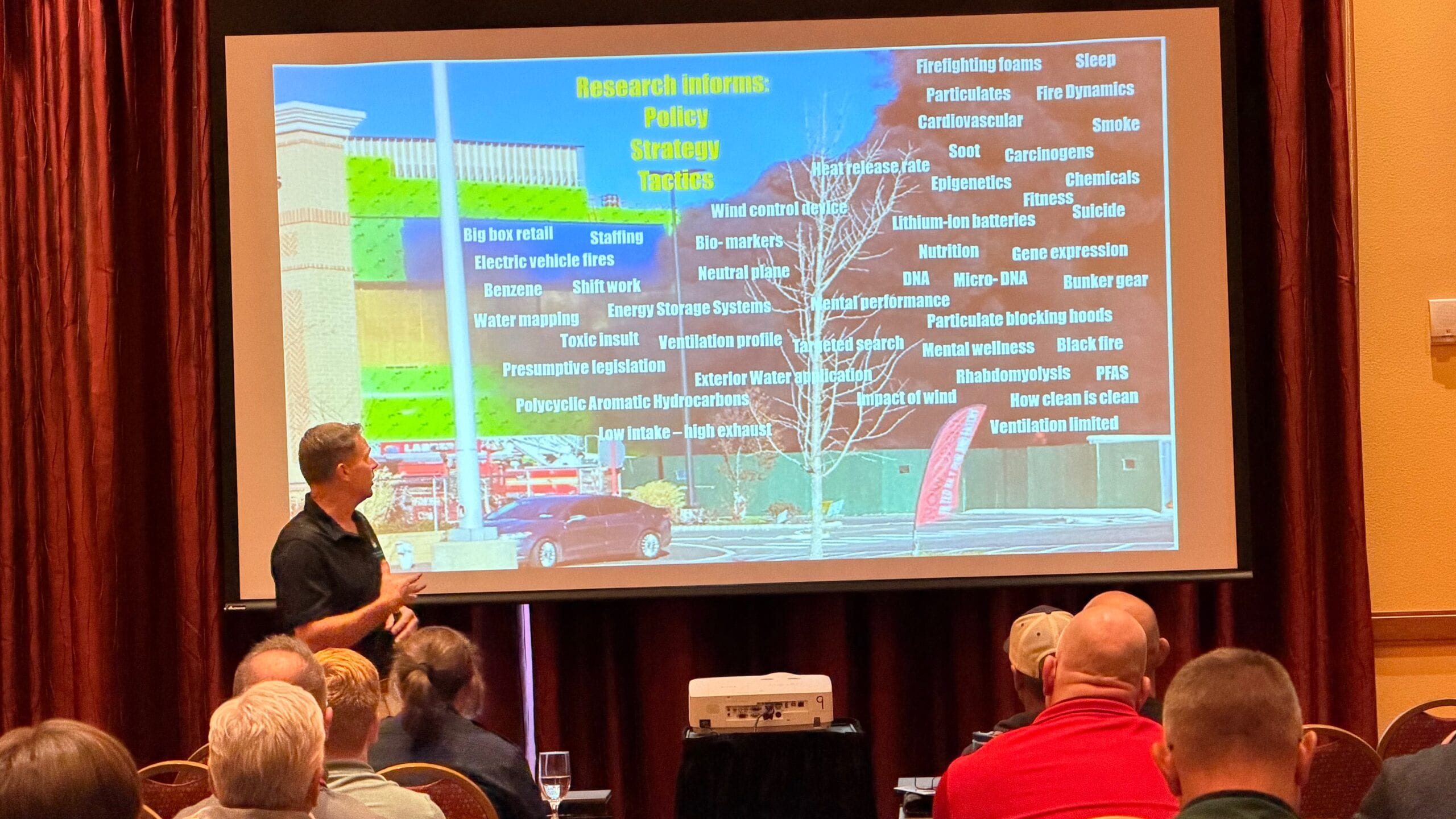
One of the key topics I discussed at the conference was how research informs practice and the many ways this translation occurs. When we combine scientific evidence with our operational experience, we achieve the most effective strategies and tactics, both on and off the fireground.
That’s where the future of the fire service lies: in partnerships that respect both the science and the culture of firefighting.
The continued success of Science to the Station proves that the appetite for this collaboration is growing. As firefighters and researchers continue to learn from one another, we strengthen our knowledge and our mission to ensure that every firefighter goes home healthy and safe, both today and in the years to come.