

I’ve been asked a very similar question three times this past week. Different people, different conversations, same underlying curiosity. People keep asking how I’ve been able to navigate CRACKYL, how it started, how it keeps evolving, and how I’ve been willing to move without having everything perfectly mapped out first. The real question underneath all of it is how you step into something that doesn’t feel guaranteed. I’ve had fun answering those questions because none of the answers are complicated. There’s no secret formula or dramatic leap. Everything keeps circling back to growth and a willingness to stop protecting comfort.
Growth doesn’t happen by being safe. Growth happens when expectations rise faster than comfort. That idea has followed me most of my life, long before CRACKYL ever existed. I’ve always been more of an estimator than a precision planner. Finite numbers have never been my comfort zone. I’ve preferred working ranges, direction, and momentum over certainty. I don’t need every answer up front to begin moving.
The Difference Between Risk and Recklessness
That approach isn’t reckless, it’s intentional. Over time, I’ve gotten comfortable not needing all the answers while also getting very good at identifying where the runway is. There’s a difference between blind risk and informed movement. Knowing how much room exists to adjust, pivot, or recover matters more than pretending certainty exists where it never really does.
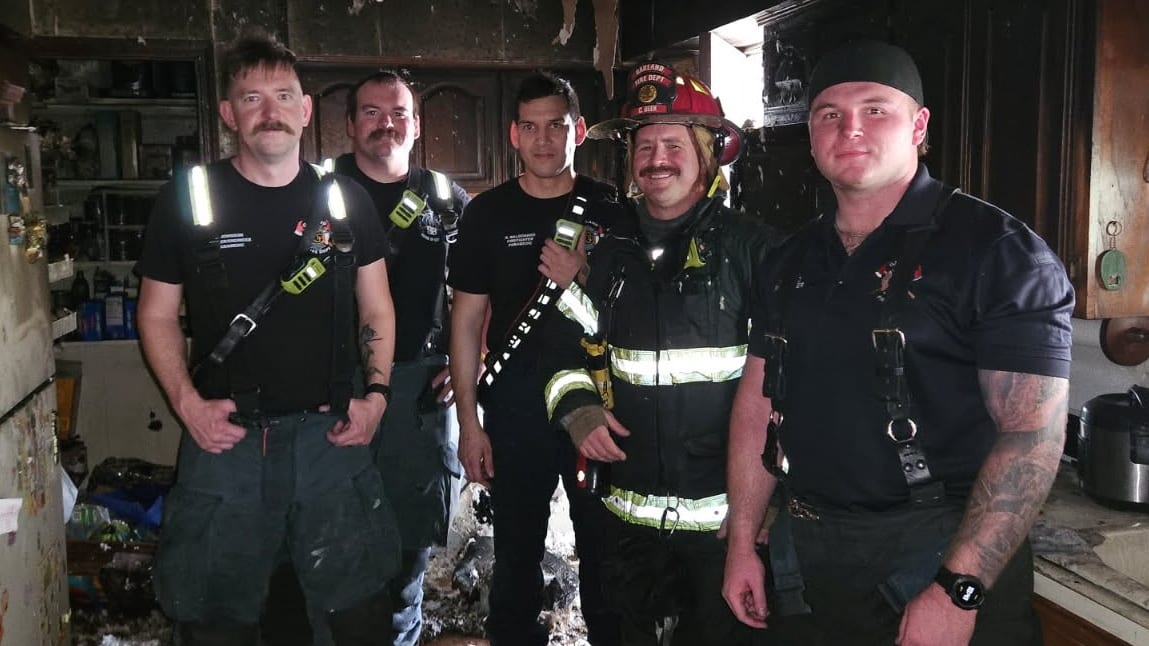
Being a firefighter reinforces that mindset. Risk and reward are never theoretical. Every decision lives inside probability, consequence, and timing. When I looked at probability, it was fairly simple. The fire service isn’t going anywhere. Demand isn’t shrinking. Call volumes are only increasing. That made the idea of building something we’d never had before easier to step into.
Weighing the Costs and Benefits
The consequences were clear. One outcome was falling on my face, being broke, and having nothing tangible to show for the effort. The other outcome was creating something viable that could support the people I work alongside, serve my peers, and help improve how we show up for a job we genuinely love. Both outcomes were real. Only one aligned with the responsibility I felt toward the profession and the people inside it.
Timing mattered just as much. Coming out of a pandemic, demand was there. Call volumes continued to climb. Burnout was becoming more prevalent, not less. Identity strain was showing up in new and familiar ways. Those numbers needed to go down. Firefighters needed a way back to their center of gravity, not just another way to push through. That missing element had existed for a long time. The moment to address it felt unavoidable.
Looking at all three together changed how the risk felt. It didn’t register as reckless. It felt calculated. I wouldn’t say I didn’t risk very much. I’d say the potential reward made the risk worth taking. Not trying would have carried its own cost.
Breaking the Fear of the Unknown
Most people don’t stall because they lack ability. They stall because they want the next level to feel familiar before stepping into it. They want certainty, proof, and reassurance they won’t look foolish if it doesn’t work. Progress rarely waits for confidence to catch up. Certainty often slows movement, while curiosity keeps it alive.
There’s a form of useful ignorance that has to exist when you reach for something that feels unattainable. This isn’t carelessness. This is trust in process. Fear of the unknown shows up in every conversation about growth, even though the unknown is where patterns break and new capacity gets built. Curiosity doesn’t remove risk, but it expands the frontier of what’s possible.
Comfort carries a cost. The cost hides well because it looks responsible. It looks like patience, timing, and playing it smart. Standards quietly shrink to match the environment. Goals get edited down to what feels reasonable. Protection starts masquerading as discipline.
The Compound Effect of Growth
The more you do things that don’t make sense yet, the more capable you become at operating without full visibility. That tolerance is where growth compounds. Not every idea turns into a win. Not every effort produces a visible result. Everything still sharpens judgment and expands range. Growth shows up in parenting, in friendships, and in choosing engagement over avoidance when it matters.
Uncertainty becomes the classroom. Surprise becomes the feedback. “That didn’t go how I expected” often marks the edge of something new. Chance matters, too. Chance favors presence. Opportunity tends to find people who stay in the room long enough for it to matter. Movement creates exposure. Exposure creates momentum.
Being at the table matters. You can’t win a hand you never sat down to play. You can’t be considered for what’s next if you refuse to show up for what’s in front of you. As we near the end of the year, thinking beyond what you already know creates space to learn what growth is asking of you internally, not externally.
The Courage to Move Forward
Stop forcing doors that keep resisting you. Closed doors are information, not rejection. Walk up to them anyway. Test them anyway. Discovery lives where certainty ends. Logic has limits. Growth doesn’t. Logic creates stability, but stability isn’t progress. Growth often starts before it feels justified.
This isn’t about external success. This is about internal demand. Internal demand creates patterns. Patterns create momentum. Momentum makes stagnation impossible.
The truth is that your life expands to match the standard you enforce, not the comfort you protect.