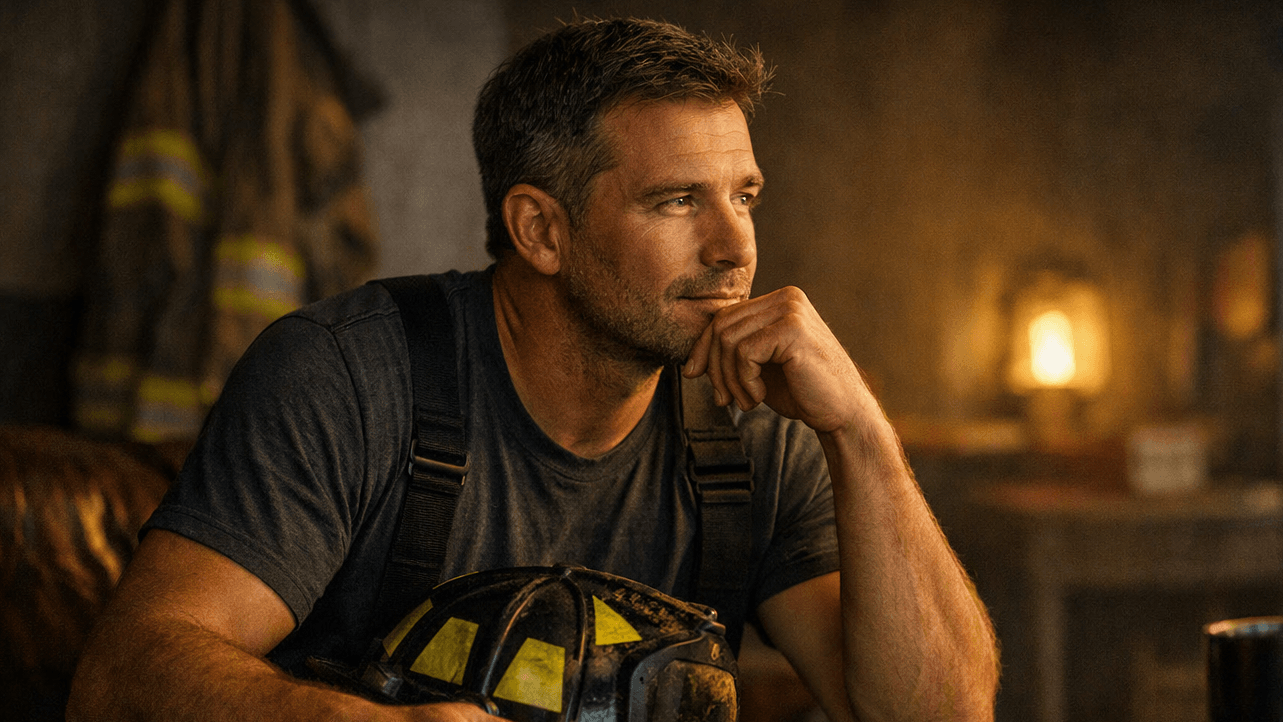

In every city, on every shift, first responders quietly absorb what the rest of the community is spared from seeing. The midnight overdose in a gas station bathroom. The mother’s wail after losing a child. The smoldering wreckage of a family home. These moments, though fleeting for the people involved, lodge themselves deeply into the minds of the firefighter, the paramedic, the officer who responded.
Over time, a first responder’s mind becomes a silent reservoir of trauma – an archive of the community’s worst days. Paradoxically, the very systems designed to protect the public from prolonged exposure to pain inadvertently concentrate that pain in the minds of the few who respond. What this means is sobering: our safety is made possible, in part, by a redistribution of suffering. Harm that once would have echoed through an entire village now echoes within the nervous systems of a handful of responders. We have professionalized emergency care, but in doing so, we have professionalized exposure to trauma.
Historically, tragedy was communal. A death, a fire, a violent act – all were shared experiences that brought people together in mourning and rebuilding. Today, those moments are cordoned off behind yellow tape. They are logged in reports, cleared from the scene, and, outwardly, forgotten. The community moves on; the responder carries it forward. The consequence? An invisible burden. A psychic toll that accrues over years, decades, and careers.
The Hidden Burden of Service
But what training prepares them for the cumulative effect of bearing witness to thousands of traumatic moments? The term occupational stress barely scratches the surface. This is not just about burnout or fatigue – this is about chronic saturation. It is about walking around with a mind filled with the grief, terror, and helplessness of countless others. It’s the paramedic who can’t eat dinner without flashing back to a trauma code. The firefighter who sees a child’s face in every room they enter. The police officer who hears a gunshot in the silence of sleep. We call it trauma exposure, but that feels too clinical. It is, more accurately, an erosion. A long, slow wearing down of the inner world – where empathy becomes painful and disconnection becomes a defense mechanism.
If we are going to rely on first responders to absorb our collective harm, then we must also invest in their healing. This means moving beyond symbolic gestures toward practical, sustainable solutions – ones that are accessible, affordable, and proven to work.
Mindfulness meditation is one such tool. It is cost-effective, evidence-based, and incredibly recognized not only for preventing mental health decline, but also for reversing the symptoms of stress-related disorders such as PTSD, anxiety, and depression. For first responders, it offers a way to process trauma. It restores focus, reduces emotional reactivity, and helps reconnect the responder to their own internal compass – something that can feel lost in the chaos of service.
Mindfulness as a Lifeline
What this can look like:
- Creating protected time and space within the work schedule for guided mindfulness sessions – not as a luxury, but as a necessity
- Training peer facilitators who can lead simple breathing and awareness practices, making mindfulness a cultural norm rather than an outlier
- Integrating meditation into department wellness programs, alongside physical training and continuing education
- Offering mindfulness apps, audio guides, or in-person sessions as part of onboarding and regular wellness check-ins
Here is an audio guide to a mindful meditation you can try:
This isn’t about turning first responders into monks. It’s about giving them back a moment of stillness in a profession defined by urgency. It’s about offering a tool that builds resilience before mental health breaks down – and helps rebuild it when it already has. Above all, it means recognizing that mindfulness is not just a trend or a buzzword – it’s a lifeline. A low-cost, high-impact practice that can help responders carry their experiences with more clarity, compassion, and agency.
To be a first responder is to live with the truth that pain is constant, but compassion can be too. There is strength in showing up, in taking action. But there is also strength in stillness – in pausing long enough to feel, to breathe, and to remember one’s own humanity. The mind of a first responder should not be the final resting place for a community’s trauma. It should be a place where experience is processed, honored, and ultimately released.
Mindfulness is not a fix-all – but it is a start. A small, daily act of courage and care that can make the unbearable, bearable. And perhaps, if practiced widely and consistently, it can remind us that no one – especially those who serve – should ever have to carry the weight of a community alone.
Josh Grandinetti is the founder of Foundation Fortified, mindfulness training designed for first responders. He is also a medically retired firefighter with 15 years of service, including five years as captain. He has worked as a CEP for 13 years and is an IMMA Certified Mindfulness Meditation Instructor, as well as a Trauma-Sensitive Mindfulness Instructor. Josh also hostsMidweek Mindfulnesson The Thin Line Rock Station every Wednesday from 12-2 p.m. EST, where he shares practices to foster resilience and well-being.