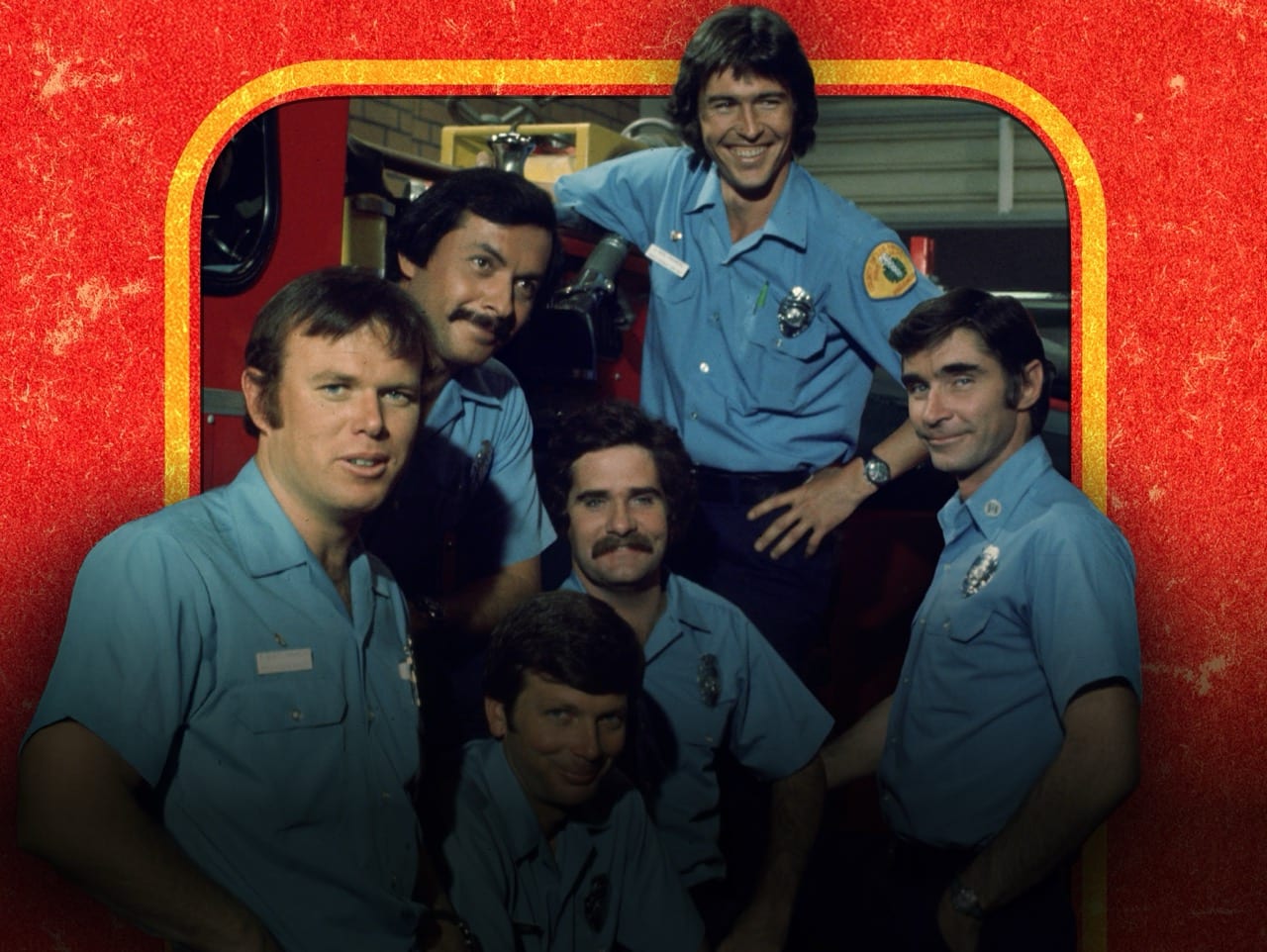
Squad 51. Two historical words that hold an uncanny amount of symbolism for firefighters and paramedics near retirement, happily retired, and even today: Chicago Fire, anyone? There is a generational line of first responders who joined emergency services because of Squad 51.
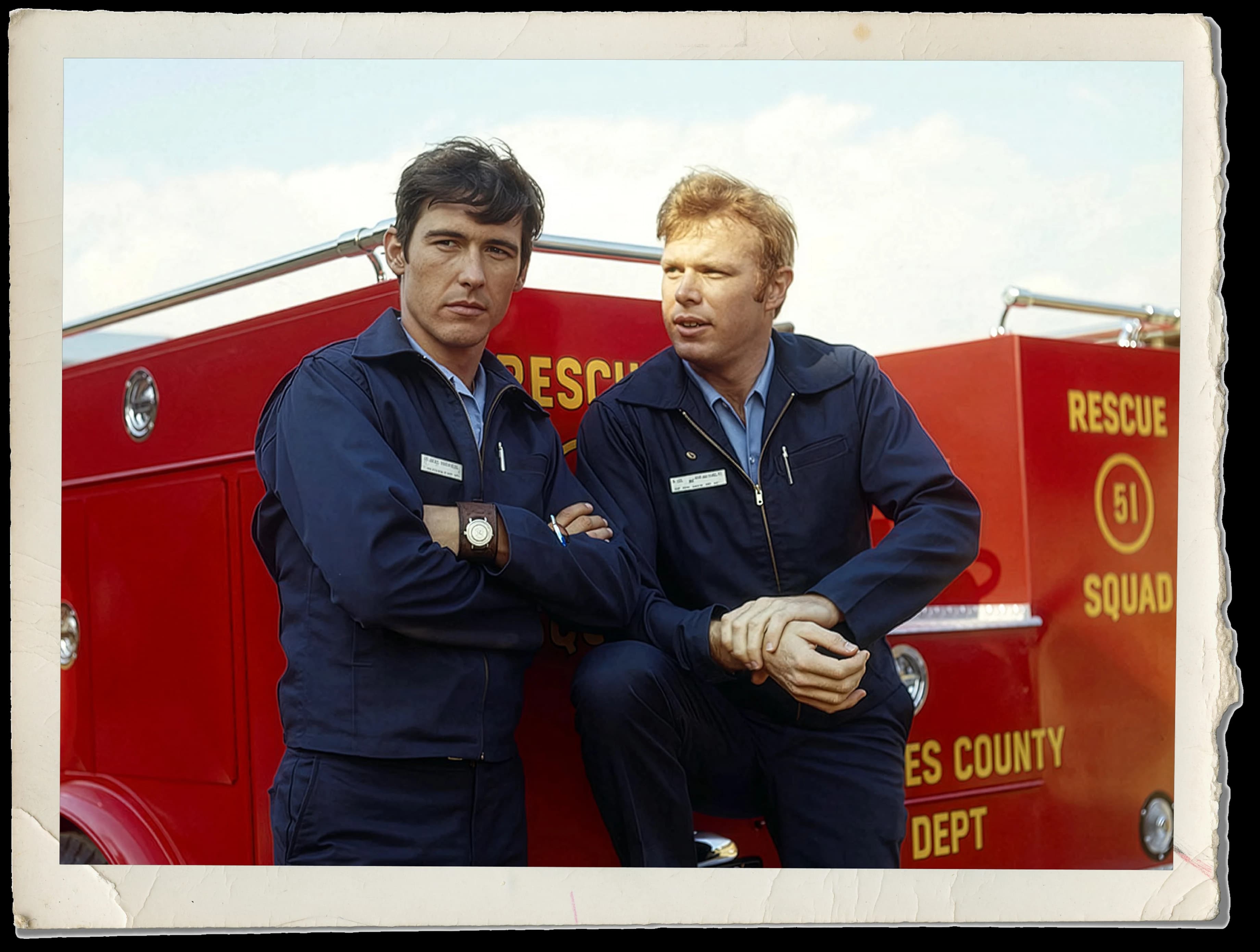
Cue Johnny Gage and Roy DeSoto, two paramedics who took the world by storm when NBC Universal came up with the concept for the hit show “Emergency!”
That was in 1972, 54 years and two TV Guide covers ago. “Emergency!” aired 123 one-hour episodes in its duration. In contrast, shows today produce only about eight to 10 episodes per season. Emergency! ran from 1972 to 1978, creating around 30 episodes per season.
When the show first aired, Randolph “Randy” Mantooth, a Sacramento, Calif., native who played Johnny Gage, a 20-something paramedic, couldn’t have predicted how popular the show would become.
The show’s impact was widespread. With so many people, including Mantooth, unaware of what exactly a paramedic was, it became a breeding ground for information and knowledge surrounding a career you’d need in your darkest moment but not think about before then. Thanks to the generosity of the LA County Fire Department, the show showcased not only equipment but also up-to-date best practices. Who better to direct continuity than a group of real-life firefighters?
“I had no idea (about paramedics) nor did Kevin Tighe,” Mantooth reiterated. “We were just two regular schlumps who were trying to keep a job. I said, ‘Was a paramedic like a doctor who parachutes on people?’ And the show’s director said, ‘Well, we don’t know either, but we’re going to find out,’ and BOY did we find out. It was a lot tougher than I thought it was going to be. I just kept saying, ‘I’m an actor, I can’t do this stuff,’ but they told me to get over it!”
“When you’re around the real thing and watching them react in the reality of it, at first it was a shocker to me, it was like, ‘Oh my god, this guy may die right here in front of me.’ Then after a while, you become not anesthetized to it, but rather it doesn’t shock you as much. You’re able to function.
I remember once asking a firefighter, ‘How do you deal with that? Like when they die. How do you deal with it? Do you blame yourself?’
And this one guy said, and they probably all say it, but I just remember the impact of him saying, ‘I try to remember all the successes, not the failures.’”
What brought Mantooth to “Emergency!” in the first place? Well, aside from a contract with NBC Universal, it was an acting moment in a separate production where he went off script and it just so happened the right person was sitting in the audience.
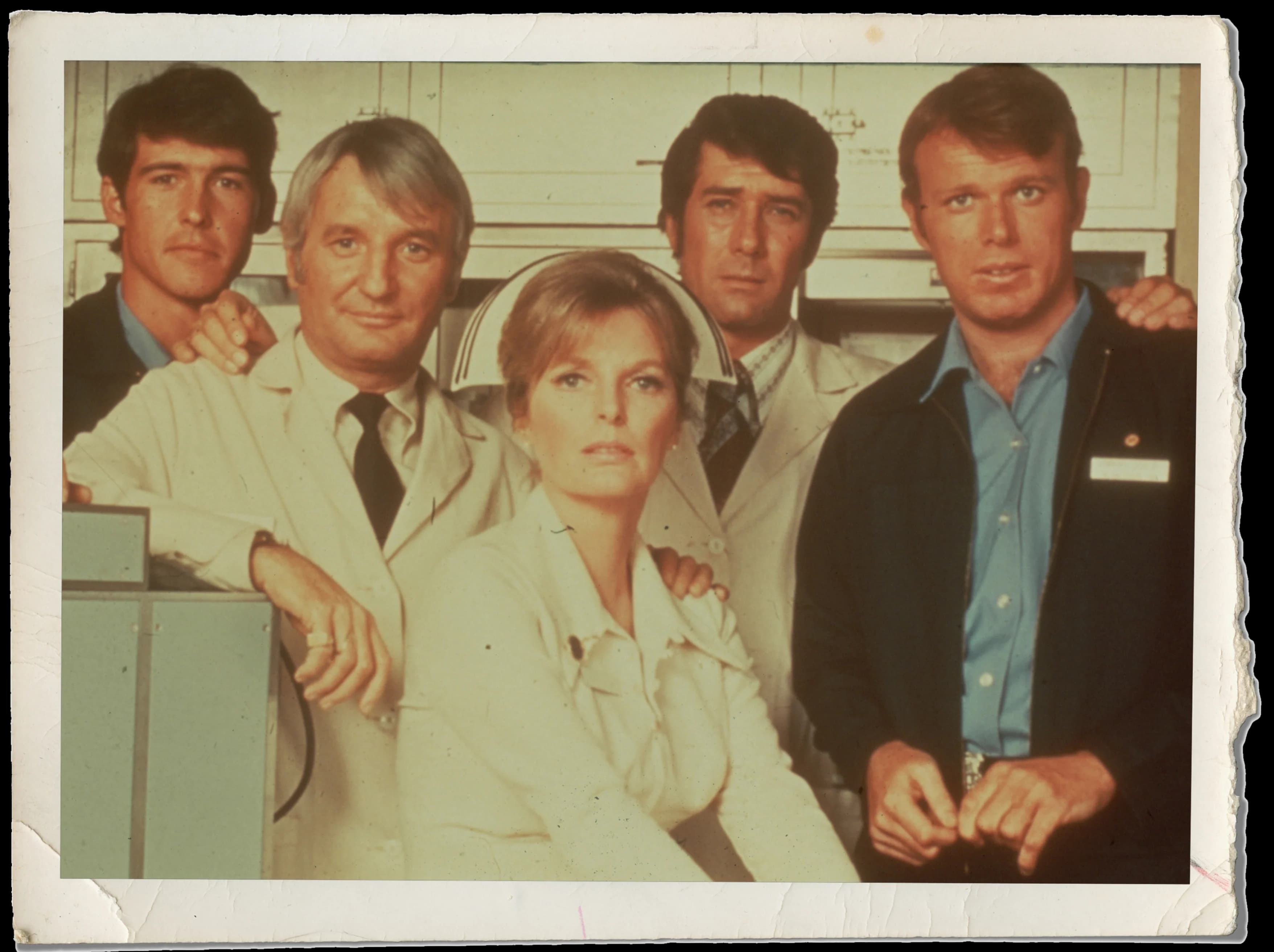
Mantooth explains, “I did a drama show called “The Bold Ones.” It had lawyers, politicians, and doctors; I was in the politician one. And I did this scene in a courtroom where I broke down and the script did not indicate I should break down, but I felt that was what this character would do. So, I broke down in the scene and Bob Cinader, a TV producer, saw that piece of film in a screening room and said, “That’s my Johnny Gage.” And the rest is history. I was told I would be playing Johnny Gage and I said I didn’t want to do it at first. They said, ‘What? You have an opportunity to star in a pilot and you don’t want to do it?’ I said this is a Jack Webb show and he’s going to want me to cut my hair and I don’t want to cut my hair. They said, ‘Shut up and sit down and you’re going to get a haircut.’”
Webb was best known for his role as the monotone, no-nonsense detective Joe Friday on “Dragnet.”
Mantooth, despite landing this once-in-a-lifetime role, which helped his fame take off, attributes his early roots in acting to his family’s constant moving and his need to acclimate each time he went to a new school. Enter Mantooth, or, as the mean kids called him, woman tooth, tiger tooth, etc. (you get the point), who cut his teeth on acting by adapting to his new school’s culture so he wouldn’t stick out. Did he want to be an actor? At that time, no. But after living in 22 states, he felt it was a necessity.
Mantooth finished high school and attended Santa Barbara City College for theater. After college, he was offered a partial scholarship to the American Academy of Dramatic Arts.
Curious about his first paid gig? It had two lines: “I do” and “Oh, I will.” He laughed as he shared the memory as if it were only yesterday.
I asked Mantooth if he had a defining moment when he knew the show had landed with its audience and was creating an impact beyond entertainment.
“Well, I would say maybe it was the third year that we began to realize the show’s impact.
People started approaching us, saying, ‘Hey, I’m a firefighter/paramedic because of you.’ And Kevin and I would look at one another and go, ‘Well, you should turn your TV off.’ We didn’t understand that impact.”
“Emergency!” aired at the same time as “All in the Family,” often on the same night. Could they beat the No. 1 show?
In the era before cable, satellite and streaming, television networks chess maneuvered their best shows to win the best viewer time slots.
“We were pitted against ‘All in the Family.’ Hell, I watched ‘All in the Family,’ and I went out and got a VCR to tape my show so I could watch ‘All in the Family.’ All the adults were watching ‘All in the Family.’ They were No. 1 and we couldn’t beat them, but NBC loved that we held our own. All the kids were watching ‘Emergency!’ I could go into a bar and nobody knew who I was because they were all my age and not at home watching ‘All in the Family.’ I couldn’t go into grocery stores because kids would follow me around and say, ‘Look, he’s buying mayonnaise.’ Now, as those kids grew up, I couldn’t go into the bars without being recognized.”
“I know that when you take a red fire truck and you run it across the screen, eyes will follow it,” says Mantooth. “But more than that, it was new and something no one had heard of before. It was a procedural show in the sense that we all thought we knew what firefighters did, but we really didn’t know. It was a learning process as much as it was about what firefighters do and what they’re trained for. And to be trained as a paramedic was absolutely astounding to the country.”
Remember, “Emergency!” hit the airwaves at a time when most Americans were served by ambulances run out of funeral homes or hospitals. Crews were called ambulance drivers because that’s mostly what they did. Care was pretty much grab and go.
When the show picked up speed, producers realized the impact of what Mantooth and Tighe were doing as paramedics and had to remove them performing the pre-cordial chest thump because the public started emulating the show. Not only that, but EMS systems, hospitals, and fire departments started to pattern their systems after the show. Talk about impact.
“More than once, I heard people say, ‘We watched the show and we patterned our system after what you guys do.’ Kevin and I went, ‘You patterned your system after a TV show?’
We’re just doing what LA County does; if they don't do it, we don’t do it.
If they didn’t have the equipment, we didn’t show it. That gave LA County lots of free equipment. I think what’s so great about the show is that we didn’t know that we had that power. When I said, ‘Look, we don’t use the jaws of life because we don’t have one,’ and within two or three weeks, we had three.”
Joe Woyjeck, retired firefighter/paramedic and Vice President and Brand Manager at the LA County Fire Museum, is a close friend of Mantooth and has had the honor of showcasing memorabilia from “Emergency!” at the museum. His uncle, who was one of the LA County Fire paramedics, helped train both Mantooth and Tighe in portraying paramedics for the show.
“I was a young teenager in the early 1970s and would go down to the station to visit my uncle and to watch them film ‘Emergency!’ Of course, growing up, I watched the show every Saturday. Years later, I was hired by the LA County Fire Department and eventually became a certified paramedic myself. I was formally introduced to Mantooth and Tighe when I started with the Los Angeles Fire Museum well over 20 years ago. The two of them were tremendous supporters of the museum and we have all been friends ever since. I believe Mantooth enjoyed the museum because, in many ways, it was like hanging around a fire station again,” explained Woyjeck.
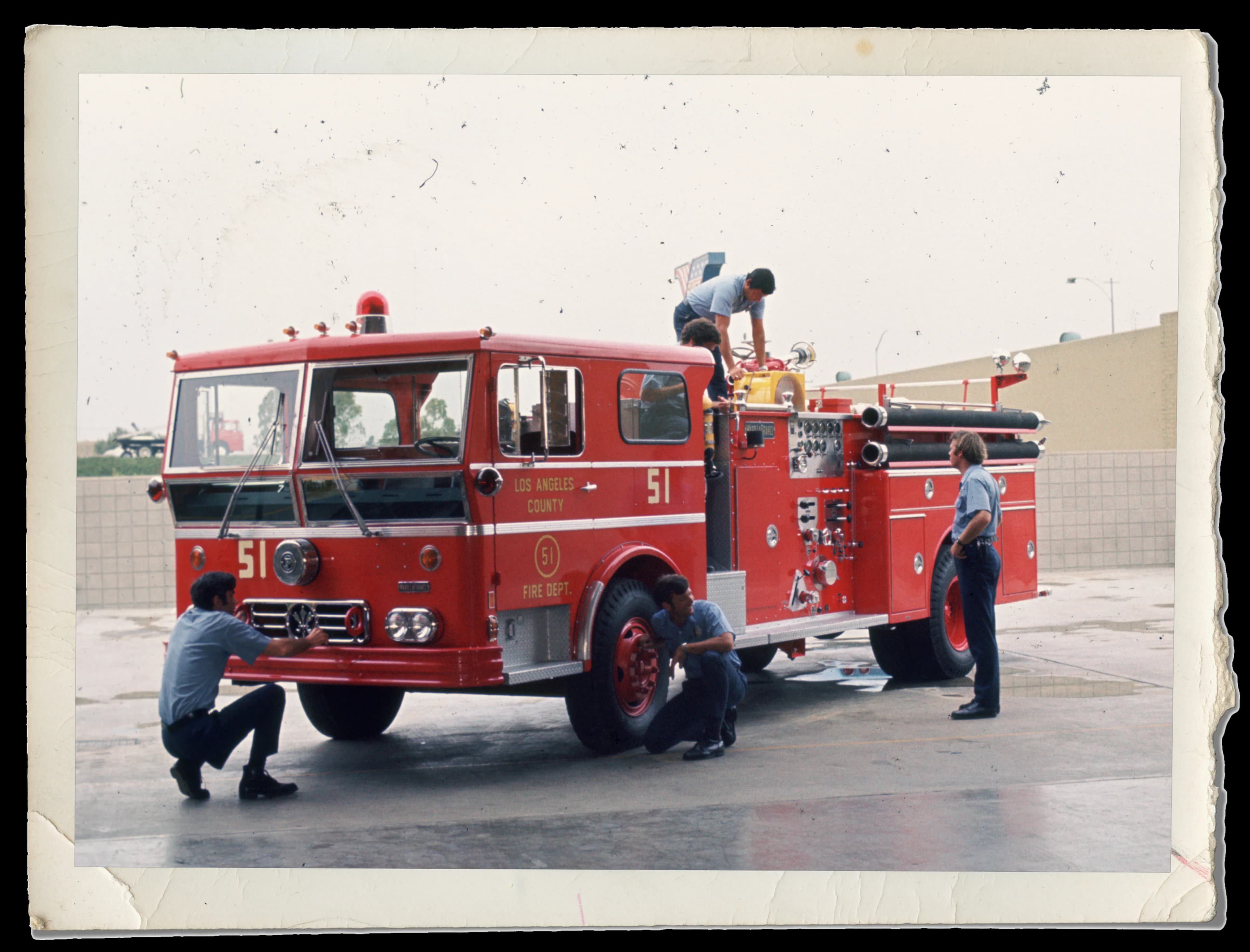
The museum, originally started by two LA County firefighters, was opened in the 1970s, then formally recognized as a not-for-profit in the late 1980s. With acquired spaces ranging from the LA County Fire Department headquarters, to units in Pacoima, a warehouse in South Gate, and then finally, in July of 2018, a showcase museum in Bellflower, Calif. The museum collects and preserves American fire apparatus. It also displays the original rigs from the show, which people travel far and wide to see. Mantooth said that turnouts, helmets, and even a radio were put in the museum.
Episode scripts, too!
“Over the years, we’ve restored Squad 51 and now have both Engine 51s and the original ambulance from ‘Emergency!’ in the museum’s collection,” said Woyjeck.
On a more personal note, which speaks to Mantooth’s character and love of his firefighter friends, when Woyjeck lost his son Kevin, who was one of the 19 Granite Mountain Hotshots killed in the Yarnell Hill Fire in Arizona, Mantooth was there beside Woyjeck, standing on his front porch, assisting however he could with the aftermath of such a devastating loss for Woyjeck. “I would expect nothing less,” Woyjeck explained. “He’s a great friend and a class act.”
Both Mantooth and Tighe worked together for seven years on the hit show, which just happened to be the length of their contract with NBC Universal. Given how often we hear about drama on television sets, I was curious about their relationship both on and off-screen.
“I met him (Tighe) in producer Jack Webb’s office with Julie London, Bob Fuller, and Bobby Troup. He said, ‘All right, you guys, we’re going to go on this adventure. Nobody knows what a paramedic is, but they’re going to find out. Then Jack said, ‘Randy, this is your partner, Kevin.’ I looked over and went, ‘Oh, great,’ sarcastically. I’m saying this guy is going to be fun to be around. But, we became such tight friends.”
He continued, “Kevin is the opposite of anybody I would typically approach to be a good friend. We are total opposites. I’m a reactionary and Kevin is a thinker. He thinks everything out; everything has to be in place for him to make certain decisions. Whenever I was running around with the crew, being a hero, Kevin was always sitting in his chair, holding a book about some ethereal theory by some guy from Greece 200 years ago. God, I can’t think of anything more boring. But yet, I was attracted to that part of him; it was something I was missing. I didn’t have the intellectual, very studied way of doing things. I was like, ‘Oh, there’s a job, gotta do it.’ Physically, I just jumped in. That’s me and not Kevin.”
Mantooth couldn’t have imagined doing the show without Tighe, explaining that he made him funny. To this day, Tighe and Mantooth talk at least once a month, and recently, Tighe flew down from Washington to California to celebrate Mantooth’s 80th birthday.
When reflecting on their time on the show, and what he liked and didn’t like, Mantooth was pretty clear about just how real the scenes got during filming. Water rescue anyone? Not Mantooth.
“We didn’t like doing certain (rescues), but we had to do them. I was two years into the show before I realized I had a stuntman. I was like, ‘Where the hell is he?’ I hated cold water, hated it. I would always be depressed the whole day, knowing I had to get in that cold water. Kevin didn’t hate it at all. He was a dolphin. He just loved it. I dreaded it. Get my head under cold water and I want to go home,” said Mantooth. “Kevin did not like heights, and I was like a monkey, zipping around. I had to be called down a couple of times because I was making Roy look silly up there, clinging to a branch and such. I was told, ‘You’re making it look too easy and you’re making Kevin not look good. I was like, ‘Oh, OK, but that’s what he does with me in the water!’”
Speaking of stuntmen and not having them when you need them, there was an episode with a tiger, who got a little bitey with Tighe. More specifically, with his throat.
“Kevin got bitten by a tiger. Blew me away. He brought Kevin down so quickly.
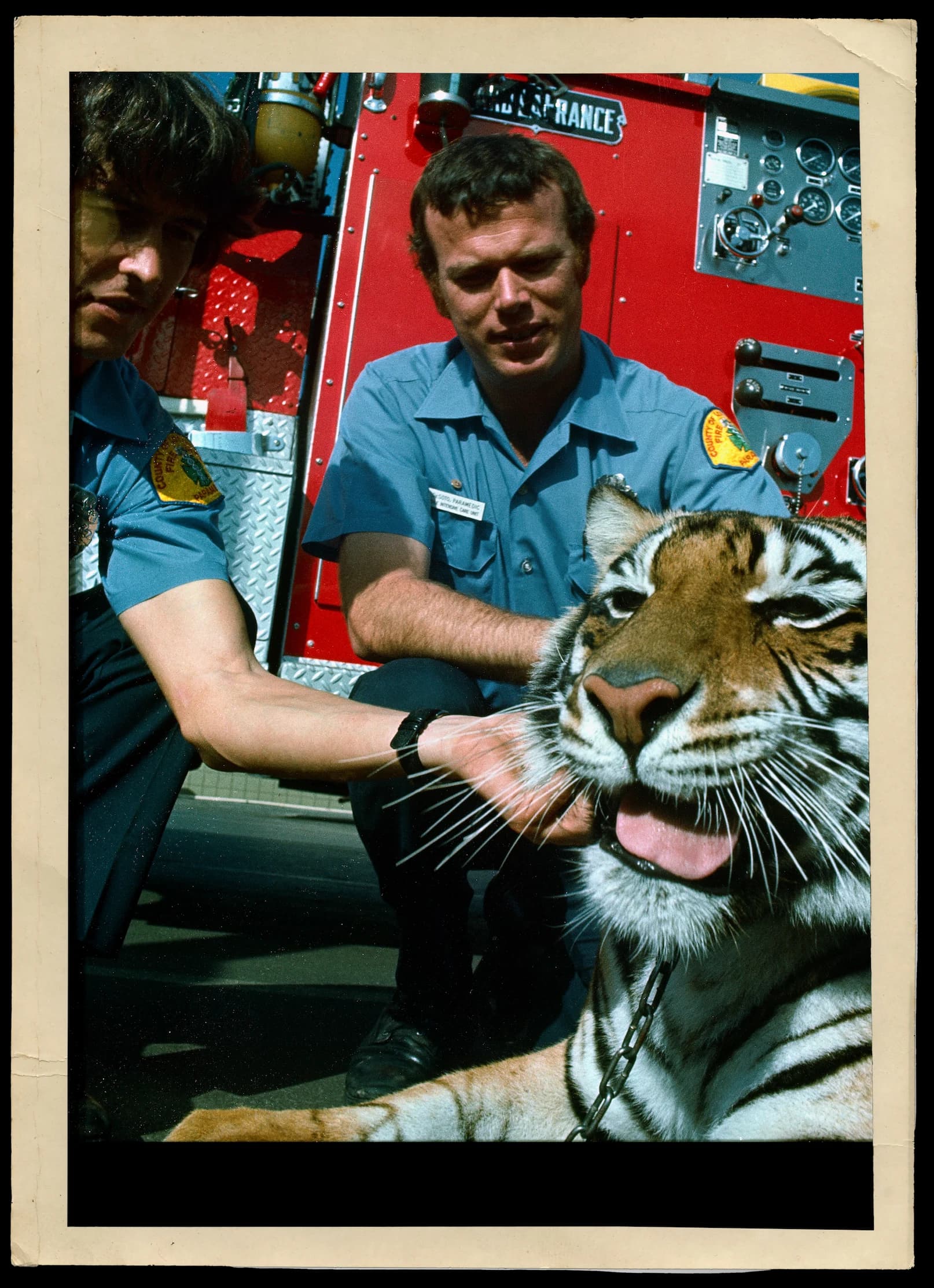
"All I could do was stare at the trainer and say, ‘Hey, uh, this tiger has my partner on the ground,’ and the trainer was in a bad position because he didn’t want to get excited and have the tiger rip into Kevin’s neck, which is how the tiger had Kevin. Kevin was just sitting there smiling, and I kept thinking, ‘Kevin, I don’t think you realize, a tiger has you pinned to the ground.’ I asked him about that later, and he said, ‘I was trying to stay calm, so I just kept smiling.’”
Tigers, water scenes, and monkey stunts aside, it’s the impact of the show that still befuddles Mantooth, who really doesn’t understand why so many people have placed him and the show on such a high pedestal. But we can appreciate a humble hero, even if he can’t see what several generations can see: a leader in our community who took on a role no one knew about and made it so positive that it helped shape the identity and profession for paramedics.
“I do believe that it (the show) changed everything. Not only that, but it changed people’s perception of what paramedics can do and what they’re not allowed to do. Because when I first got into this, there were firefighters who said, ‘Oh, paramedics, the hell with them. These were old-time firefighters who thought paramedics were tits on a boar hog. You know? What is the point? More and more, they realized that not only were they good rescuers but also good hands and eyes of the doctors.”
Mantooth’s popularity in paramedicine hasn’t changed. He’s been invited to speak at conferences about his role in “Emergency!” and its widespread impact.
“I was sliding into those events, beginning to realize just what an impact it was all having. I remember it was in Galveston, Texas, for my first speaking invitation. Dr. George Hatch, former chairman and program director of the Emergency Medical Services Department at Houston Community College, said, ‘Would you come down, and we’ll fly you and put you up so you can talk to us?’ I asked about what? He said about ‘Emergency!’ I went and did a speech and everyone responded really well to it. I was shocked and didn’t realize the impact it was having.”
Dr. Baxter Larmon, a longtime friend of Mantooth who helped us obtain this interview, has heard people tell Randy they’re paramedics because of him and their own dad, who watched the show.
“I'm surprised to this day the fuss that’s been made over that show,” said Mantooth. “You’re talking about a 50-year-old show. What show does that? I’ve heard people say, I grew up watching it with my dad on the couch and I’m still to this day a little amazed by that.”
Mantooth, despite being retired, if that even exists in Hollywood, has kept busy with other projects. His most recent work has been with director and producer Tom Putnam, who’s responsible for both the “Burn” and “Burn X” documentaries, among others. Putnam is deeply invested in the emergency services profession, and his work demonstrates his dedication as he draws attention to the professions of firefighting and paramedicine.
To no one’s surprise, Putnam also admires Mantooth, who is part of the documentary “Into the Unknown - A Paramedic’s Journey,” alongside Steve Buscemi, Tonya Mantooth, Kevin Tighe, Wren Arthur, Dr. Baxter Larmon, Steve P. Martin, and Dr. Richard Carmona.
Putnam was happy to weigh in on just how big an impact “Emergency!” and Mantooth have had on both the profession and himself.
“When I was five years old, my house burned to the ground, so I got to know the world of first responders at a very young age. Growing up in Portland, Ore., in the 1970s and 80s, “Emergency!” was a daily ritual after school. So it was a surreal and amazing experience to get to know and work with Randy and Kevin on their life-long passion project.
“On some films, executive producers are in name only. But on this one, it was truly their baby (Randy’s sister Tonya is an accomplished filmmaker and one of the producers on the film, as well) and I really saw my job as helping to bring their incredibly thoughtful and knowledgeable perspective to life. Every day in the edit room, we had a photo of the guys tacked to the wall above the monitor and would ask ourselves, ‘Would Randy and Kevin approve of this?’ Thankfully, they did! We’re all so excited about the final outcome and just launched a month-long Kickstarter campaign to release the film in 80-plus countries now that it’s complete,” said Putnam.
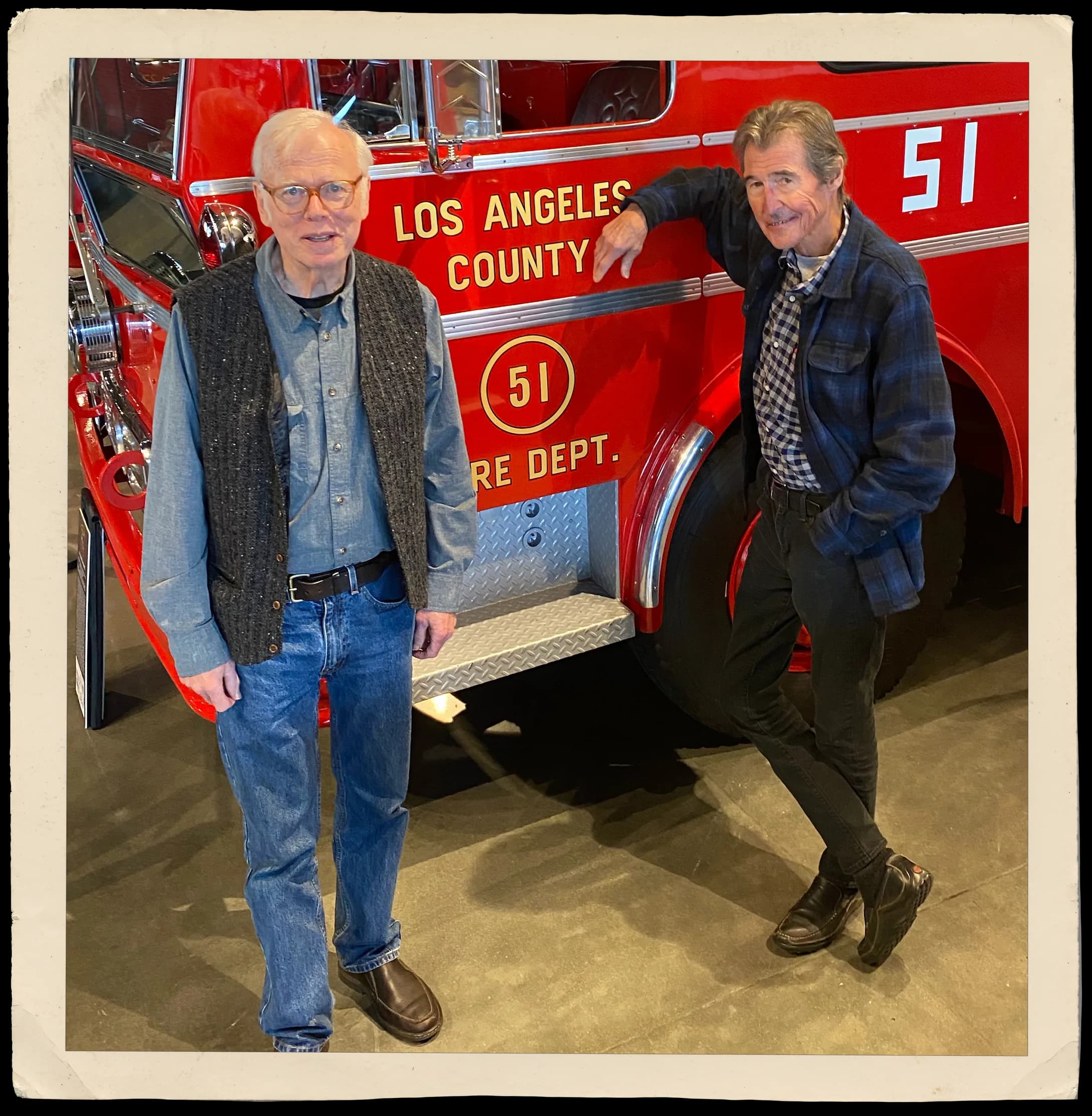
If Mantooth is this busy and dedicated at 80, we can’t wait to see what happens next with his projects and involvement in the profession.
After all, paramedicine has only gotten better. Take a moment to reflect on your career and picture all the changes that have advanced the profession. We could likely start and end the argument at powerlift stretchers, but “Emergency!”’s reach was much more. When paramedics were put on the map and recognized for their value in pre-hospital medicine, an avalanche was triggered, creating a never-ending cycle of progression for a career that originally had two actors floating in water, climbing trees, and getting bitten by tigers, all in the name of curiosity.
And if you're wondering whether Mantooth conceded defeat and cut his hair, as Webb wanted?
“He gave up,” Mantooth said, chuckling, with what we could assume was the best shit-eating grin we’ve ever seen.