
Love has a way of arranging moments in a sequence you don’t fully understand until you’re inside one. That realization met me in the yard this week as I walked it for the last time with our 13-year-old dog. Every step carried its own echo – birthday parties, quiet mornings, familiar routes we never questioned, the small anchors she gave us without ever trying. Those memories rose in a slow, uninvited wave as our family stood at the edge of a decision we kept hoping we wouldn’t have to make.
There is a responsibility that attaches itself to love when you’re part of the final call. For days we lived between hope and the truth, telling ourselves we had a little longer, a little more time, as if waiting might somehow change what her body made impossible. That hesitation came from love, but it risked stealing what comfort she still had. Eventually, the reality settled with a weight I could feel in my chest: she had outlived the body carrying her.
Once the decision became real, something inside me pulled tight, not with strength but with the weight of what was coming. It felt like standing in the narrow corridor between love and loss, aware that every direction carried its own hurt. My mind kept looping through the same questions: How do I protect someone when protection no longer means keeping them here? How do I lead my family through a moment I can’t repair? How do I look at my daughters and hold steady when everything under me feels unsteady? The part that cut the deepest was knowing I couldn’t spare them from any of it.
The Space Between Love and Loss
Those questions grew louder than the grief itself. My role was to help protect her, yet I couldn’t save her. I wanted to be steady for my daughters, yet I felt powerless. That tension made me feel like I was failing them, even though there was no version of this moment where anyone could walk away whole. Loss has a way of turning helplessness into self-accusation, when in reality it’s simply the boundary line of being human.
The emotions that followed were familiar – the ones loss always drags out of the shadows. Old grief. Old faces. Memories you thought had settled under the surface. A single loss collapses the distance between every other one you’ve ever carried. The ground doesn’t shift because of the moment you’re in; it shifts because you’re standing on the accumulated weight of all of them.
While I was trying to make sense of all of this, another moment from the week kept pressing against it. We responded to a call involving the sudden death of a young person – a loss no parent should ever have to endure. That reality sat beside my own grief in a way I didn’t know how to hold. I was mourning a dog who lived a full life, while another family was being forced into a kind of pain that violates the natural order. I felt guilty for hurting, guilty for trying to justify my sadness, guilty for even comparing the two experiences in my own mind. I kept trying to justify my sadness, trying to measure my hurt against theirs, as if grief needed a hierarchy.
When Grief Refuses Comparison
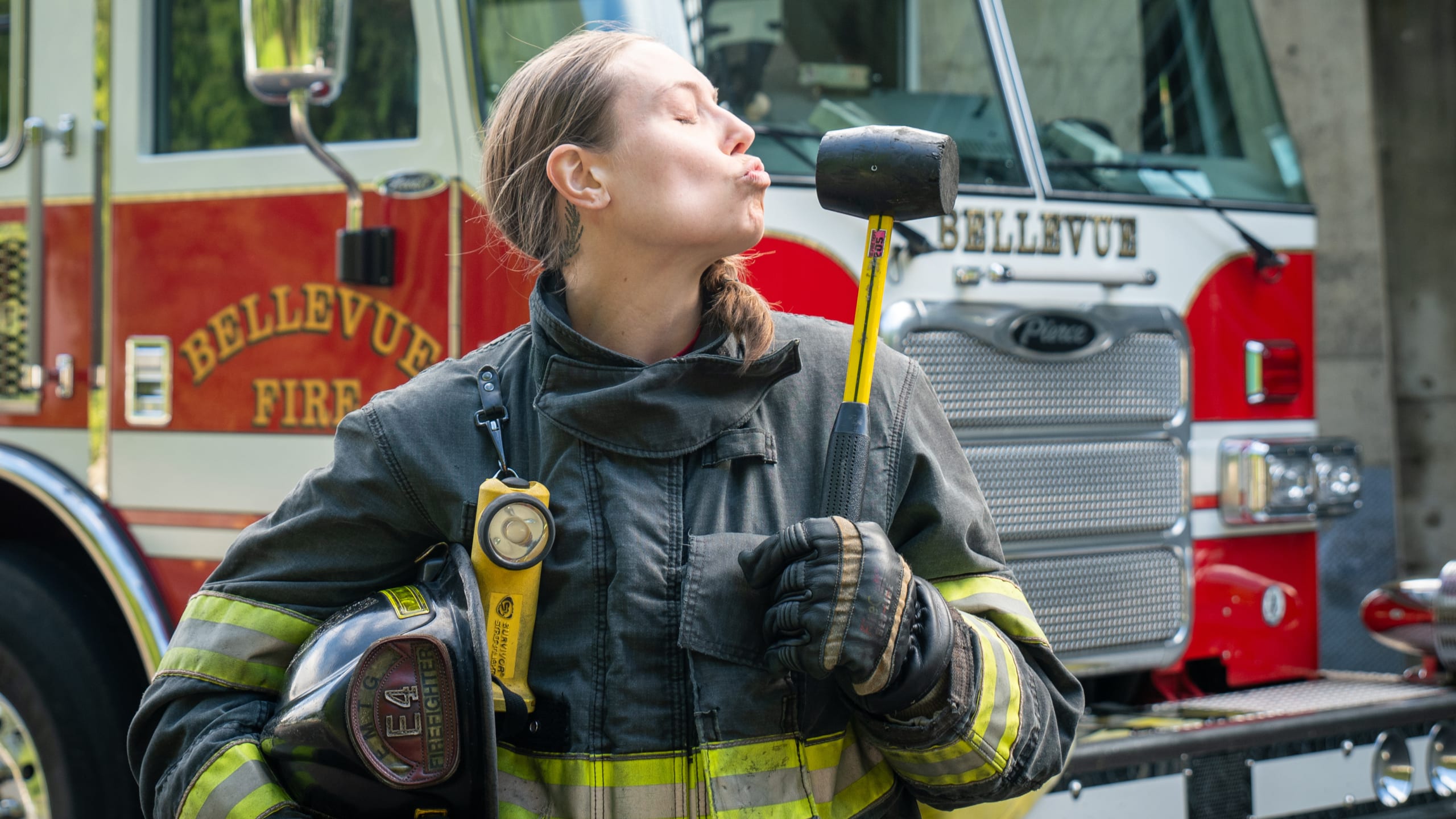
As a firefighter, the contrast tore at me. Their loss overshadowed everything. It left me feeling helpless, knowing there was nothing I could do to rewrite what they were now living through. Yet I also had to recognize that my own feelings were real. I had to hold space for both the weight of their world collapsing and the quiet ache of mine changing. Carrying those two realities at once has been its own kind of conflict.
What kept circling back – what finally pushed me to write this – was something I’ve been trying to articulate. When you bring a dog into your home, you know from the beginning you’re meant to outlive them. You know they’ll become part of the architecture of your life. You know a day will come when you’ll have to say goodbye. It’s one of the few kinds of love where the ending is understood from the start. Knowing that doesn’t reduce anything; it sharpens every edge of the loss.
This week reminded me that not all losses follow that order. Grief didn’t stay contained in the moment we were in. It pulled forward every person I never expected to lose, every relationship that ended out of sequence, every fracture that didn’t align with the way life should have gone. Losing her reopened files I thought were settled. Grief rarely shows up alone. It brings its entire archive.
The Lack of Control
Underneath everything was the recognition that so much of this pain came from having no control. With her, we were trying to do the right thing, the kind thing – the loving thing – even though every option felt wrong. With those other losses, the ones never meant to happen, there was no choice to make at all. No warning. No preparation. Just life rearranging itself without permission.
This is why the moment hit with the force that it did. It wasn’t only about losing our dog. It was the reminder that love doesn’t shield you from what you can’t predict. Even when you think you’re prepared, loss finds new ways to change you. Leadership, strength, being the steady one – none of those roles involve fixing anything in a moment like this. Sometimes they ask you to stand there, exposed, human, accepting that you cannot.
Through all of it, I kept drifting back to the same thought: I’m sad it’s over, but that feeling is outweighed by the simple fact that I’m grateful it happened at all. That realization has followed me through every loss I’ve carried. Like most of us – and I’ll say this as a firefighter – there are people in my life I never expected to outlive, people whose absence still changes the air in the room. As the week unfolded, I kept returning to the same thought. Gratitude doesn’t erase the ache; it gives it a frame. I’m grateful they were here. I’m grateful she was here. Her final walk beside me – slow, trusting, quiet – will stay with me longer than any ache. She followed the way she always had, unaware of how much she taught us simply by being here.
The truth is, loving deeply means losing deeply, yet the depth of the loss is never larger than the life that created it. Gratitude fills the space grief opens, reminding me that what hurts now once made me whole.