Verified PPE maintenance programs can keep dirty and damaged gear safe and compliant
Today’s fires can release a toxic mix of chemicals from lithium-ion batteries, petroleum-based fabrics and countless other sources. These chemicals can bind to protective gear and be absorbed through the skin or inhaled, exposing firefighters to serious health risks – including cancer.
The statistics are sobering:
- According to the International Association of Fire Fighters (IAFF), over 70% of line-of-duty deaths of IAFF members in 2023 were from occupational cancer
- Firefighters have a 14% higher risk of dying from cancer than the general U.S. population, according to a study by the National Institute for Occupational Safety and Health (NIOSH)
- And they are twice as likely as non-firefighters to be diagnosed with testicular cancer and mesothelioma, the NIOSH study found
Personal protective equipment (PPE) is a firefighter’s last line of defense against extreme heat, hazardous conditions and dangerous toxins. While modern turnout gear is engineered to withstand intense environments, it only works well if it’s properly maintained.
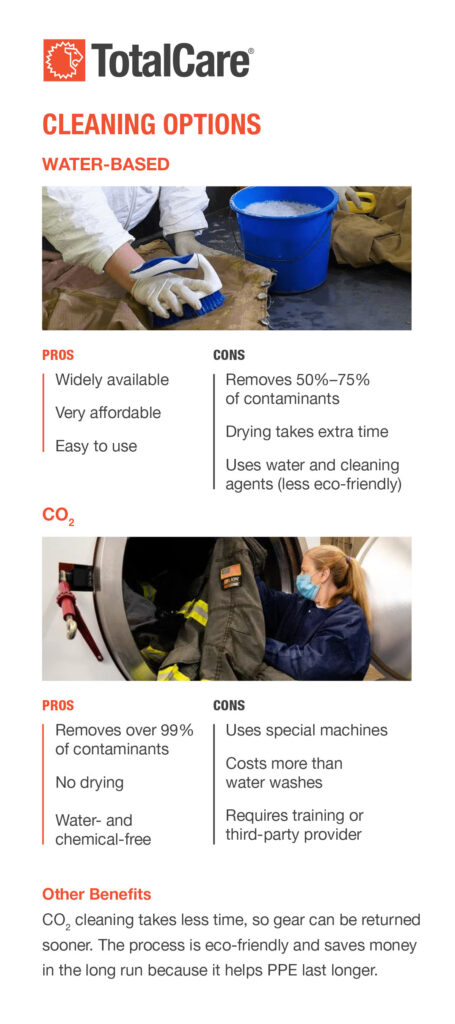
For years, firefighters have used soap and water to clean their gear. These traditional washes are inexpensive and easy to do, but they only remove a portion of the carcinogens trapped in soiled gear.
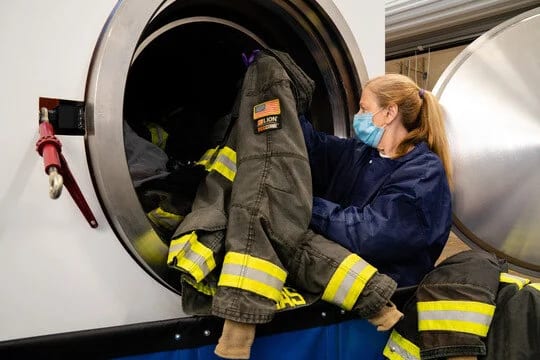
Many departments are now using pressurized CO2 instead to clean their gear. CO2 systems are the gold standard in gear cleaning and can remove more than 99% of toxins, drastically lowering the cancer risk from contaminated PPE.
How to Tell if PPE Is Clean
Firefighters can check their gear for contamination with a few simple tests.
The Touch Test
A stiff area that looks like a stain on PPE is a sign of possible contamination. Firefighters also can rub a piece of white paper over their gear; if the PPE is dirty, contamination will transfer to the paper.
The Smell Test
Clean gear should have no smell at all. This includes smoke, chemicals or even a citrus scent from detergents. Just because gear smells “clean” doesn’t mean it is.
When to Clean Gear
NFPA recommendations call for cleaning PPE whenever it gets soiled, and advanced cleanings should happen at least twice a year. Post-incident cleanings may be needed after fires or contamination events.
Thorough inspections and repairs are the final parts of a strong gear maintenance program. These services help identify and fix small problems before they become big issues.
The best inspections go beyond obvious signs of damage. Inspectors also should examine moisture barriers and liners; this is especially important for gear that has been in service for 3 or more years.
Quality repairs can keep protective gear working as new. All repairs should meet NFPA 1850 standards, and companies should offer detailed service reports of any work done on protective gear.
The Bottom Line
By treating PPE maintenance with the same discipline as apparatus checks or tactical training, fire departments can reduce cancer risks. And that can help keep their most valuable assets — their people — safe for the long haul.
LION TotalCare takes firefighter PPE care to the next level by combining state-of-the-art cleaning, inspection and repair services. Our work meets all NFPA maintenance, safety and performance standards because our customers expect us to keep them safe — and we do. Learn more at lionprotects.com/totalcare.