
The Claim of ‘Self-Leadership’
There is a part of the leadership literature that focuses on something called “self-leadership.” The idea, in a nutshell, is that if you want to be good at leading others, you need to be good at “leading” yourself. In a Forbes article from 2024, you’ll find an example of that argument. However, you’ll notice that three times in the article the author explains that “self-leadership” is essentially “self-management.” The article includes other themes, like decision making, accountability, self-awareness, and learning.
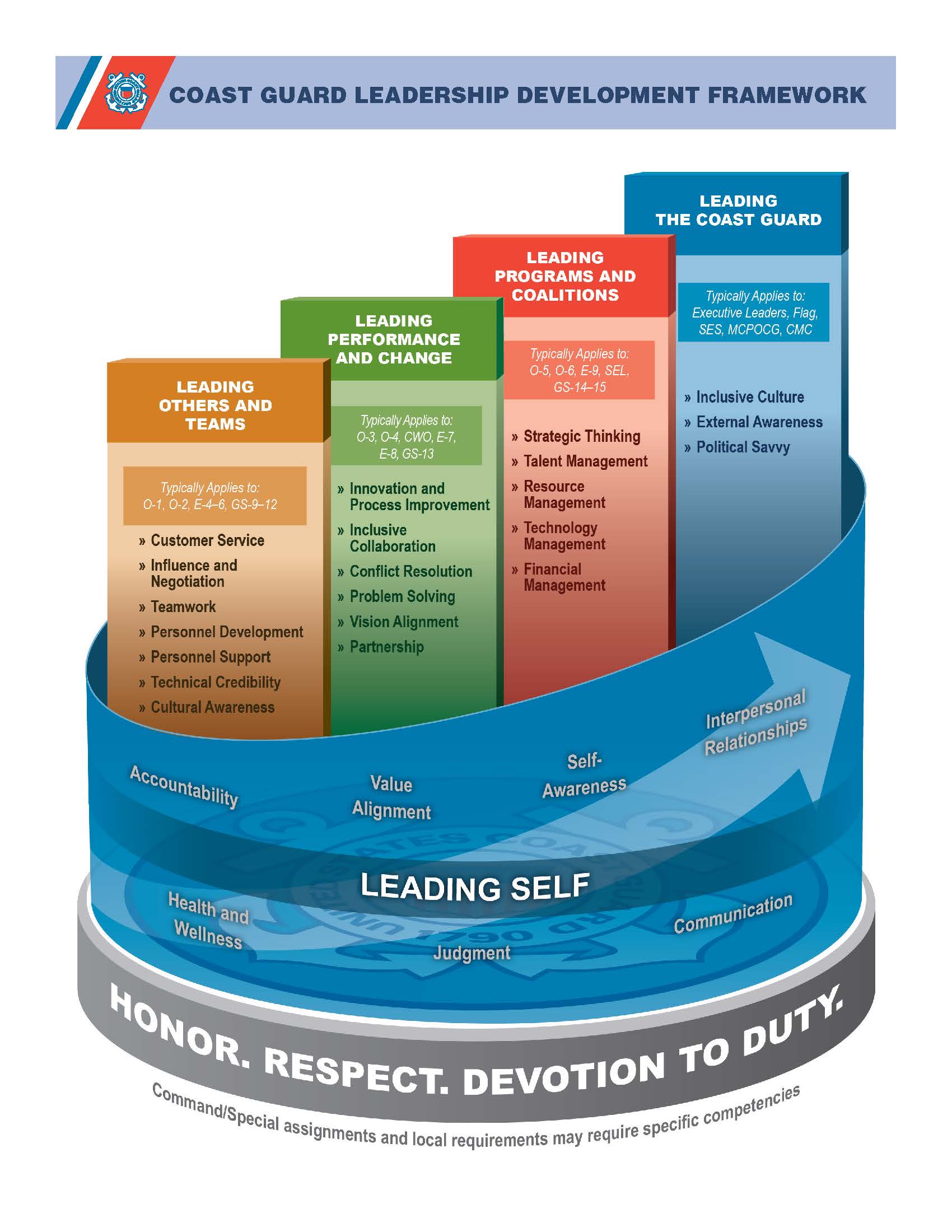
These themes are similar to several of the U.S. Coast Guard’s (the military branch I serve in as a reservist) leadership competencies found in the Coast Guard Leadership Development Framework (LDF). The LDF is the USCG’s official policy for evaluating officers, enlisted members, and civilians. There are 28 Leadership Competencies in the LDF, which can be seen in the infographic below (and here).
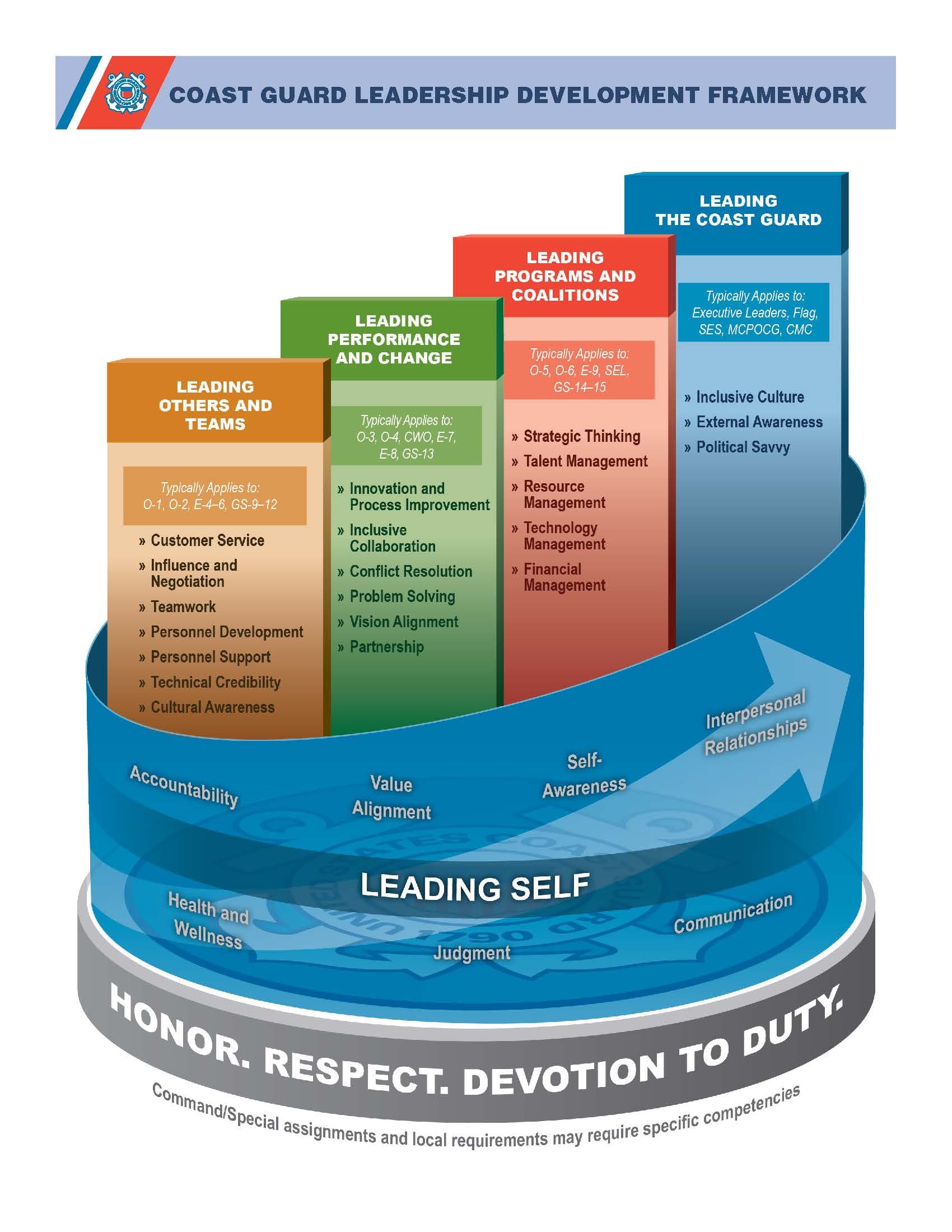
As you can see, the “Leading-Self” category of the LDF includes competencies that describe a responsible adult that has discipline, good decision making (judgement), and the ability to work well with others. But is this worthy of being labelled as leadership? You’ll also notice competencies labelled as management.
Back in 2020-2021 during COVID, I was activated to full-time duty for a year to the Office of Leadership to help revamp the Leadership Development Framework, which hadn’t had an update for almost 20 years. I argued to the Office of Leadership and the USCG’s Leadership Development Center that “self-leadership” doesn’t make sense, and I was told in person that they agreed with my argument. However, because the USCG already had used the idea of “self-leadership” as a category for so long, Admirals that needed to sign off on any changes were not going to break tradition, and that we needed to keep that category.
The USCG Office of Leadership did adopt and include in the LDF an important aspect that I proposed (which is argued in my book, and also in one of my previous CRACKYL articles). They agreed with the argument that the word “leader” is used normally as a noun that describes a position of power, and that the person in such a position might be doing either management or leadership, and that those two verbs are distinct. Below is a section of the LDF that shows the adoption of that concept.
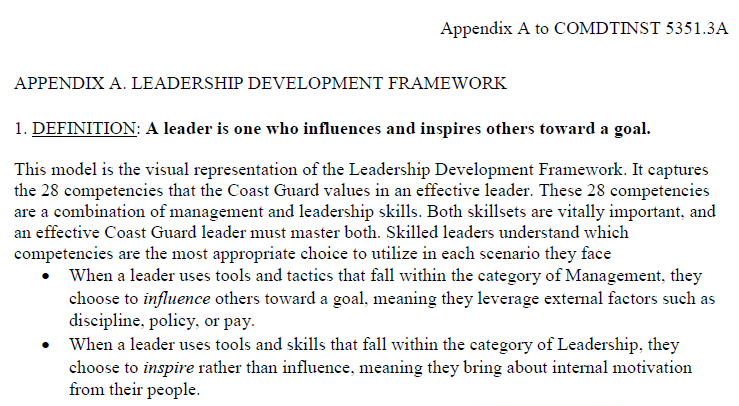
As you can see, the section of the LDF that defines a leader, includes a differentiation between management and leadership. This is a critical aspect for any debate on “self-leadership,” because it begs the following questions: If “Self-Leadership” exists, where do we identify a leader-follower relationship within a single individual? Why wouldn’t “self-leadership” simply be called discipline, decision making, or virtue? Even if we insist on attaching the word “self” to another word to describe the competencies that go along with being a good individual, why not call it “self-management” or “self-motivation”? Is it possible that we use the term “self-leadership” because leadership is just a sexier term and sells better?
Leadership as a Noun and a Verb
In my last CRACKYL article, I introduced a 2×2 matrix for the word “leadership” that represents how leadership can be used as a verb or a noun, and can be subjective or objective. I argue that the vast majority of leadership literature applies the words leader or leadership in ways that are never used as an objectively defined verb. The 2×2 matrix is shown below.
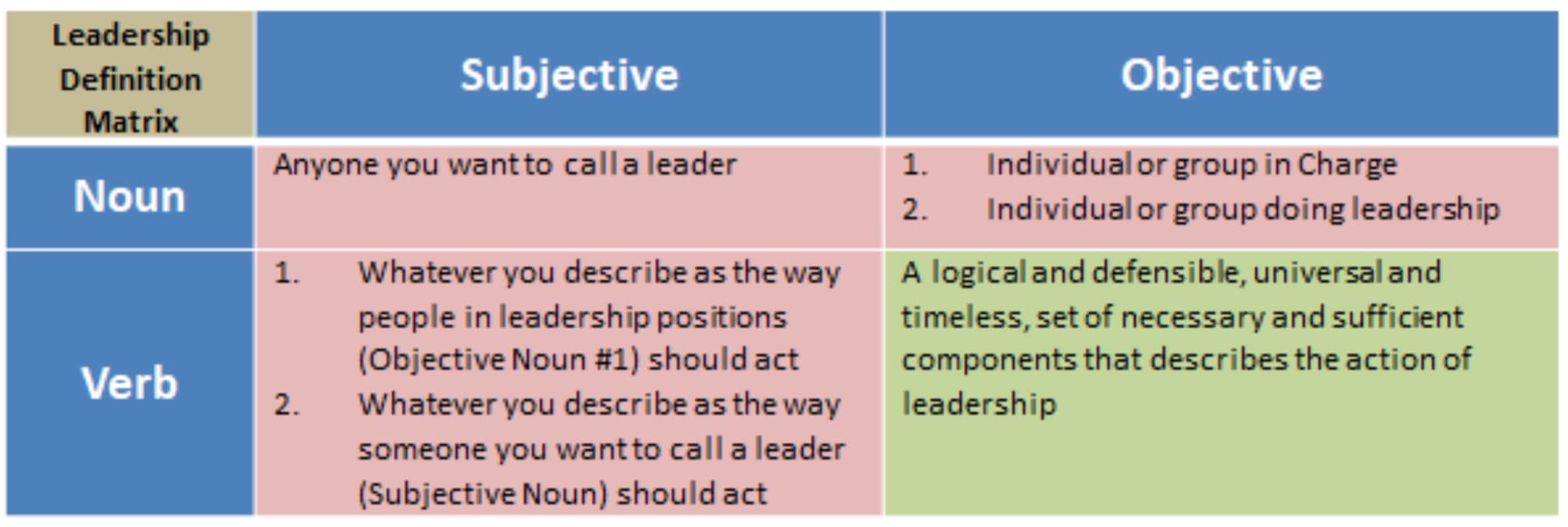
For those that insist on using the term “self-leadership,” it would fit in the matrix as a subjective verb (No. 2 in the matrix). Using the term “self-leadership” simultaneously applies the concept of leader (as a noun) to an individual, and also applies the concept of leadership (as a verb) to that person’s actions. The problem with using leadership as a term in this way is that it devolves into pure opinion. Basically anyone who makes any decisions about their own life, regardless of what those decisions are, can claim “self-leadership.” Not only does that imply that the decisions you make as an individual are not originating from any other person, or from nature (if so that would mean you are actually following something other than yourself), it also means that there is some possibility of you choosing not to “follow” yourself.
In order for leadership to be occurring, followership would also have to be occurring. However, your body does not choose to follow or not follow the ideas of your mind. Your body either responds (or doesn’t if you have an injury or illness) to a decision that your mind makes. If we reduce “leadership” to mean an unquestioned response (e.g., your arm moving when you decide to drink from a cup), then what you really mean to say is dictatorship or automation, and both of those concepts removes humanity out of the equation (which also means a robot with AI is doing “self-leadership”).
The Necessity of Learning from ‘Others‘
Followership implies that there is a passing of knowledge from one person to another, and that the follower is adopting and deciding to act on that knowledge. The three main ways of learning are experimentation, observation, and education. It is true that an individual can experiment on their own, without other humans involved, but even then the individual is learning from an interaction with nature (there isn’t much an individual can experiment with if they were isolated by themselves, alone).
If decisions are coming from experimentation with nature, then we are following nature, not ourselves. If our decisions are coming from observing others, or being educated by others (either verbally or in written form), then we are following the actions or advice of others, not ourselves. That is true even if the output (action by an individual) happens much later in time from the input (observation or education). In truth, “self-leadership” is just a sexy way of saying that you are developing into a person that conforms to the culture that you are a part of that others can rely on. In other words: “growing up.”
Dr. Gamaliel D. Baer is a firefighter/EMT/special operator with Howard County Fire and Rescue (Maryland). He is a reserve officer for the U.S. Coast Guard, and is a faculty member at Johns Hopkins University, where he teaches Leading and Managing Change for the Master of Science in Organizational Leadership. He lives in Howard County, Maryland, with his wife and four kids.