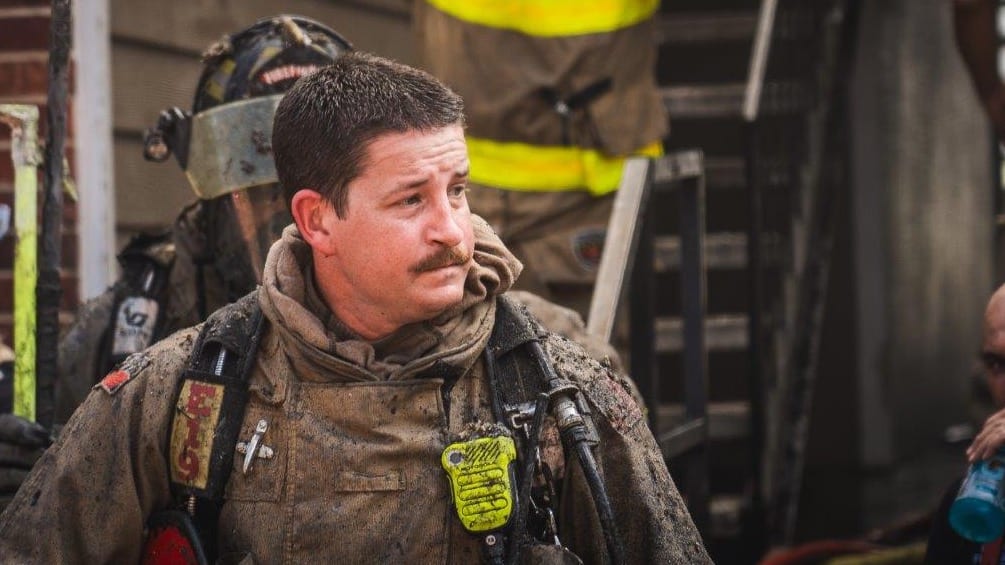
When I was first promoted to lieutenant, I found myself lacking the tactics and skills to appropriately lead my crew in training. My crew at that time had a cumulative two years of experience between the three of them, and they were looking to me, their “experienced” lieutenant, to lead them in the right direction, a reality that weighed heavy on me.
Due to the way my department is organized, I spent eight and a half years working on an ambulance prior to returning to the fire division. During this time, I invested in personal development and training to be the best I could be as a paramedic, but spent zero time keeping up on working on the fire side. Having become a regular listener and reader of Jocko Willink, I took the idea of ownership to heart. In order to become the best leader I could for my crew, I had to come up with a system to prioritize training for them and myself.
Before moving forward, it would be good to discuss responsibility and ownership. This is not our sole responsibility; it is that of the entire leadership, from the fire chief of the department down to the rookie. That being said, we have little control over what decisions they make or what they prioritize. Venting about issues is perfectly fine until we start using it as a reason to justify doing little to nothing ourselves. This is detrimental to us in two ways: First, we really accomplish nothing. Second, we set a bad example for our crew on how to proceed when things get difficult. If we take ownership of our individual responsibility and we choose not to focus on what “they” are not doing, we can accomplish much more. We only have control over the actions we ourselves take, and what we choose to do about it.
Ownership and Responsibility
From the outset, it is our responsibility as officers to ensure our crew is prepared and trained to address any scenario. This includes responding to EMS calls, managing structure fires, handling hazardous materials incidents, performing elevator rescues, understanding fire alarm and sprinkler systems, recognizing building construction and collapse risks, mastering vehicle extrication and both forcible and respectful entry procedures, understanding fire behavior physics, executing effective search techniques, and operating pumps and aerial apparatus, among other skills. The scope of required knowledge can be daunting, especially given there are aspects we may not fully comprehend ourselves, making it challenging to determine where to begin. Nonetheless, we recognize the importance of incremental progress and approach these responsibilities systematically, addressing each element step by step.
Let’s begin with setting priorities for training. If your goal is to train fireground skills, then start by making a list. If done thoughtfully, you will probably end up with more than two pages of items, from pulling the first line and flowing water, to pump ops, forcible entry types, construction, RIT drills, all kinds of ladder stuff, all the way to firefighter down, rescue and doffing procedures.
Prioritizing Fireground Skills
After you have come up with this list, start to number it, with one being the skill you are most likely to perform today and the last being the item you are least likely to utilize.
Next, look at these same skills and determine which ones carry the most risk if performed poorly, to the least risk. Now make a frequency versus acuity comparison. We need to identify which training topics will be most useful and have the greatest impact on the fireground, especially those we cannot perform instantly or without preparation.
The items we should be working on first are what we have identified as being high frequency, and high acuity. For instance, like the old adage says, “As the first line goes, so goes the fire.” Hopefully, we all understand that by now. At every single fire, we should be pulling a hose line, after choosing the appropriate volume and mobility requirements, and doing it as efficiently and effectively as possible. If we cannot accomplish this skill to the best of our ability, the impact it can have on the fire is enormous i.e., high frequency, high acuity.
Similarly, for the truck guys, if you are more likely to be assigned first in search, your ability to read the building, force entry and complete a primary search is arguably the most important job on the fireground. (Yes, we all know that water application is paramount, but it’s all in support of a good search and potential rescue operation.)
Structuring Training by Frequency and Risk
Now that we have done the work to prioritize fireground skills we can do the same for medical calls, maybe make pump operations or aerial operations its own subject, Hazmat skills, building construction and collapse, fire behavior, etc. We can allocate these to a day of the week if we want, e.g., Medical Monday, Truck Ops Tuesday, Water Wednesday, RIT team Thursday, etc.
When we believe our crews have become proficient at the skills we started with, we can proceed to the less frequent skills, and prioritize some things that are high acuity but maybe less frequent, such as ladder bailouts or self-rescue from second or third-story windows.
RIT drills are extremely high acuity but also very low frequency. First, we train on how to prevent the need for them, however, when it happens, we can’t afford to waste time “figuring it out when we get there.” This level of acuity necessitates it being higher up on our priority list even though it’s extremely low on our frequency list, this is why I gave the category its own day.
Building a Culture of Input and Confidence
We need to be thoughtful and thorough in this process to make sure we aren’t missing anything vital, and it would be a great idea to make sure your crew has some input. Just make it clear, no one is judging them for what they may feel deficient in; they cannot feel ashamed to share their own concerns. If you, as the officer, don’t create an environment where they feel comfortable, not only will they not work on improving, you won’t be privy to their insecurities, either.
The reality is we need to prioritize before we can execute the appropriate training for each individual crew. We have crews out there that are extremely proficient in the basics, and as with every profession, we have some that have fallen victim to that devil we call complacency.
We as company officers need to take a hard look at our crew’s abilities and train to their level as needed. The list of items we need to train on and have answers for at the drop of a hat really does seem to be never-ending, and it can feel paralyzing at times. After all, the general rule for the public seems to be that if you need a problem solved that does not require a gun, call the fire department. Getting overwhelmed by this is not an option. You must prioritize and move forward. You are the only one you have control over, and you hold the responsibility of training your crew.
Moving Forward with Ownership
If you are unsure of the best way to train on something, then look at those around you, pick up a book on skills and tactics, consult one of the many editorial resources, or attend a conference (I’d recommend the Alamo Fire Conference, but I may be biased.) Only you have control over how you decide to move forward, and moving forward without training yourself or your crew is not a viable option. Now get out there and get going, your crew is looking to you to lead.