
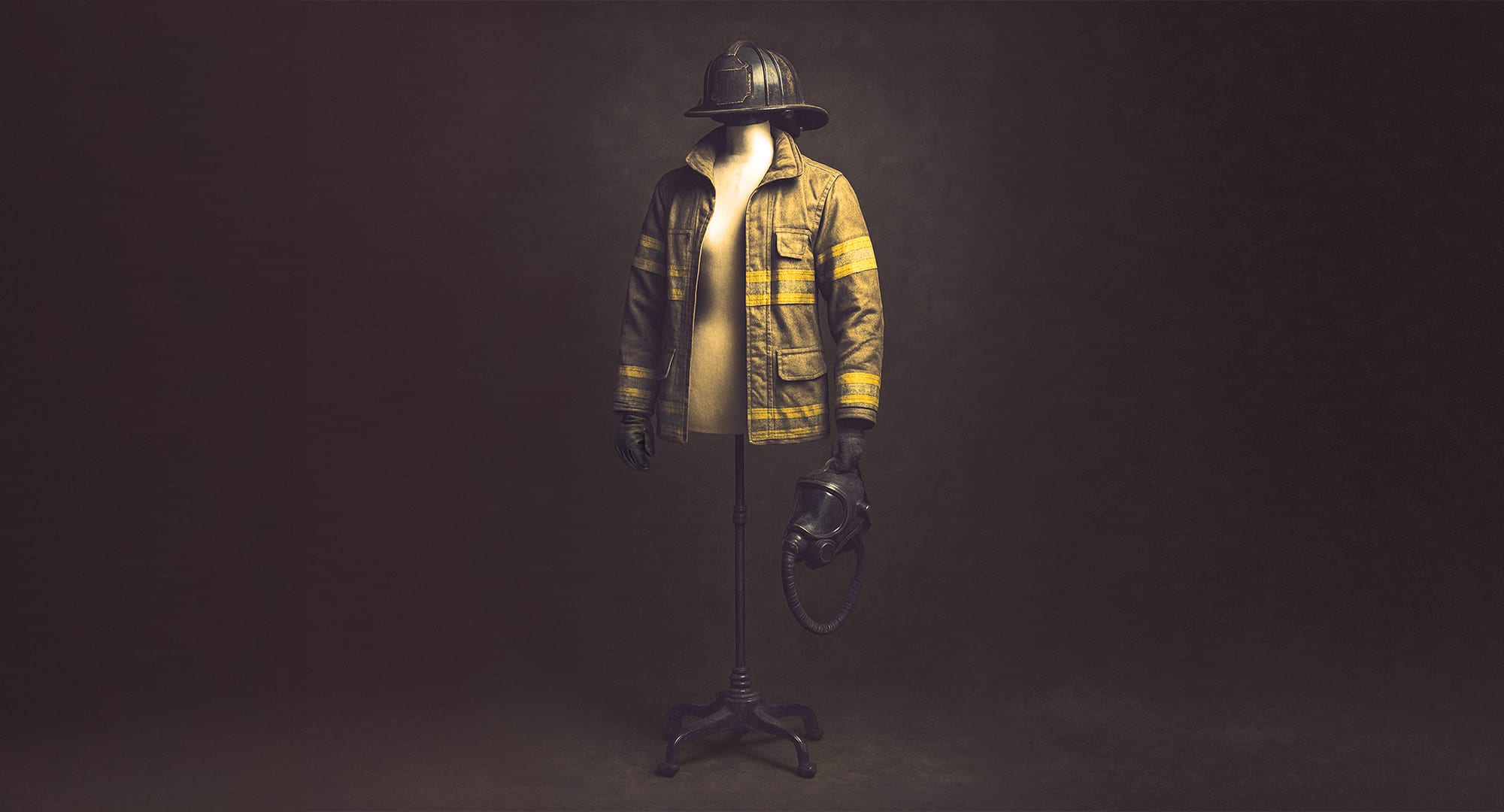
Fire scenes are hazardous and unforgiving. Every hose advance, roof cut, or patient extrication exposes crews to flames and toxins. Yet for the 89,000 female U.S. firefighters, an additional danger is often present before the first alarm even sounds:the standard-issue bunker gear hanging on the station rack. Primarily designed with male bodies in mind, it silentlyreduces safety, performance, and even long-term health.
Four decades of surveys suggest four in five female firefighters struggle with improper fitting PPE – nearly quadruple the rate for male firefighters (FEMA & USFA, 1993; Hollerbach et al., 2017; Hulett et al., 2008; McQuerry et al., 2023; USFA, 2019). In the largest mixed-methods study to date,15 percent to 21 percent of U.S. female firefighters reported they sometimes, often, or nearly always leave off critical items of their PPE – most often the turnout coat or pants – because they hinder movement (McQuerry et al., 2023).
Further analyses link ill-fitting PPE in the fire service to a33 percent higher injury rate for women compared with men (Liao et al., 2001). CDC researchers recently echoed the finding, noting female firefighter mobility-limiting fit problemsincrease the risk for trips and falls, the second leading cause of firefighter injuries(Campbell & Hall, 2024; Marsh et al., 2024).
Female firefighters are not simply smaller versions of men, as many of the National Fire Protection Association's standards (from 1970 and 1950) reflect. Women cannot be adequately fitted by simply shortening their sleeve and pant lengths. Further, in 2021, the first anthropometric database of U.S. female firefighters was collected. In 2025, that database was compared to women in the general population, which found female firefighters, on average, are6.7 cm taller than the average American woman and haveproportionally wider waists and hips (Bolaji et al., 2025a).
When forced into down-scaled male patterns, these shape differences translate into real biomechanical penalties.Hip flexion drops by 2 percent to 3 percent and knee mobility by up to 5.7 percent when wearing the turnout pants, while oversized shoulders and sleeves snag on ladders and hose lines (McQuerry, 2020; McQuerry et al., 2019). Clinical ergonomists have tied such restrictions tochronic low-back pain and ankle injuries, especially when generic boots fail to match female foot biomechanics (Jo et al., 2022; Ras et al., 2024; Sokolowski et al., 2022).
Bulky, excess gear not only restricts mobility and movement, it also traps air above and beyond what is needed for thermal protective performance against heat and flame exposure, raising core body temperature faster and accelerating fatigue. In addition, oversized gearmay prevent necessary, potentially life-saving access to garment accessories like pockets, increasing the time it takes to grab a tool or radio in an emergency. Based on a 2021 study, female respondents believe poor personal protective clothing (PPC) fit directly limits their fireground mobility and compromises personal safety (McQuerry et al., 2023).
The Need for Specialized Design
Quick**“pink it and shrink it”** fixes are not sufficient for bridging the gap between male and female anthropometrics. For example, when comparing the measurements of the female firefighters in the U.S. anthropometric database to the current NFPA wildland firefighting PPC sizing system, all 187 participants had front rise (crotch) measurements thatfell outside the entire pant size range. They also had wrist and ankle circumferences that weresmaller than the smallest cuff or leg opening allowed by the wildland sizing table, leaving 9–15 cm interface gaps (Bolaji et al., 2025b).
Improvements to the 2022 edition of the standardincreased the coverage in the waist to 47 percent, from just 29 percent in the 2016 edition. However, this still indicates that more than half of wildland female firefighters would experience ill-fit in wildland PPC, which 52 percent of survey participants recently reported (Bolaji et al., 2025b; McQuerry et al., 2023).
Quick**“pink it and shrink it”** fixes are not sufficient for bridging the gap between male and female anthropometrics.
A specialized pattern block, separate from original male patterns, must be created for female firefighters that reflects their unique torso length, seat rise, and limb proportions, not merely reduces chest girth and length measurements. Comparative anthropometric evidence shows that generic waist-hip increments can miss female firefighters by up to two entire pant sizes (Bolaji et al., 2025a).
Although NFPA 1971 language was updated in 2018 to suggest sex-specific patterns, its tables still treat women as scaled-down versions of men (McQuerry et al., 2019). A consolidated NFPA 1970 standard could finally compel manufacturers to certify new products against female blocks, closing PFAS, particulate, and interface loopholes in the process (NFPA 1970, 2025).
It’s essential the industry takes advantage of this unique opportunity coinciding with the new consolidated standard as just10 percent of structural and 3 percent of wildland U.S. female firefighters currently report wearing women’s specific PPC – and even most of those options start by using male anthropometry and patterns (McQuerry et al., 2023). Beyond the manufacturers and standards bodies, departmental inertia certainly plays a role. Just five years ago, almost40 percent of U.S. agencies had never purchased female-specific PPC (McQuerry et al, 2019).
OSHA requires employers to furnish PPE “of safe design and construction” for all employees, including female firefighters. When departments fail to offer gear that fits the female form, they risk more than discomfort. For female firefighters, the lack of properly fitting gearaccelerates early retirements, increases lost-time incidents, and contributes to difficulties in recruitment and retention. These outcomes carry substantial hidden costs, as noted in recent occupational safety reports and fire service leadership forums (Newsom, 2025).
The Future of PPETechnology can help us bridge the gaps. Mobile 3D body scan apps can capture more than 240 body measurements in less than 20 seconds, supporting statistical sizing capable of mass-custom “body blocks” (Bolaji et al., 2025a). The key is to start with the right building blocks, which includes a female-firefighter specific pattern, now possible with the U.S. anthropometric database.
Continuing to approach fitting women in the fire service via current custom-fit processes of modifying male-based patterns simply won’t cut it.We must design, produce, size, and fit gear specific to the female firefighter form. Not only will this approach improve comfort and mobility, but wearing appropriately fitting PPE has the potential to reduce musculoskeletal injuries, incidences of heat strain, and cancer.