

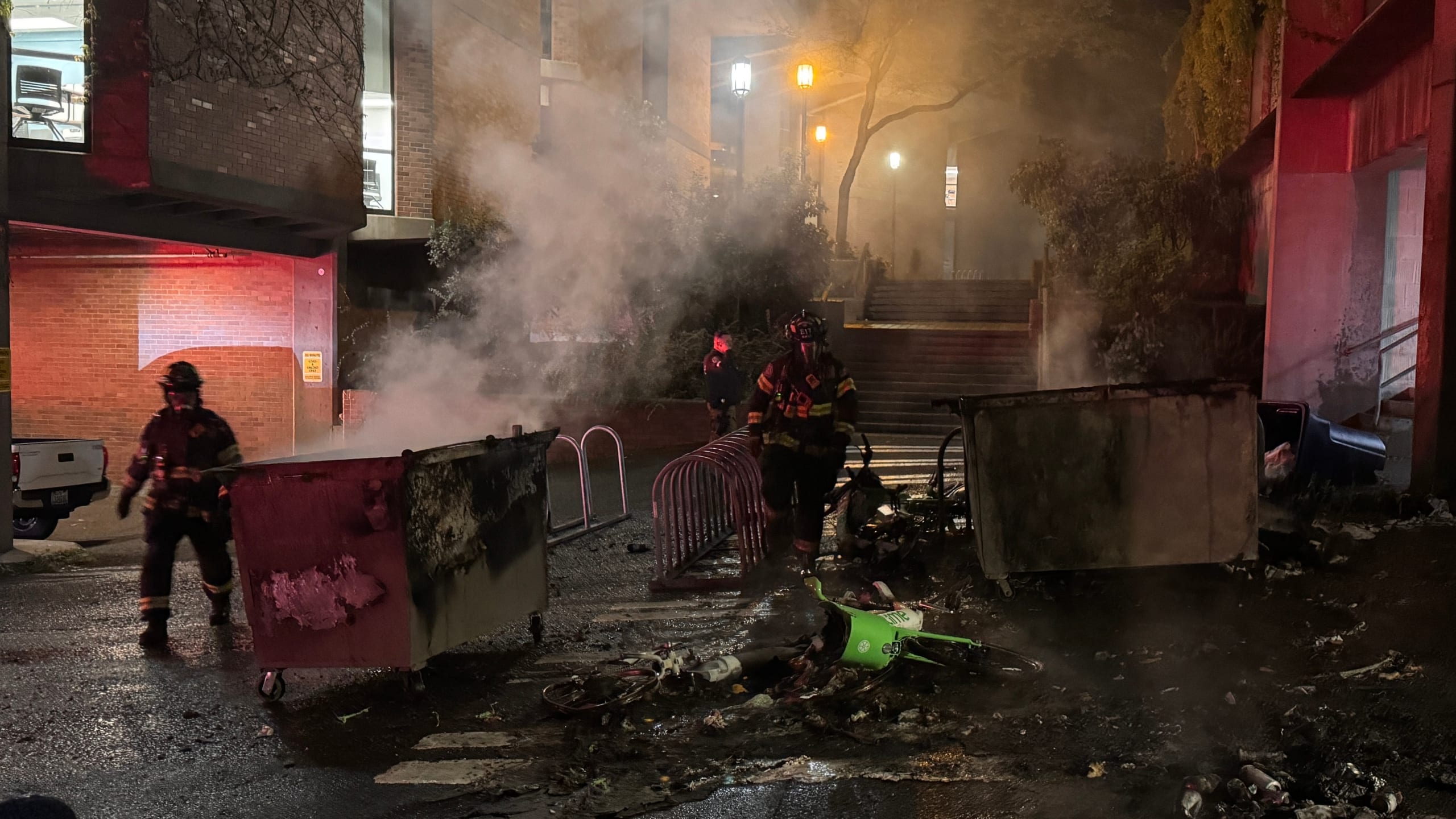
“The body keeps the score.” — Bessel van der Kolk, MD
Have you ever worked hard at getting better and wondered why the return feels so small? You train. You eat better. You buy the supplements. You track your sleep. You listen to podcasts. You try the breathwork. You tell yourself you need more discipline, more consistency, more effort, more structure. You keep adding tools, routines, apps, protocols, products, and plans. From the outside, it looks like you’re doing all the right things. From the inside, you still feel like your body is running on bad fuel. That’s the part I keep coming back to.
Maybe the problem isn’t the effort, but the order.
I think a lot of us in the fire service are trying to fix sleep, recovery, fitness, digestion, stress, relationships, patience, energy, and mental performance while our nervous system is still operating like the call never ended. We’re trying to build health on top of a body that has never fully stood down. We’re treating sleep, training, nutrition, and supplements like they’re the missing pieces, when the gatekeeper to all of it may be our nervous system.
Here’s what I didn’t understand for a long time: the nervous system is not one tool in the recovery toolbox. It’s the whole table the toolbox sits on. Factors like sleep, digestion, training adaptation, emotional regulation, and connection don’t work the way they’re supposed to when the nervous system is still running like the next call is 30 seconds out. It’s the system that decides how well those factors work. If that gate is stuck in threat mode, everything downstream gets compromised.
Reset Begins With the Nervous System
Firefighters understand stress in obvious ways. We understand calls, trauma, shift work, lack of sleep, death, conflict, pressure, responsibility, noise, heat, alarms, and the accumulation of things we pretend did not come home with us. What we don’t always understand is how long the body can keep carrying that state after the incident is over.
Psychiatrist and author Bessel van der Kolk put it plainly: “Trauma is not just an event that took place in the past. It’s also the imprint left by that experience on mind, brain, and body.” Swap out trauma for cumulative occupational stress and the principle is the same. The truck backs in. The gear gets hung up. The report gets written. The conversation moves on. The body didn’t get the memo.
A firefighter can be physically off duty and biologically still on scene.
Twenty-two years on the job, and I got so used to running at a certain temperature that I stopped noticing the heat. The frog in the pot. You know the one. The elevated baseline starts to feel normal. The wired exhaustion starts to feel like personality. The short fuse starts to feel like who you are. The inability to fully relax starts to feel like discipline. You start confusing readiness with regulation. Somewhere along the way, your body adapts to living half-activated.
When Readiness Replaces Regulation
That’s where a lot of firefighters get stuck. Matthew Walker, who wrote Why We Sleep, makes a point that stopped me cold: sleep is not a passive state we fall into. It’s a process the brain has to actively allow. The system has to feel safe enough to drop its guard. If it doesn’t — if the cortisol is still elevated and the arousal threshold is still high — the body lies in bed and runs the engine at idle. You’re not recovering, you’re just horizontal. You can feel tired to the bone and still not feel safe enough inside your own body to sleep well. That’s a brutal combination because it makes you think you need a better sleep hack when you may actually need a better off-ramp.
The research backs this up hard. A 2019 study in the International Journal of Environmental Research and Public Health found firefighters show significantly dysregulated autonomic nervous system function after shift work, with impaired heart rate variability — one of the strongest markers of recovery capacity — compared to baseline. They weren’t just tired. Their systems were structurally compromised.
Sleep doesn’t begin when your head hits the pillow. It begins with the signals you send your body before bed, which is why the order matters. You can take melatonin, magnesium, wear the sleep tracker, tape your mouth, cool the room, buy the good mattress, and still struggle if your body has spent the previous three hours being fed stimulation. Heavy food. Bright lights. Scrolling. Emails. Social media. TV. Conflict. Work thoughts. Fire service group chats. A nervous system can’t be fed speed all night and then be expected to slam into park because you finally decided it was bedtime.
That’s where something simple like the 3-2-1 reset makes sense. Three hours before bed, stop loading the system where possible. Heavy meals, alcohol, intense stimulation, and late-night snacking all keep the body working when it should be preparing to repair. Two hours before bed, start lowering the input. Dim the lights. Bring the volume of the house down. Stop treating the evening like an extension of the shift. One hour before bed, get away from the screen or reduce it as much as possible. Read. Stretch. Breathe. Shower. Journal. Sit without feeding the machine more noise.
Sequencing Recovery Like a Fireground
Firefighters should understand sequencing. We know the order matters on a fireground. Skip a step, rush a step, or do the right thing at the wrong time, and the outcome changes. Recovery works the same way. The right tool in the wrong order can still underperform. That’s where working out can get misunderstood, too.
Training is good. Strength matters. Conditioning matters. Movement matters. For many of us, the gym has been one of the only places where the pressure had somewhere to go. But a hard workout is still a stressor. A useful one, but a stressor. If you train hard on top of a body that’s already fried, then leave the gym and go straight back into stimulation, you may be adding output without creating recovery. You’re asking your body to adapt while never giving it the biological conditions to rebuild.
You can’t out-train a nervous system that never gets permission to stand down.
That doesn’t mean stop training — it means the workout can’t be the whole reset. The downshift, long exhale, the walk after training, phone staying in your bag for a few more minutes, and the space between stress and the next demand matters.
Learning to Come Back Down
For firefighters, that may be one of the most important skills we never formally learned. We were trained to ramp up, solve, move, respond, absorb, and keep going. We were rewarded for being ready, respected for being dependable, and valued for not needing much. That’s useful on scene, but not when the body forgets how to come back down.
Breathing is one of the simplest places to start. I know that sounds basic, but basic doesn’t mean ineffective. Sometimes the most accessible tools are the ones we overlook first. A longer exhale and slowing the breath tells the body something. Box breathing, physiological sighs, nasal breathing, stretching, walking outside, dimming lights, reading before bed, shutting the screen earlier — these are signals that tell the nervous system, “The call is over. You can come off watch.”
We keep chasing bigger fixes when the body may be waiting for smaller signals repeated long enough to become believable. You don’t reset two decades of stress with one good night routine. You don’t regulate a nervous system because you finally downloaded the right protocol. You teach the body through repetition. Same signal. Same direction. Same message. Again and again.
Recovery Has an Order
I’m still in the middle of this. I’m not writing this like I have mastered it. I’m writing it because I’m starting to understand I may have had the order wrong for a long time. I thought I was building better health. In some ways, I was. But I was also building on a foundation that had not fully settled. The work doesn’t disappear. The gym, food, sleep, and discipline still matter. But the nervous system is the first door that has to open before the rest of the house starts working the way it should.
The truth is, recovery has an order. We can keep fighting for sleep, energy, discipline, patience, and better health, but at some point we have to stop fighting against the very state our body needs to repair. This is not instant. It’s a system we build over time, one signal at a time, until the body starts to believe there is another way to live.