Chief Dennis Reilly
Fifty years on the job — and a cancer diagnosis — force a hard look at what firefighters owe not only to their communities, but to themselves and each other
I have been fortunate to spend more than 50 years as a firefighter. Other than a short time in administration, I have spent my time in operations or training. Even as a fire chief, I worked in smaller departments with a minimum staffing of eight. You can have all the trumpets in the world on your collar but when you’re the ninth person on the scene at a working fire, you had better be willing to get your hands dirty. My experience tells me we have an absolute obligation to stay mission-ready and operationally focused. Anything less than that does not provide what our citizens rightfully expect from their fire department.
It is easy for motivated professionals to see the obligation to serve their community as their primary focus and lose sight of other important obligations. For years, I fell into this category. Every waking moment was focused on being my best in my professional life. Everything else I thought would just fall into place. This is a flawed way of thinking, and in the long run will detract from all your obligations. You must balance your life to be the best version of yourself that pulls into the firehouse parking lot. Let’s look at some of the other obligations.
The Obligations Beyond the Job
Sometimes we look right past the most obvious things in our lives. Your family needs to be your No. 1 obligation. For many of us, our family was part of our life before we came on the job. For the overwhelming majority of us, our families will outlast our time in uniform.
Being smart about your health is critical to honoring the obligation to live well past your retirement date. You should spend some time researching the current data in occupational health and make decisions based on the data. What you decide today will impact you years and decades down the road. Make good decisions so you can enjoy the next chapter of your life.
Honoring your obligation to your family means growing old with your partner, watching your children become parents, playing with your grandchildren, and sharing the stories of your career with those who you love.
Obligation to Your Colleagues
Another obligation you have is to the people with whom you work. The strongest bonds I have, my closet friends, are all firefighters. We have seen so much, done so much, have grown so much, and in ways others will never understand. I want these great men and women to wear their class A uniform to my retirement, not to a memorial service.
You need to make smart decisions about how you manage those things you can manage. Monitor your health, get a yearly physical, watch your diet and weight, stay physically fit and mentally strong. Ask for help when you need and be a resource for others. Do not leave these relationships early because you did not make wise choices. You will be gone, but the hurt caused by your absence will live on with the people you call brother and sister.
If you don’t take care of yourself, make smart decisions, and be an example for your department, are you really living up to your obligation to your community? The more time on the job, hopefully the more good experiences we accumulate. As we gain seniority, our value to the department and our community increases. Your fireground performance should increase, and your ability to mentor and influence the next generation should also increase. If you care about your department, then I hope you care about building an organization that will continue to grow after you are gone. One of the most important contributions we can make is the ability of our people and our department to be better because we were there. If you are not taking care of yourself and making good decisions, then you are denying your community some valuable experiences that could save a life.
So here comes the backstory. I am a stage II prostate cancer survivor. There is little doubt in my mind that my cancer is job-related. My diagnosis has allowed me to think about things in a way that someone who hasn’t dealt with cancer most likely can’t. Believe me, if I had a choice, I wouldn’t be writing this article because I wouldn’t have had to deal with cancer. Cancer has taken me to some dark places, but it has also given me a perspective that I would not have otherwise.
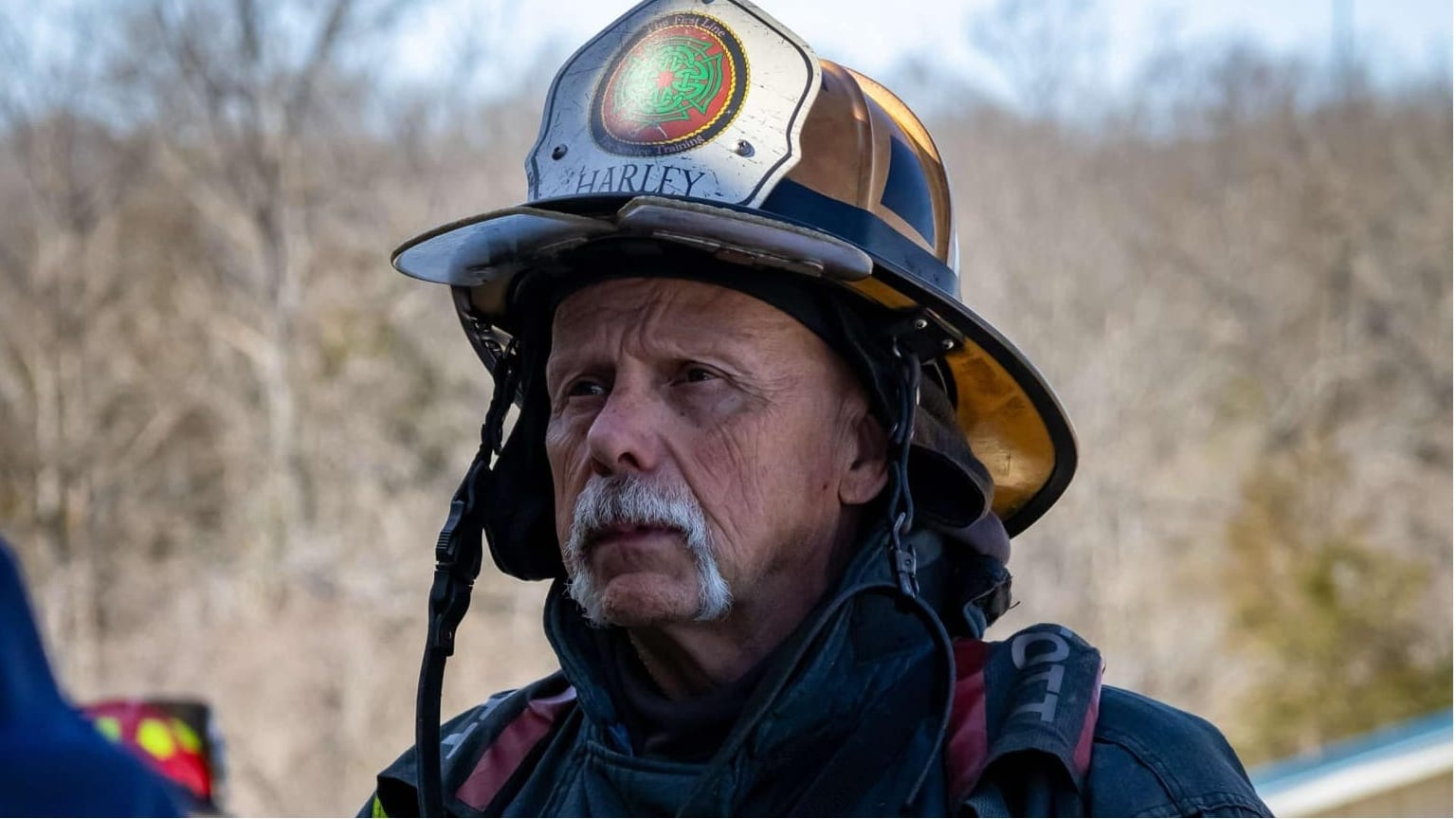
Chief Dennis Reilly is a stage II prostate cancer survivor.
A Balancing Act
Understanding obligations is about balancing the different needs of the different obligations. As much as I love my family, when I was dispatched to a fire, the victims who might have been trapped became my No. 1 obligation. This doesn’t mean my family is any less important, it simply means I had to make some difficult decisions and balance my many obligations.
Balance to me means making intelligent choices. It also means doing research and being open to learn from others who have experiences that can apply. Knowing what I know now I might have kept my gear in a gear bag when my take-home car was a SUV. Maybe I would have been a little more conscious of my diet. I would have looked for the PFAS-free label on water bottles and thrown out the Teflon frying pan that was all “jacked up.”
Balance requires us to think and make good decisions. The PFAS issue is an issue to be concerned about, but it can’t be the sole determining factor. I will never advocate for the 100 % clean cab. Removing SCBA increases the time it takes to deploy for a rescue and, in my opinion, that time does not belong to us, it belongs to the victims. My version of the clean cab means we don’t put contaminated SCBA and tools in the cab when we return to the firehouse from a working fire.
To support occupational health, fire chiefs need to budget for spare SCBA and cab-mounted tools. After a fire, the crews put all the dirty SCBA and tools in a compartment to limit exposure. When they pull into the firehouse they put the clean spare equipment in the cab. Now they can clean the contaminated equipment and have it ready for the next fire. Balance your obligations and make decisions that support all your obligations.
Balancing Risk, Readiness, and Reality
Probably the most controversial thing I am going to talk about is working out in gear. I have always believed we must maintain a high level of tactical fitness and to do so we must train in our gear. Certainly cancer and PFAS exposure is an issue but so, too, are the effects of fireground stress on the cardiovascular system. I believe we all must make a choice on this issue, but your choice needs to be an informed one.
Many people who do not advocate training in gear cite the PFAS study, but they have not read the study. They do not know the particulars of what the study involved. On the other hand, some people discount the risk of training in gear simply because other people train in gear. I have decided that for me, the risk of a medical emergency when operating on the fireground or training ground, justifies training in gear.
I have an old set of gear that I use strictly for PT. I have run the gear through an extractor, I wash the liners on a regular basis, and I take a shower right after my training. I manage my exposure as much as I can while looking at this issue from the 30,000-foot level.
My recovery from a major surgery is going very well and many knowledgeable people attribute this in part to a high level of physical fitness I have always maintained. My part of my fitness is a result of me training in gear and had I not trained in gear, I believe all my other exposures would have led to me having cancer anyway.
I have written many articles for our trade publications and by far this has been the hardest to write. I don’t pretend to know all the answers, and I don’t mean to say the opinions I have shared are the only opinions that have value. My goal is for you to stop and think about what I have said. I am cancer free and enjoying the best chapter of my life. I share my thoughts in hope that no matter what comes down the road for you, you will enjoy what your future holds for you.
Dennis Reilly is a 50-year fire service veteran and is a retired fire chief. He is the owner of The First Line Fire Service Training Company LLC. In addition to his fire service career Dennis is an Army veteran having served in the first Gulf War. Chief Reilly has been married to his wife Ann for 40 years; they have two children and three grandchildren.