
Early in my career, I was asked to help a firefighter who was struggling – deeply. He had just lost his eight-year-old son and was suffering through the kind of pain most of us hope we never have to imagine. This wasn’t someone new to trauma. He was a 20-year combat medic who had seen and survived a lifetime’s worth of tragedy. But when we met, he was unraveling. As he told me, “You know, coach, you sit in the hot zones and think about losing your loved ones and try and prepare for it, but there is nothing you can do.”
My heart broke. I didn’t have the right words, the credentials, or the experience to say I understood. But I did want to help. I told him, honestly, “I have no idea what you’re going through, but maybe exercise could help.”
That was the beginning.
Stress, Cortisol and the Grip Test
I approached his training the way I would treat medicine: carefully, intentionally, and grounded in what his body – and mind – could handle. I knew he was under enormous emotional strain, so I needed a way to measure his nervous system and recovery before prescribing anything. The tool? A simple hand dynamometer. Grip strength is a surprisingly effective marker of sleep quality and nervous system recovery. If the body is stressed and sleep is poor, grip strength tends to be weak. When recovery improves, grip strength rises, too.
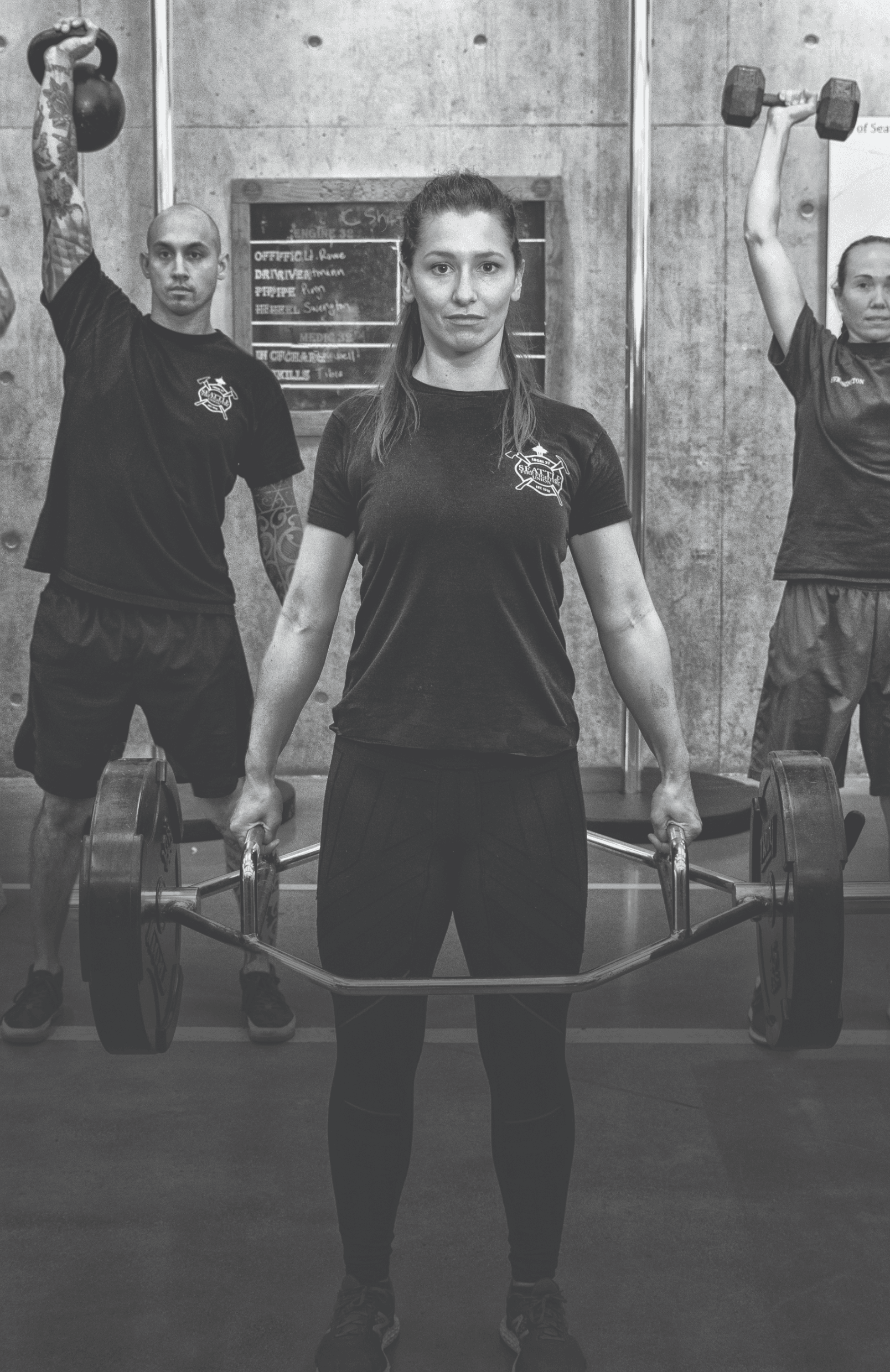
Each morning, he’d squeeze the hand dyno and that would tell us how far we could go. If the grip was light, we’d keep it simple – some biceps and triceps work, and a lot of conversation. If the grip was strong, I’d ask, “What do you feel like doing?” More often than not, we’d head out for a light run and talk. That was the goal all along: reduce cortisol, move the body, and create a small sense of forward momentum. A rhythm. A reason.
The Hormonal Toll of PTSD
We hear the word cortisol tossed around a lot, but for first responders – and especially those battling PTSD – it’s more than a buzzword. Cortisol is our body’s main stress hormone, released by the adrenal glands during fight-or-flight situations. In short bursts, it’s helpful. Over time, though, it becomes corrosive.
In a healthy individual, cortisol peaks in the morning and gradually decreases throughout the day. But in those with PTSD or depression, it often spikes earlier and stays elevated. That constant high-alert mode can wear down the immune system, destabilize mood, and lead to burnout or worse.
Exercise, if approached properly, can blunt this cortisol cascade. Yes, exercise is a physical stressor, but when programmed well, with enough recovery, progression and variety, it teaches the body to regulate stress more effectively. The result? Lower baseline cortisol levels, improved sleep, and more emotional stability. But push too hard without rest, and you may actually worsen symptoms.
That’s why moderation, personalization, and purpose matter.
The Role of Exercise in Recovery
We now know that exercise is a legitimate tool in treating depression and PTSD, not just in theory, but in practice. I’ve seen firsthand how movement becomes a lever for healing, especially when combined with conversation, community, and consistency.
A good starting point: 30–40 minutes of low- to moderate-intensity aerobic activity on 3–5 days a week. That intensity range matters, especially for those on medications that can alter heart rate, sleep, and mood. Train too hard, and the stress piles up. But at the right intensity, it becomes a regulator. A release valve.
Exercise can also help with fatigue, a common side effect of PTSD and depression. When we feel helpless or emotionally drained, movement becomes a way to re-engage with life. The endorphins released during physical activity act as natural mood boosters. Just as important, exercise creates structure, momentum, and a sense of agency. It reconnects people to their confidence – and to themselves.
But it only works if it’s consistent, fun, and realistic. If the routine becomes another source of stress, it loses its impact.
The Firefighter Who Changed My Perspective
Over the weeks and months that followed, that firefighter kept showing up. We built a rhythm. He trained. He shared. We laughed, even. One day, he turned to me and said something I’ll never forget: “Coach, you know the exercise really saved my life … our talks, and just doing something, made me feel normal. It allowed me to focus on my wife and daughter, and it gave me something to look forward to every day.”
He also worked with a mental health professional. He connected with a fire chaplain. He did the hard work of healing. But I learned something critical from him: that exercise, when approached with care and humanity, can be more than a tool for physical readiness. It can be a lifeline.