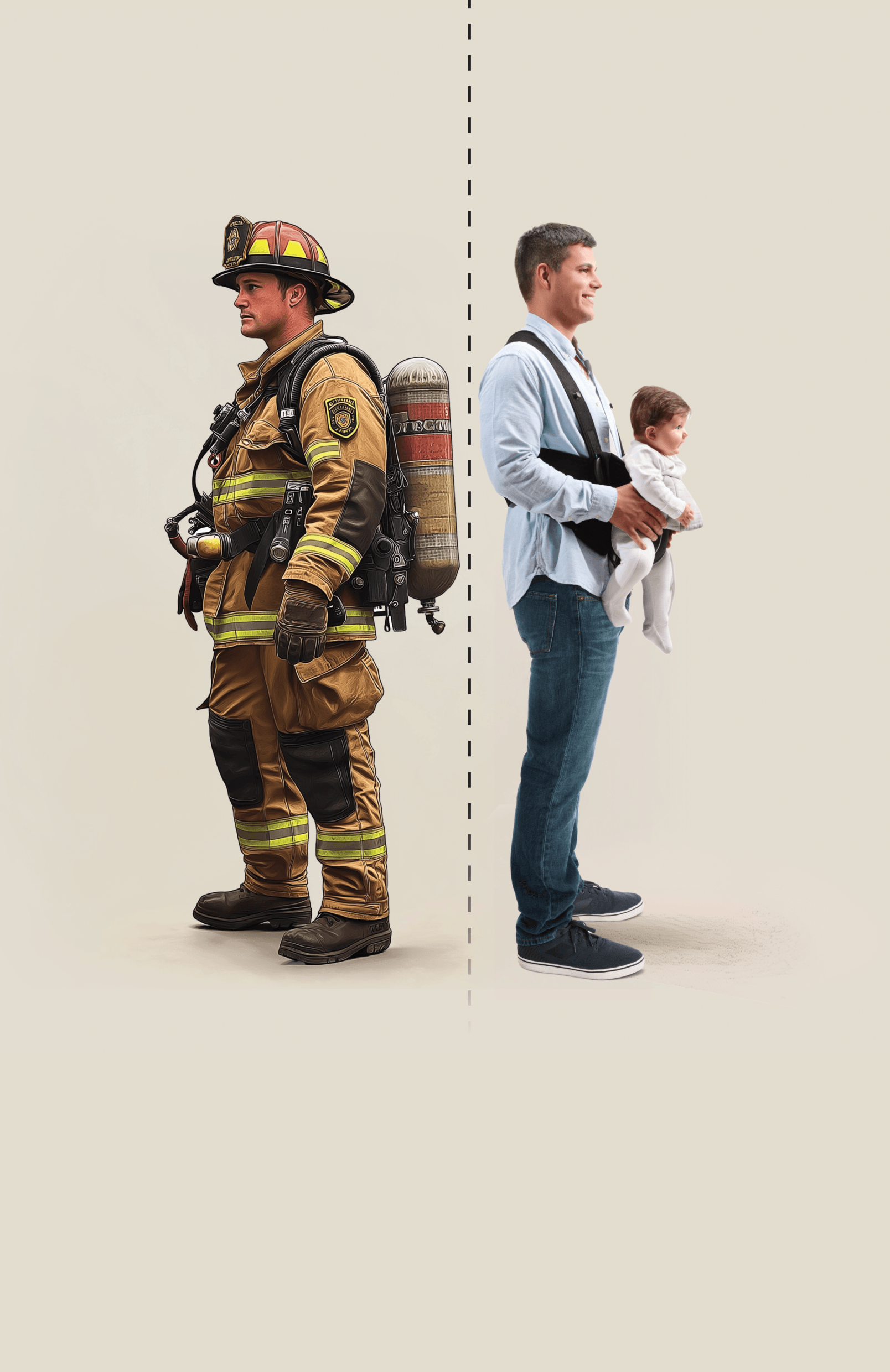


Most women in the fire service understand the pressure to prove they belong. You learn the house, earn trust, build competence, and figure out the rhythms of a crew. Belonging matters.
But belonging is not the same as being fully heard.
It is not the same as having what you see trusted and put to use. The stronger question is not only, “Do women fit here?”
It is also, “Can this crew use what every capable member sees?”
I approach that question as an organizational consultant embedded with high-consequence teams. Research on voice and silence helps identify a familiar pattern: people speak up when it feels safe enough and likely to matter.
And across these environments, I’ve seen another pattern: teams are not fragile, but they can develop blind spots. The trust and cohesion that help a crew move fast can, if left unexamined, make it harder to question a habit, name a concern, or notice whose information is not making it into the conversation.
That pattern does not make cohesion the problem. Crews need loyalty, shared standards, their own lingo, and confidence in one another.
The risk comes when strength turns into certainty, and a crew starts mistaking “how we do it” for “the only way it works.”
Women’s experiences can matter here, but not because women automatically see more, communicate better, or make teams safer simply by being women. The more research-supported point is this: moving through the firehouse differently can make certain things more visible.
You may have gear and technique workarounds that are normalized as “that’s just the way things are.” You may notice who gets heard the first time and who has to repeat themselves. You may see that a concern is useful when coming from one person but irritating when coming from another.
You may understand the difference between being included socially and being trusted operationally.
Those observations are not complaints by default.
They can be information a crew has not yet learned how to hear.
What does this look like?
In medicine, surgical checklists have helped by changing how teams communicate, but they have not always improved outcomes when they became just another box to check or were implemented incompletely.
The lesson is that tools work best when they change what teams notice and discuss.
The same is true in a firehouse. A debrief, policy, or officer development program only matters if it helps the crew use information it may otherwise miss.
This is not about having these conversations in the middle of an incident. Real-time incident communication has to stay disciplined, operational, and routed through the right channels.
But a crew’s ability to speak clearly under pressure is shaped long before the call.
Team debrief research points to the same lesson: structure helps people talk honestly about what happened and what to adjust. In a firehouse, that habit is built in training, around the kitchen table, in debriefs, and in how people respond when someone names what others would rather move past.
The point is not to lower standards because women are present.
The point is to ask whether what the crew notices should change how it trains, communicates, debriefs, or prepares. That is a performance question.
Every firefighter has some sphere of control, regardless of rank. An individual firefighter can pay attention to patterns, decide when to speak up, and tie observations to work areas such as readiness, safety, standards, training, and crew performance.
Some of what strengthens a crew also extends beyond the formal job description, such as courtesy, helping, preparing well, and taking responsibility for the environment around you. In organizational psychology, these are organizational citizenship behaviors. In the firehouse, they are part of how people take care of the crew. That is personal agency, not the burden of fixing the house.
For women firefighters, that distinction matters. You can contribute what you notice. You can frame concerns around the mission and the crew.
But no individual firefighter can make a culture safe by herself.
If the only person carrying the cost of honesty is the one trying to be heard, the crew has more work to do.
The company officer is often the hinge. Research on speaking up points to this: leader response matters.
An officer teaches the crew whether a challenge is treated as disrespect or as useful information.
Officers can ask, “What are we missing?” They can thank the person who raises the hard point before deciding what to do with it.
They can separate candor from attitude. They can close the loop when someone raises a concern, even when the answer is no.
Chiefs and departments shape the larger system. They decide what gets rewarded, how people are promoted, how officers are developed, and whether people who raise concerns are protected or punished.
They build this long before the first boot hits the fireground. They do so by aligning selection, assessment centers, officer development, training expectations, and systems that prepare leaders to hear useful information before the stakes are high.
That is where belonging becomes more than presence. There is a difference between being allowed in the room and being part of how the room thinks. There is a difference between fitting in and being trusted enough to say what others may have missed.
Firehouse cultures are not broken by blind spots. They show strength when they are willing to examine them. The goal is not for women to fit so completely into the firehouse that nothing changes.
The goal is to build crews strong enough to use what every good firefighter brings, including what she sees that others may have missed.
Belonging gets someone into the crew.
Being heard and taken seriously is what moves us beyond belonging and helps a strong crew level up.