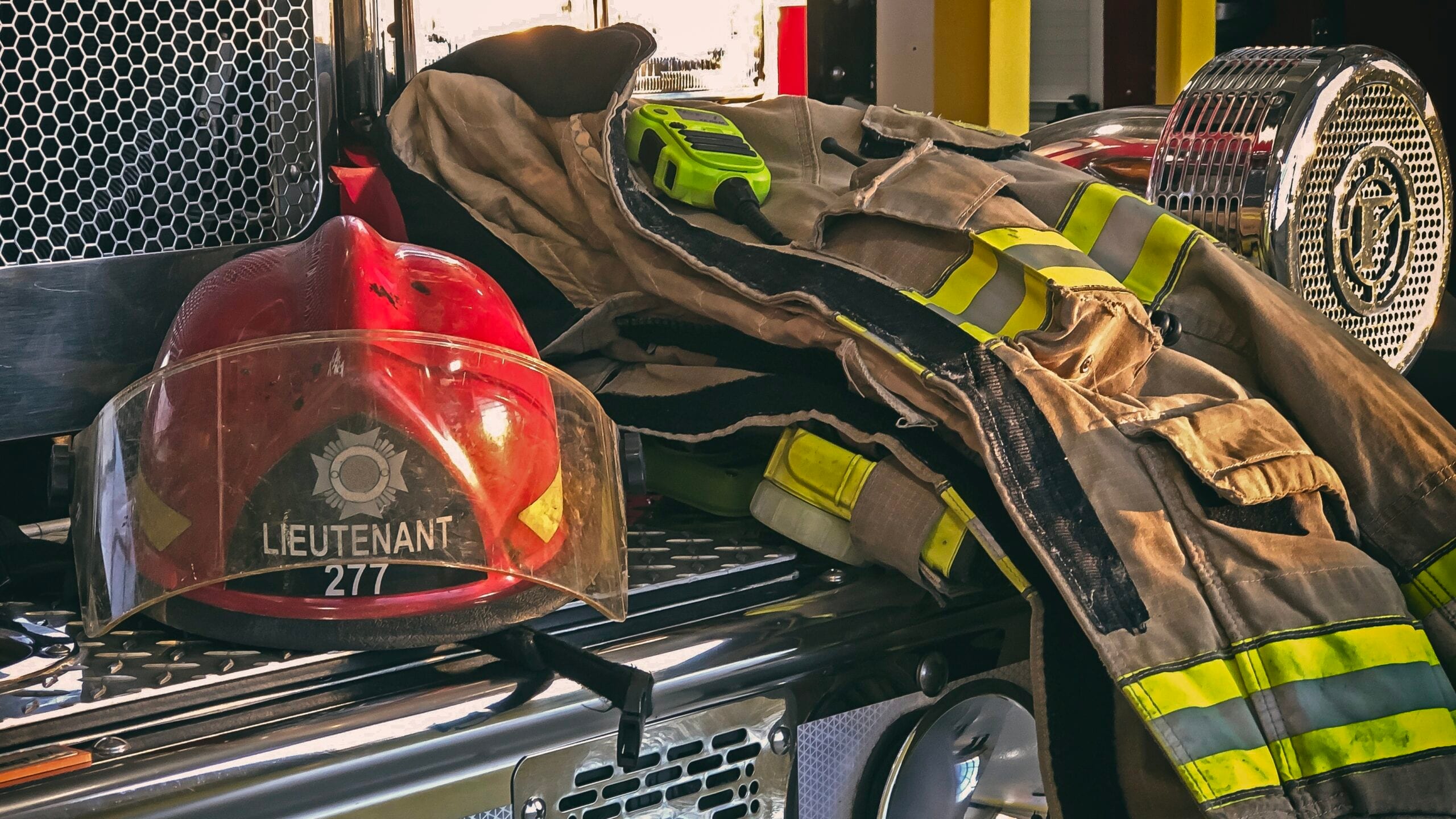
Imagine waking up every morning thinking the world mightbe better without you. Not because you wanted to die, but because you were exhausted from pretending you were fine.
For 30 years in the fire service, I wore the mask well. I laughed at the table, I showed up strong on scene, and I pushed through calls like they did not affect me. That is what we do. We keep moving. But you do not move on, you just move forward, dragging the weight with you.
Most people think trauma begins the day we enter this career. They picture the first fatal crash, the first child we could not save, the first fire that goes sideways. But the truth is, for many of us, the roots go back much further. Long before turnout gear and the sound of tones dropping, there was a kid trying to find where he belonged, searching for identity, purpose, and acceptance.
Finding Belonging
And that is exactly what the fire service offers: a tribe, a mission, a place where you matter.
We do not just become firefighters. We gravitate toward it. The firehouse becomes the family many of us longed for, the uniform becomes the armor we never had, and the job fills the void, until it doesn’t.
But the job that once filled that void eventually started taking more than I knew I had to give. It wasn’t just the trauma, it was the sleep deprivation, the chronic stress, the adrenaline that never shuts off, and the insomnia that keeps your mind running long after the station goes quiet.
Sleep stopped being rest; it became a battlefield. I’d lie there exhausted but wide awake, not just replaying calls, but replaying everything: the stress, the guilt, the family pressures, and the feeling I did not belong. Childhood programming whispered I was not enough. Words I took the wrong way. Betrayals from people I once called friends. It was not one thing breaking me; it was all of it, stacking layer by layer until the cracks finally showed.
Depression didn’t arrive like a five-alarm fire. It crept in quietly. Irritability. Loss of joy. Sleepless nights. A mind that wouldn’t shut off. I told myself to toughen up, that others had it worse, that this was just part of the job.
But pain denied is pain delayed, and eventually it breaks the surface.
A Breaking Point
There’s a day burned into my memory like a photograph I never asked for. Not a scene. Not a call. A quiet room, a broken man, and a gun in my hand. I was numb. Empty. Depression whispered that my family would be better off without me, and I believed it.
I raised the gun to my head.
Then I heard footsteps on the stairs, my son.
In an instant, I lowered the gun, laid it across my chest, and pretended to be asleep as he walked in. He never knew what he interrupted, but his presence stopped me. I lay there silently, realizing how close I came.
Firefighters say we’d die for our families without hesitation, but maybe the real courage is choosing to live for them. To stay. To fight our way back, even when it feels impossible.
In 2019, I entered the IAFF Center of Excellence, a 30-day facility for firefighters, not because I was forced, but because I was finally ready. Walking through those doors was my choice, and it became the turning point that changed my life. I was diagnosed with major depression, anxiety, and PTSD. I resisted at first. Vulnerability felt dangerous. Medication felt like a failure. Asking for help felt like weakness. I was wrong.
The Work of Healing
Recovery wasn’t neat or fast. It was work. Hard, honest work. But slowly, through therapy, medication, faith, and a family who refused to give up on me, hope returned. My boys unknowingly saved my life. My wife walked with me through darkness. Finn, my therapy dog, still senses pain before I speak it. Healing gave me something the job alone never could: permission to feel.
This was my journey. Yours may look different; just keep going. Be your own advocate. Healing comes when you don’t quit.
I wrote Unseen Battles because silence nearly killed me, and it’s killing our brothers and sisters. We lose more firefighters to suicide than to line-of-duty deaths. That should stop us cold.
If we want to change that, culture must change.
We pride ourselves on toughness, but real strength is speaking up despite the struggle. And leadership matters. Not the kind that only shows up on the fireground, but the kind that checks in afterward. Ask like you mean it. Stick around long enough to hear more than “I’m fine.”
Peer support can’t just be a poster. It must be lived.
Brotherhood in Action
We talk about brotherhood like it’s automatic, but brotherhood isn’t a patch; it’s a behavior. Some stand closely only when life is smooth, but others step in when you’re slipping. Those are the ones I call brothers; the few who refused to let me fall.
Families must also be part of this. They see it first. They feel it deepest.
We can build firehouses where mental health is treated like PPE, essential, maintained, and checked often. Where courage isn’t only charging into a burning building, but admitting when the fire is inside us.
If you’re struggling:
You are not weak or alone. You are worth staying for.
One conversation can save a life. One leader can change a station. One firefighter can change the culture.
Let’s be that change, now.
Because silence is killing us. Speaking up can save us.
Tommy Bolin is a lieutenant/paramedic with 30 years in the fire service. He is also a peer support member, board member of One Brother One Sister 501(c)(3), a keynote speaker, and author dedicated to breaking the stigma around mental health in the fire service.