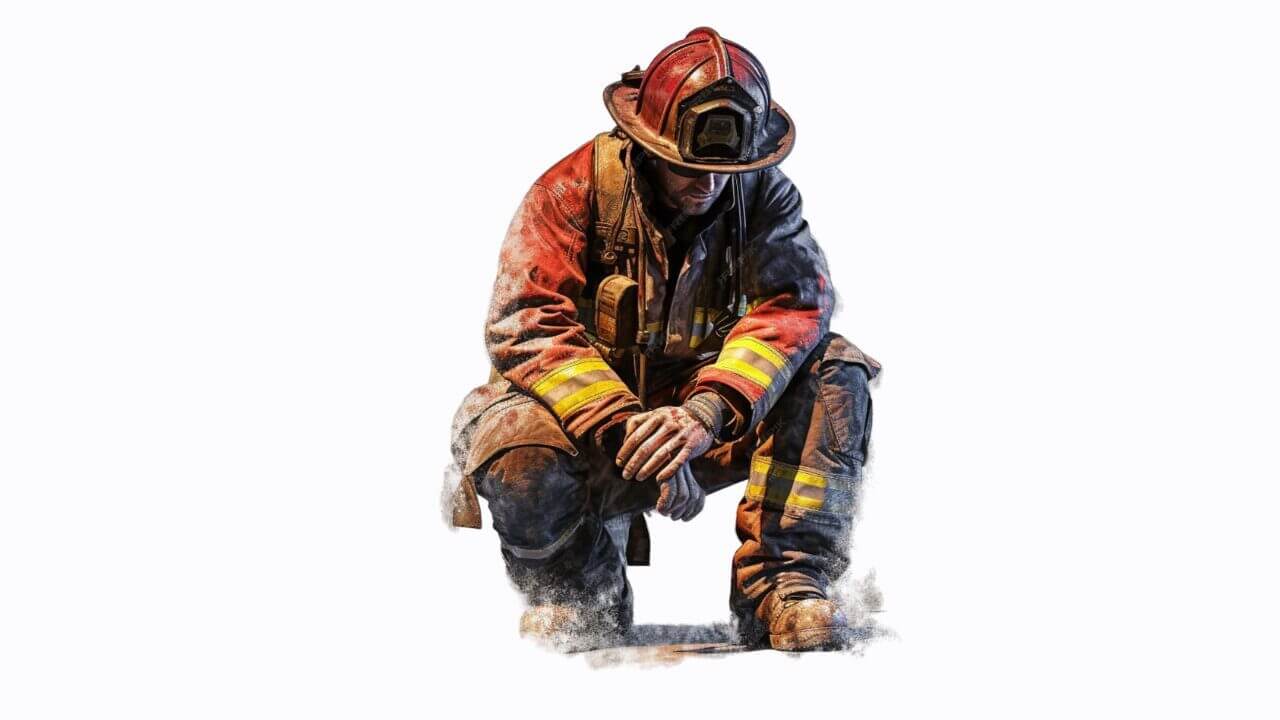
At what point should you take a knee? What is holding you back? This is something I struggled with personally for years.
When I reflect on my career in the fire service, I think about the barriers that prevented me taking time off when my mental health declined, when I was burnt out and had nothing left in my tank: Shame, fear of judgment, guilt about letting my team down, worrying people would look at me differently, and wondering how my family would perceive me. All of these things and more were floating around in my head.
The Importance of Self-Care
I felt people relied on me. I’ve been the one taking care of everybody else. I’ve been the face of mental health in my organization. I’ve been the one that connected people to resources and helped people with their problems. There was no time to take care of myself … or so I thought.
Eventually, life caught up to me. My beach ball of unprocessed trauma and emotions, coupled with years of shift work and poor sleep, relationship issues, work stress and workload, suddenly started surfacing. I couldn’t keep it underwater any longer. It started popping up everywhere unexpectedly. I no longer had patience. My fuse was very short. I became angry quickly. At times, I wasn’t kind to the people I loved. The energy I used to keep all of my shit together was now depleted. I waited far too long to take a knee.
The Impact of Service-Resistance
I see far too many first responders struggle with this. They wait too long to get help, making their problems complex and difficult to untangle. It takes longer to recharge and heal when you resist taking time off to rest, recover, and reset. This requires more resources and additional time off and, from my experience, you are not the same coming out the other side.
Many first responders are service-resistant, especially senior firefighters and first-responder leaders. A 2023 British Columbia Fire Service survey of almost 1,100 firefighters found many participants would recommend a mental-health professional to colleagues. However, only half would access care in times of personal crises.
The survey also revealed 59 per cent would consider accessing care afterthey experienced a mental health challenge, which means about 40 per cent of firefighters would deal with personal crises without outside support (or no support at all).
In addition, the survey identified 88 per cent of fire administrators were peer support/CISM trained but only 43 per cent of senior administrators would access care when required.
The Unique Challenges of Union Leadership
What this survey did not capture is the other side of fire-service leadership, the union executive officers. Having been a union representative for 18 years, I have seen a whole other side of the first responders world, which comes with its unique challenges and stressors: From collective bargaining and grievances and arbitrations to legislative lobbying and conflict resolution, to labor/management interactions and supporting members through some very difficult times.
All these responsibilities add another layer to the onion and oftentimes add to a backpack already full of emotional rocks. We acknowledge the impact of service when it comes to emergency calls and life challenges. However, what has not been considered is the additional workload and burden of representing the union membership on a daily basis. It takes a toll, and sometimes is worn as a badge of honor.
The Dark Side of Advocacy
The dark side of this privilege to advocate and fight for your firefighters is the feeling of responsibility. The members are relying on you. They are relying on you to be their voice, to bargain for better working conditions. To also help them navigate disciplinary issues, bullying and harassment, referring them to health professionals for substance misuse, physical injuries, and occupational disease claims. It also involves helping them navigate the worker’s compensation system, assisting them with a return-to-work plan, and advocating for modified duties or a Duty to Accommodate.
How could you possibly take a break from providing service to your members/firefighters as a union leader or fire chief? What is holding back our fire service leaders from taking a knee and reaching out for help?
As I confessed earlier, we are our own worst enemy. In our minds, we might ask ourselves, How can I let my people down? Who else would step up and do this work? Will it affect my chances of promotion?
Time for a New Narrative
A new narrative is required. If we are trying to change the culture and make it acceptable for our first responders to reach out for help early and often, we need to lead by example. Fire service leaders have to model healthy behavior. We must
set better boundaries when it comes to our availability and time. There is collateral damage to our families if we do not address this additional workload and stressors.
My friend Matt from First Responder Health is trying to bring awareness to this issue. To break down the stigma and increase awareness. He is trying to get upstream with the BC Fire Fighter & Wildfire Occupational Awareness Training Program. In this video series, Dr. Duncan Shields, from Blueprint, shares his perspective and the insights he has gained from working with both firefighters and police. He also provides some excellent guided breathing exercises and various self-regulation tools.
I am hopeful that more first responders will listen, and take a knee early. I am hopeful that fire-service leaders (and all first responders) will feel more comfortable taking time off, as it takes courage and strength to take that first step when required.
Do not wait until you are burnt out, in the red or depleted. You owe it to yourself, your family and your peers to take a kneesooner rather than later, and before you are in crisis.