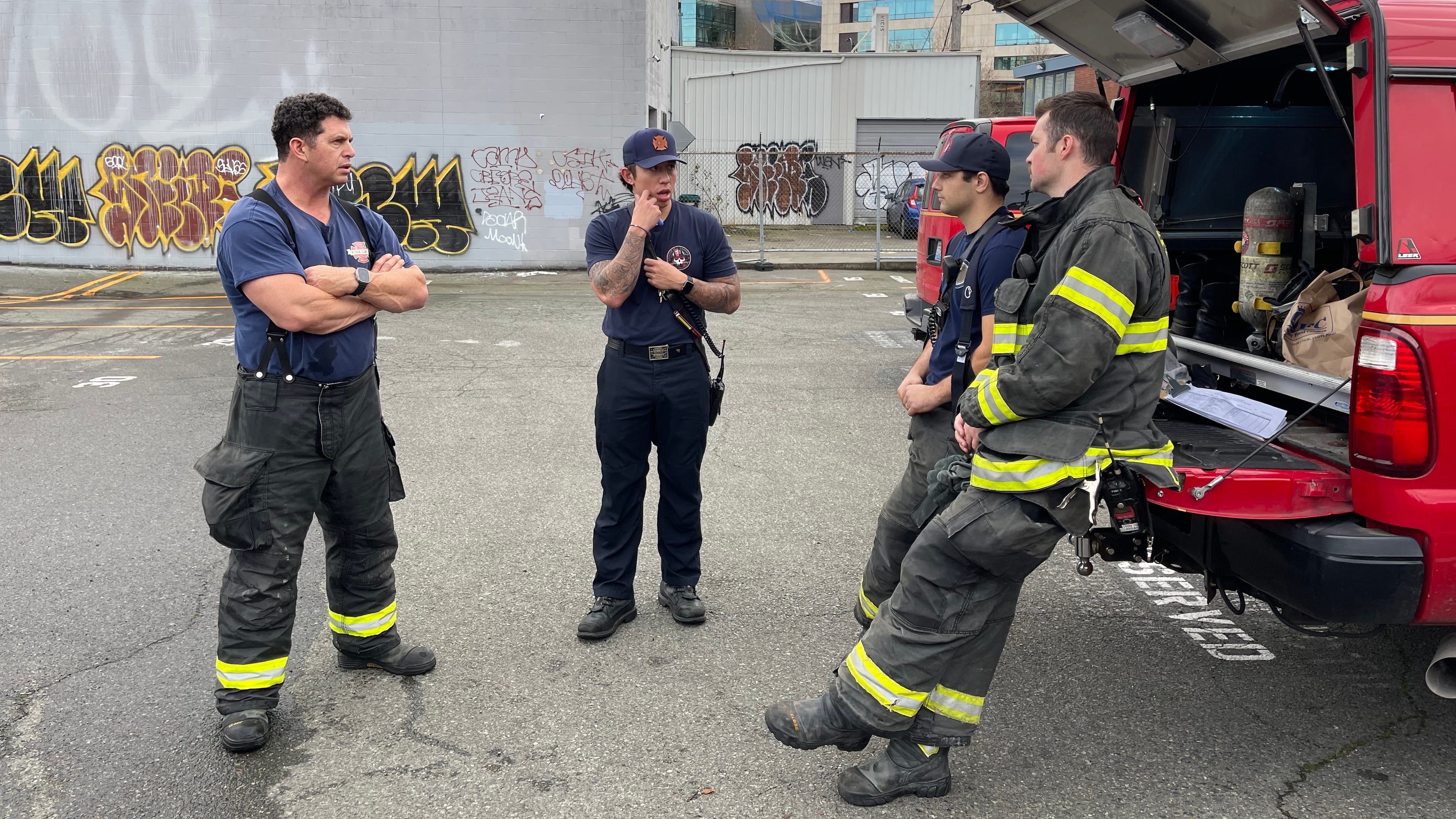

Firefighters always keep us researchers on our toes – as they should! From a scientific perspective, I can’t imagine a more fascinating profession to study. At the Illinois Fire Service Institute (IFSI), our research team spends much of our time (on our toes) trying to understand the nature of their occupational exposures, what happens in the body after exposure occurs, and how to mitigate their impacts. And so, IFSI Research launched the Illinois Firefighters Cancer Risk Study (IFCRS). As it turns out, the more we learn, the more we realize just how complex the firefighter exposure story really is – because every fire creates a unique chemical cocktail.
This article pulls the curtain back to reveal the uncertainty around what happens behind the scenes when our bodies are tasked to process and eliminate complex mixtures of chemicals. The goal here isn’t to distill 1,700 pages of a toxicology textbook into a few paragraphs, but to shine a light on why the chemical mixtures firefighters face are so challenging to understand.
Let’s use a real-life firefighting exposure example to explore one of two sides of every exposure story in toxicology: “toxicokinetics” (what the body does to the chemical) and “toxicodynamics” (what the chemical does to the body). For now, we’ll focus briefly on toxicokinetics, which is conveniently described by a four-step framework: Absorption, Distribution, Metabolism, and Elimination – known in the field of toxicology as “ADME.”
You’re called to a structure fire. As plastics, foams, treated wood, electronics, furniture, textiles, paints, and building materials burn, they release a complex mixture of toxic gases, carcinogens, fine soot particles, metals, and combustion byproducts into your workspace. During suppression and overhaul, many of these chemicals are deposited onto your protective gear and can eventually gain access to your bloodstream through multiple exposure pathways including inhalation, dermal absorption, and even accidental ingestion (absorption). Once absorbed, these chemicals are carried throughout the body using the blood as a vehicle to reach target tissues and organs (distribution). The body then works hard to process these chemicals using enzymes – primarily in the liver – to transform them into metabolites that are easier to remove (metabolism). Keep in mind, however, that metabolism does not always make chemicals less harmful; in some cases, it produces metabolites that are more toxic than the original chemical. Finally, the chemicals and their metabolites leave the body through pathways such as urine, feces, sweat, or exhaled air (elimination).
When Chemicals Interact
Ideally, the chemical mixture exits on good terms after being handled by the body’s sophisticated metabolic SOP. In reality, interactions of hundreds – or even thousands – of chemicals make these exposures far more complicated than exposure to any single chemical alone. In fact, the resulting combination of effects of repeated exposures to these unique chemical cocktails remains one of the greatest uncertainties in occupational toxicology.
So, what happens when all of these chemicals are present at the same time? The short answer is, we don’t know – but we do know some possible interactions that may occur.
The most common effect is an additive effect – the classic “1+1 = 2” scenario. This occurs when we are exposed to two or more chemicals and the combined effect is equal to the sum of their individual effects. This is often the case when chemicals share similar biological effects or act on the same biological pathways (such as per- and polyfluoroalkyl substances, PFAS). For example, as certain PFAS produce similar biological effects, the Environmental Protection Agency (EPA) concluded that their combined effects should be considered additive when evaluating health risks.
Here’s where things get even more interesting. Some chemicals can change how other chemicals behave during exposure. Scientists know that some solvents can act as “penetration enhancers”, making it easier for other chemicals to penetrate the skin and potentially increasing the internal dose that reaches the bloodstream – this phenomenon is well established in toxicology but has not been well studied under real-world firefighting conditions.
A Chemical Tug-of-War
Chemicals can also interact with each other once inside the body by competing for, inhibiting, or inducing the same metabolic enzymes, altering how efficiently they are processed and eliminated. Some volatile organic compounds (VOCs) encountered during firefighting (such as benzene, toluene, and naphthalene) are metabolized through pathways that can overlap with those involved in alcohol metabolism. For example, if the body is still processing last night’s alcohol, it could temporarily tie up some metabolic machinery, potentially influencing how certain VOCs from today’s fire are processed. Depending on the chemical, the timing of exposure, whether alcohol use is acute or chronic, and seemingly countless other variables, these interactions can slow metabolism, speed up the formation of toxic metabolites, or influence the body’s rate of elimination.
Consider two examples involving alcohol. Let’s first look at the potential interaction between benzene and booze, both of which can be metabolized by an enzyme called CYP2E1. Ethanol (the active ingredient in “booze” that causes intoxication) enhances both the metabolism and toxicity of benzene in animals, which may be of particular concern for benzene-exposed firefighters who consume alcohol. Now let’s look at the combination of alcohol and toluene, a known fireground VOC exposure. It has been demonstrated that ingestion of ethanol prolongs the presence of toluene in the blood and that workers exposed to toluene who regularly drink alcohol may be at greater risk of developing toluene-related neurological problems than non-drinkers. This inhibition of toluene metabolism has been attributed to competition for alcohol dehydrogenase, which is used by both ethanol and toluene during metabolism. This particular interaction reminds me of the famous I Love Lucy chocolate factory skit where things quickly get out of hand as the chocolates pile up faster than Lucy can keep up. Similarly, when the body’s metabolic machinery is temporarily occupied, certain chemicals may remain in the body longer than expected.
Perhaps the biggest plot twist is when two or more exposures produce a synergistic effect – where we see something like a “1+1 = 20” scenario. For example, studies have shown that PFAS and bisphenol A (BPA) together may amplify endocrine disruption when compared with either chemical alone. It has also been reported that co-exposures to lead, mercury, and cadmium may amplify neurotoxic effects, particularly in vulnerable populations such as developing children.
To add to the fire (pun intended), the extreme physical demands associated with firefighting generate heat and sweat, which can increase the potential for dermal absorption of chemicals. Dehydration and heat stress alter circulation and kidney function, potentially influencing elimination of some chemicals and how the body handles absorbed contaminants.
Why Mixtures Are So Difficult to Understand
In any case, the result of multiple chemical interactions depends on a number of factors, including dose, timing, exposure route, and susceptibility. Since firefighters are exposed to complex mixtures rather than one chemical at a time, the risk of their occupational exposures is much more difficult to assess than exposures to individual chemicals, especially considering that risk assessments and epidemiological studies have traditionally evaluated the toxicity of chemicals one at a time. This single-chemical paradigm fails to capture the potential interactions of mixture toxicity, and many of the complex chemical mixtures encountered by firefighters have never been studied directly. The truth of the matter is that for most complex chemical mixtures encountered by firefighters, we simply don’t know.
This uncertainty does not mean we are powerless; it means we need better data, better prevention strategies, and continued research focused on real-world firefighter exposures.
Takeaways: what does this mean for you as a firefighter?
- The jury is still out: real-world fireground chemical cocktails can produce additive, synergistic, or other effects that traditional single-chemical risk assessments fail to predict, leaving gaps in understanding about the health risks for firefighters. Science does not yet have all the answers about complex chemical mixtures, and this uncertainty shouldn’t be mistaken for safety – “the absence of evidence is not the evidence of absence.”
- Avoid fanning the flames: uncertainty should not be an excuse for inaction. On the contrary – it reinforces the importance of exposure reduction whenever possible. Here’s where we apply the Precautionary Principle. When it comes to firefighter exposures, reducing unnecessary contact with contaminants remains the safest strategy, even while researchers continue working to understand the full effects of chemical mixtures.
- The IFSI Research team is gathering evidence: through the IFCRS, the IFSI Research team is working to bridge these knowledge gaps by studying real-world firefighter exposures, measuring biological markers of exposure and effect, and investigating how these complex chemical cocktails may contribute to cancer risk and, ultimately, how we can better protect those who protect us.
Stay tuned for our next article when my colleague, Dr. Neda Seyedsadjadi explores the effects of exposure on inflammation and some common toxicodynamic indicators that reflect the biological responses of firefighters to occupational chemical exposures.
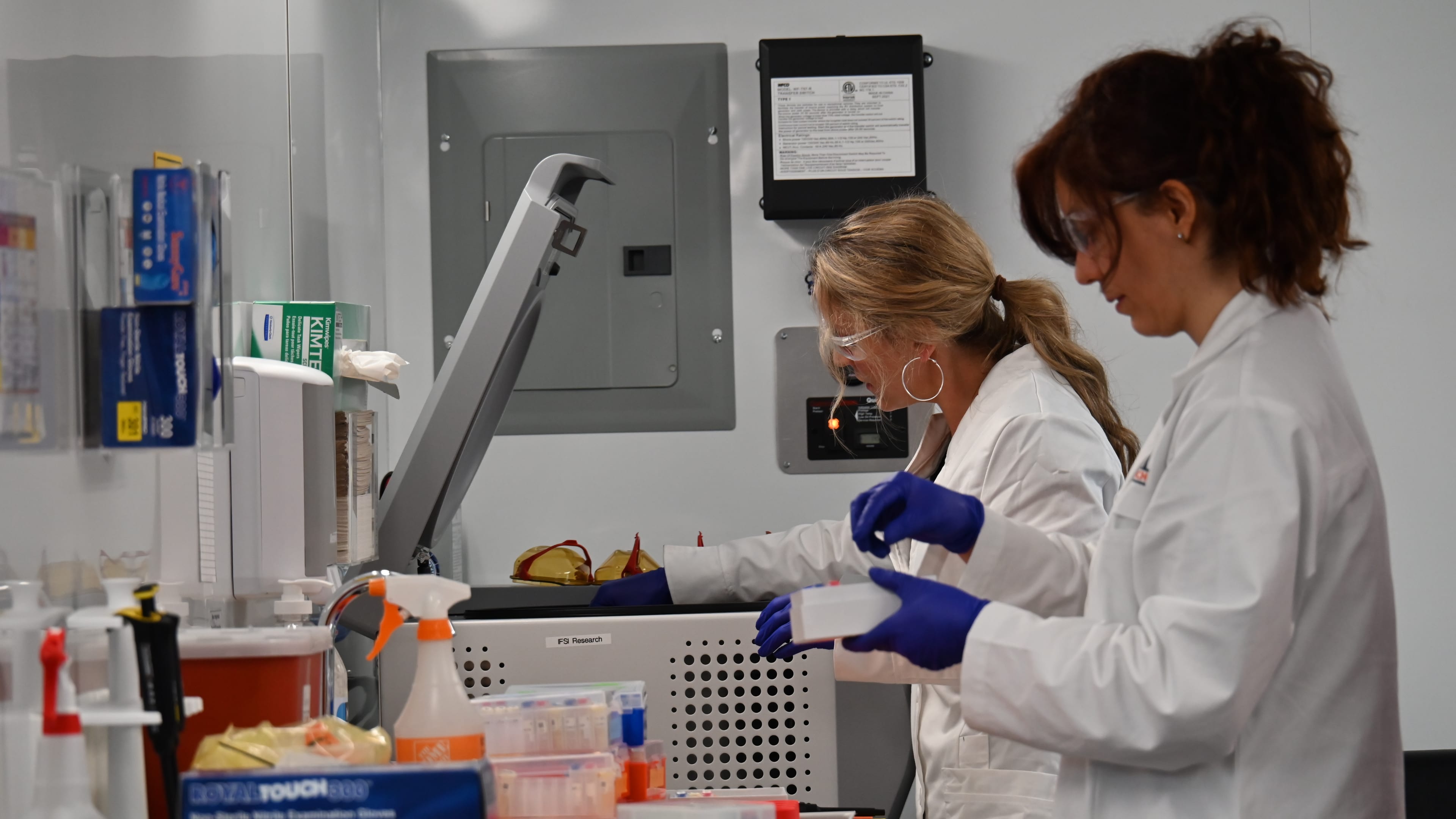
Photo: Dr. Crystal Sweeney (left) and her colleague, Dr. Neda Seyedsadjadi (right) process blood samples in the IFSI Research Laboratory’s mobile laboratory for the Illinois Firefighters Cancer Risk Study (IFCRS).